Skip to Content
Merck

296848

Ethylbenzene

anhydrous, 99.8%

Synonym(s):

NSC 406903, Phenylethane

Sign In to View Organizational & Contract Pricing.

Select a Size


About This Item

Linear Formula:
C6H5C2H5
CAS Number:
Molecular Weight:
106.17
NACRES:
NA.06
PubChem Substance ID:
eCl@ss:
39011201
UNSPSC Code:
12352002
EC Number:
202-849-4
MDL number:
Beilstein/REAXYS Number:
1901871
Assay:
99.8%
Grade:
anhydrous
Bp:
136 °C (lit.)
Vapor pressure:
10 mmHg ( 20 °C), 19 mmHg ( 37.7 °C)
Technical Service
Need help? Our team of experienced scientists is here for you.
Let Us Assist
Technical Service
Need help? Our team of experienced scientists is here for you.
Let Us Assist

grade

anhydrous

Quality Level

vapor density

3.7 (vs air)

vapor pressure

10 mmHg ( 20 °C), 19 mmHg ( 37.7 °C)

assay

99.8%

form

liquid

autoignition temp.

810 °F

expl. lim.

6.7 %

impurities

<0.002% water, <0.005% water (100 mL pkg)

evapn. residue

<0.0005%

refractive index

n20/D 1.495 (lit.)

bp

136 °C (lit.)

mp

−95 °C (lit.)

density

0.867 g/mL at 25 °C (lit.)

SMILES string

CCc1ccccc1

InChI

1S/C8H10/c1-2-8-6-4-3-5-7-8/h3-7H,2H2,1H3

InChI key

YNQLUTRBYVCPMQ-UHFFFAOYSA-N

Looking for similar products? Visit Product Comparison Guide

Application

Ethylbenzene may be used as a starting material to synthesize:
  • Acetophenone via selection oxidation in the presence of potassium dichromate supported on neutral alumina and using air as the oxidizing agent.
  • Styrene via dehydrogenation over nanodiamonds in an oxygen-lean environment.

signalword

Danger

Hazard Classifications

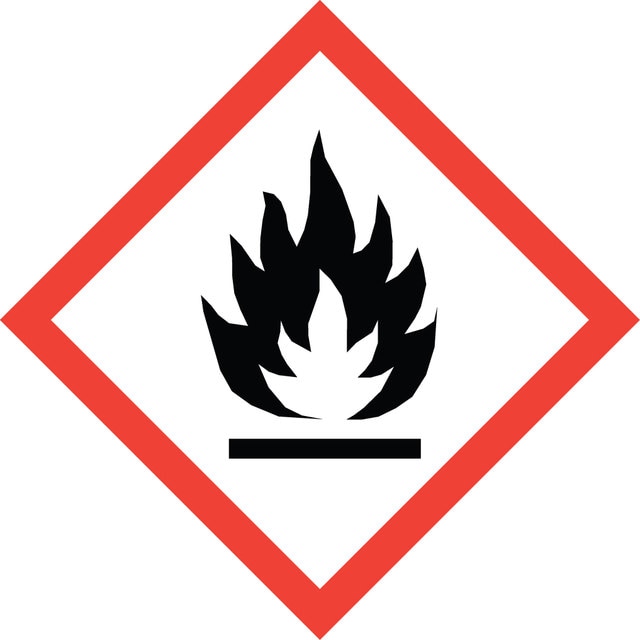
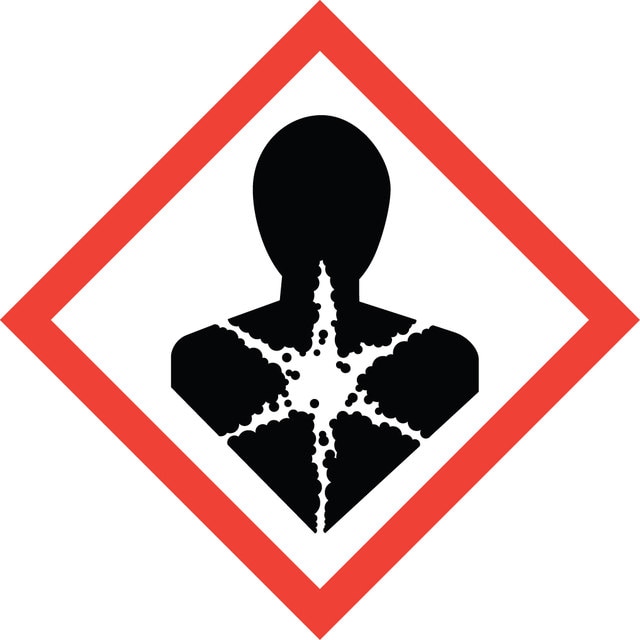
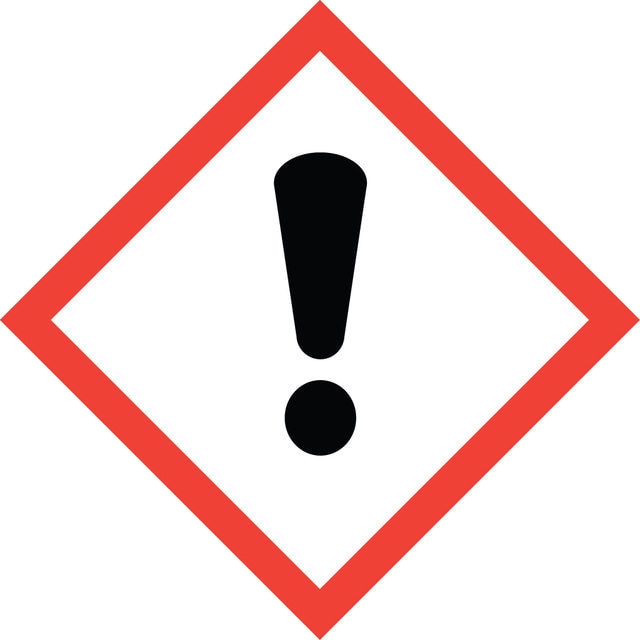
Acute Tox. 4 Inhalation - Aquatic Chronic 3 - Asp. Tox. 1 - Flam. Liq. 2 - STOT RE 2

target_organs

hearing organs

Storage Class

3 - Flammable liquids

wgk

WGK 1

flash_point_f

71.6 °F - closed cup

flash_point_c

22.0 °C - closed cup

ppe

Eyeshields, Faceshields, Gloves, type ABEK (EN14387) respirator filter


Regulatory Listings

Regulatory Listings are mainly provided for chemical products. Only limited information can be provided here for non-chemical products. No entry means none of the components are listed. It is the user’s obligation to ensure the safe and legal use of the product.

Class I Designated Chemical Substances

prtr

Group 4: Flammable liquids + Type 2 petroleums + Hazardous rank III + Water insoluble liquid

fsl

Substances Subject to be Indicated Names

ishl_indicated

Substances Subject to be Notified Names

ishl_notified

296848-VAR: + 296848-100ML:4548173313696 + 296848-BULK: + 296848-6X1L: + 296848-1L:4548173313702 + 296848-2L:4548173313719

jan


Choose from one of the most recent versions:

Certificates of Analysis (COA)

Lot/Batch Number

Don't see the Right Version?

If you require a particular version, you can look up a specific certificate by the Lot or Batch number.

Already Own This Product?

Find documentation for the products that you have recently purchased in the Document Library.

Visit the Document Library

Selective and Stable Ethylbenzene Dehydrogenation to Styrene over Nanodiamonds under Oxygen?lean Conditions
Diao J, et al.
ChemSusChem, 9(7), 662-666 (2016)
Catalytic oxidation of ethylbenzene to acetophenone using alumina-supported dichromate: Process optimisation and development of a continuous process.
Chisem IC, et al.
Organic Process Research & Development, 1(5), 365-369 (1997)
Preparation and Characterization of MCM-41@ PEI? Mn as a New Organic-Inorganic Hybrid Nanomaterial and Study of its Catalytic Role in the Oxidation of Cyclohexene, Ethyl Benzene, and Toluene in the Presence of H2O2 as an Oxidant.
Tarasi R, et al.
Bull. Korean Chem. Soc., 37(4), 529-537 (2016)
Hongyang Liu et al.
Chemical communications (Cambridge, England), 50(58), 7810-7812 (2014-06-07)
A novel nanodiamond/CNT-SiC monolith catalyst has been prepared by a facile two-step approach. The as-synthesized monolith afforded high activity and stability for ethylbenzene direct dehydrogenation to styrene, showing its potential application as a metal free catalyst in gaseous catalytic reactions.
Silvia L Cruz et al.
Neurotoxicology, 57, 121-127 (2016-11-05)
Several organic solvents have anticonvulsant or convulsant actions depending on the dose and exposure time. To study if there is a structure-activity relationship for organic solvents as anticonvulsant agents we subjected independent groups of mice to a single 30-min exposure

Our team of scientists has experience in all areas of research including Life Science, Material Science, Chemical Synthesis, Chromatography, Analytical and many others.

Contact Technical Service