
Skip to Content
Merck

34750

2,6-Di-tert-butyl-4-methylphenol

purum, ≥99.0% (GC)

Synonym(s):

2,6-Di-tert-butyl-p-cresol, BHT, Butylated hydroxytoluene, Butylhydroxytoluene, DBPC

Sign In to View Organizational & Contract Pricing.

Select a Size

Change View

About This Item

Linear Formula:
[(CH3)3C]2C6H2(CH3)OH
CAS Number:
Molecular Weight:
220.35
UNSPSC Code:
12352100
NACRES:
NA.22
PubChem Substance ID:
EC Number:
204-881-4
Beilstein/REAXYS Number:
1911640
MDL number:
Assay:
≥99.0% (GC)
Technical Service
Need help? Our team of experienced scientists is here for you.
Let Us Assist


vapor density

7.6 (vs air)

Quality Level

vapor pressure

<0.01 mmHg ( 20 °C)

grade

purum

assay

≥99.0% (GC)

autoignition temp.

878 °F

bp

265 °C (lit.)

mp

68-72 °C, 69-73 °C (lit.)

solubility

methanol: 0.1 g/mL, clear, colorless, methanol: soluble 100 mg/mL, clear, colorless

SMILES string

Cc1cc(c(O)c(c1)C(C)(C)C)C(C)(C)C

InChI

1S/C15H24O/c1-10-8-11(14(2,3)4)13(16)12(9-10)15(5,6)7/h8-9,16H,1-7H3

InChI key

NLZUEZXRPGMBCV-UHFFFAOYSA-N

Gene Information

human ... CAPN1(823)
rat ... Capn1(29153), Nos1(24598)

General description

2,6-Di-tert-butyl-4-methylphenol is an 4-alkylphenol. It is an antioxidant and exhibit toxicities mediated by oxidative metabolism to electrophilic quinone methides. It acts as Michael acceptor and its reaction with simple nucleophiles and proteins have been reported. Reaction of 2,6-di-tert-butyl-4-methylphenol with ytterbium(II)-benzophenone dianion complex has been reported. 2,6-Di-tert-butyl-4-methylphenol, a food additive, promotes acute pulmonary toxicity and tumor growth in mice.

Application

2,6-Di-tert-butyl-4-methylphenol may be used in the preparation of an organoaluminum compound, methylaluminum bis(2,6-di-tert-butyl-4-alkylphenoxide).


Still not finding the right product?

Explore all of our products under 2,6-Di-tert-butyl-4-methylphenol
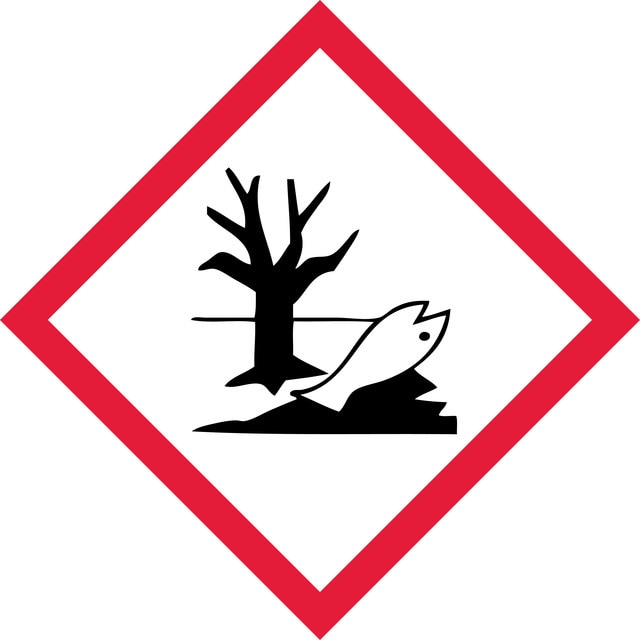

pictograms

Environment

signalword

Warning

hcodes

Hazard Classifications

Aquatic Acute 1 - Aquatic Chronic 1

Storage Class

11 - Combustible Solids

wgk

WGK 2

flash_point_f

260.6 °F - open cup

flash_point_c

127 °C - open cup

ppe

dust mask type N95 (US), Eyeshields, Gloves


Regulatory Listings

Regulatory Listings are mainly provided for chemical products. Only limited information can be provided here for non-chemical products. No entry means none of the components are listed. It is the user’s obligation to ensure the safe and legal use of the product.

Class I Designated Chemical Substances

prtr

Substances Subject to be Indicated Names

ishl_indicated

Substances Subject to be Notified Names

ishl_notified

34750-1KG-F:4.548173938301E12 + 34750-250G-F:4.548173938318E12

jan


Choose from one of the most recent versions:

Certificates of Analysis (COA)

Lot/Batch Number

It looks like we've run into a problem, but you can still download Certificates of Analysis from our Documents section.

If you need assistance, please contact Customer Support

Already Own This Product?

Find documentation for the products that you have recently purchased in the Document Library.

Visit the Document Library


Articles

Simultaneous LC-MS/MS determination of vitamins D₂ and D₃ in infant milk powder meeting GB 5009.296-2023 criteria for accuracy and sensitivity.


Rene Kupfer et al.
Chemical research in toxicology, 15(8), 1106-1112 (2002-08-20)
Acute pulmonary toxicity and tumor promotion by the food additive 2,6-di-tert-butyl-4-methylphenol (BHT) in mice are well documented. These effects have been attributed to either of two quinone methides, 2,6-di-tert-butyl-4-methylenecyclohexa-2,5-dienone (BHT-QM) formed through direct oxidation of BHT by pulmonary cytochrome P450
Methylaluminum bis (2, 6-di-tert-butyl-4-alkylphenoxide). A new reagent for obtaining unusual equatorial and anti-Cram selectivity in carbonyl alkylation.
Maruoka K, et al.
Journal of the American Chemical Society, 107(15), 4573-4576 (1985)
Novel crystal structure of ytterbium (II)-benzophenone dianion complex and its reaction with 2, 6-di-tert-butyl-4-methylphenol.
Hou Z, et al.
Journal of the Chemical Society. Chemical Communications, 9, 722-724 (1999)