Skip to Content
Merck

45795

1-Methylnaphthalene

analytical standard

Sign In to View Organizational & Contract Pricing.

Select a Size

Change View

About This Item

Linear Formula:
C10H7CH3
CAS Number:
Molecular Weight:
142.20
UNSPSC Code:
41116107
NACRES:
NA.24
PubChem Substance ID:
EC Number:
201-966-8
Beilstein/REAXYS Number:
506793
MDL number:
Technical Service
Need help? Our team of experienced scientists is here for you.
Let Us Assist

grade

analytical standard

Quality Level

assay

≥98%

autoignition temp.

984 °F

shelf life

limited shelf life, expiry date on the label

technique(s)

HPLC: suitable, gas chromatography (GC): suitable

refractive index

n20/D 1.615 (lit.)

bp

240-243 °C (lit.)

mp

−22 °C (lit.)

density

1.001 g/mL at 25 °C (lit.)

application(s)

environmental

format

neat

SMILES string

Cc1cccc2ccccc12

InChI

1S/C11H10/c1-9-5-4-7-10-6-2-3-8-11(9)10/h2-8H,1H3

InChI key

QPUYECUOLPXSFR-UHFFFAOYSA-N

Looking for similar products? Visit Product Comparison Guide

Application

1-Methylnaphthalene defines the lower (zero) reference point of cetane number, a measure of diesel fuel ignition quality, as it has a long ignition delay (poor ignition qualities)
The 1-Methylnaphthalene may find the following uses:
  • Study of surface and electronic features of fluorinated TiO2 and their influence on the photocatalytic degradation of 1-methylnaphthalene
  • Thermal decomposition of 1-Methylnaphthalene in a batch reactor
  • Catalytic conversion of tar from hot coke oven gas using 1-methylnaphthalene as a tar model compound
  • Hydrocracking of 1-methylnaphthalene to benzene, toluene, and xylene using high metal–acid balance and selective hydrogenation activity catalysts

Other Notes

Find a digital Reference Material for this product available on our online platform ChemisTwin® for NMR. You can use this digital equivalent on ChemisTwin® for your sample identity confirmation and compound quantification (with digital external standard). An NMR spectrum of this substance can be viewed and an online comparison against your sample can be performed with a few mouseclicks. Learn more here and start your free trial.

signalword

Danger

Hazard Classifications

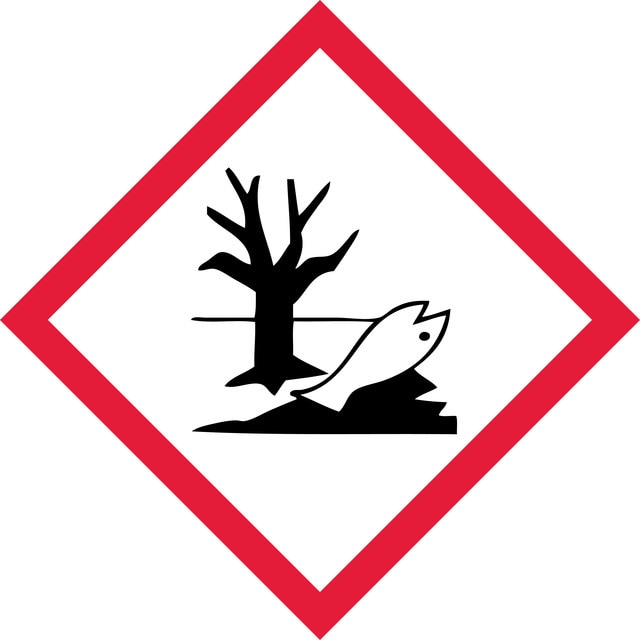
Acute Tox. 4 Oral - Aquatic Chronic 2 - Asp. Tox. 1

Storage Class

10 - Combustible liquids

wgk

WGK 2

flash_point_f

179.6 °F - closed cup

flash_point_c

82 °C - closed cup

ppe

Eyeshields, Faceshields, Gloves, type ABEK (EN14387) respirator filter


Regulatory Listings

Regulatory Listings are mainly provided for chemical products. Only limited information can be provided here for non-chemical products. No entry means none of the components are listed. It is the user’s obligation to ensure the safe and legal use of the product.

Class I Designated Chemical Substances

prtr

Group 4: Flammable liquids + Type 3 petroleums + Hazardous rank III + Water insoluble liquid

fsl

Substances Subject to be Indicated Names

ishl_indicated

Substances Subject to be Notified Names

ishl_notified

45795-250MG:4548173997384 + 45795-1EA: + 45795-BULK: + 45795-VAR:

jan


Choose from one of the most recent versions:

Certificates of Analysis (COA)

Lot/Batch Number

It looks like we've run into a problem, but you can still download Certificates of Analysis from our Documents section.

If you need assistance, please contact Customer Support

Already Own This Product?

Find documentation for the products that you have recently purchased in the Document Library.

Visit the Document Library

Gas purge microsyringe extraction for quantitative direct gas chromatographic-mass spectrometric analysis of volatile and semivolatile chemicals.
Yang CP, et al.
Journal of Chromatography A, 1218(12), 1549-1555 (2011)
Comparative study of solvent extraction and thermal desorption methods for determining a wide range of volatile organic compounds in ambient air.
Ramirez N, et al.
Talanta, 82(2), 719-727 (2010)
Analysis of aromatic compounds in gasoline with flow-switching comprehensive two-dimensional gas chromatography.
Micyus NJ, et al.
Journal of Chromatography A, 1086(1-2), 115-121 (2005)
Development and validation of a method for air-quality and nuisance odors monitoring of volatile organic compounds using multi-sorbent adsorption and gas chromatography/mass spectrometry thermal desorption system.
Ribes A, et al.
Journal of Chromatography A, 1140(1-2), 44-55 (2007)
Evaluation of an in-injection port thermal desorption-gas chromatography/mass spectrometry method for analysis of non-polar organic compounds in ambient aerosol samples.
Ho SSH, et al.
Journal of Chromatography A, 1200(2), 217-227 (2008)

Our team of scientists has experience in all areas of research including Life Science, Material Science, Chemical Synthesis, Chromatography, Analytical and many others.

Contact Technical Service