Skip to Content
Merck

84679

Naphthalene

analytical standard

Sign In to View Organizational & Contract Pricing.

Select a Size


About This Item

Empirical Formula (Hill Notation):
C10H8
CAS Number:
Molecular Weight:
128.17
UNSPSC Code:
20121904
NACRES:
NA.24
PubChem Substance ID:
EC Number:
202-049-5
Beilstein/REAXYS Number:
1421310
MDL number:
eCl@ss:
39011601
Technical Service
Need help? Our team of experienced scientists is here for you.
Let Us Assist
Technical Service
Need help? Our team of experienced scientists is here for you.
Let Us Assist

grade

analytical standard

Quality Level

vapor density

4.4 (vs air)

vapor pressure

0.03 mmHg ( 25 °C)

assay

≥99.7% (GC)

autoignition temp.

978 °F

shelf life

limited shelf life, expiry date on the label

expl. lim.

5.9 %

technique(s)

HPLC: suitable, gas chromatography (GC): suitable

bp

218 °C (lit.)

mp

79.5-81.0 °C, 80-82 °C (lit.)

application(s)

cleaning products
cosmetics
environmental
food and beverages
personal care

format

neat

SMILES string

c1ccc2ccccc2c1

InChI

1S/C10H8/c1-2-6-10-8-4-3-7-9(10)5-1/h1-8H

InChI key

UFWIBTONFRDIAS-UHFFFAOYSA-N

Looking for similar products? Visit Product Comparison Guide

General description

Naphthalene is widely used as an intermediate in the chemical and plastics industry. It is commonly found in petroleum, coal, mothballs, cigarette smoke, biomass burning, incomplete combustion, etc.

Application

Naphthalene is used as a calibration standard for the real-time quantification with high specificity for naphthalene vapor and other HOVs in industrial environment using NaDos personal exposure monitor (PEM) device.
Refer to the product′s Certificate of Analysis for more information on a suitable instrument technique. Contact Technical Service for further support.

signalword

Warning

Hazard Classifications

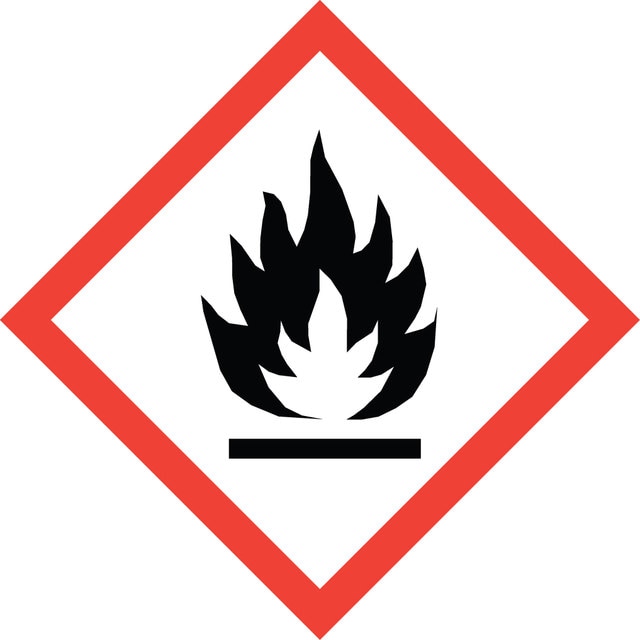
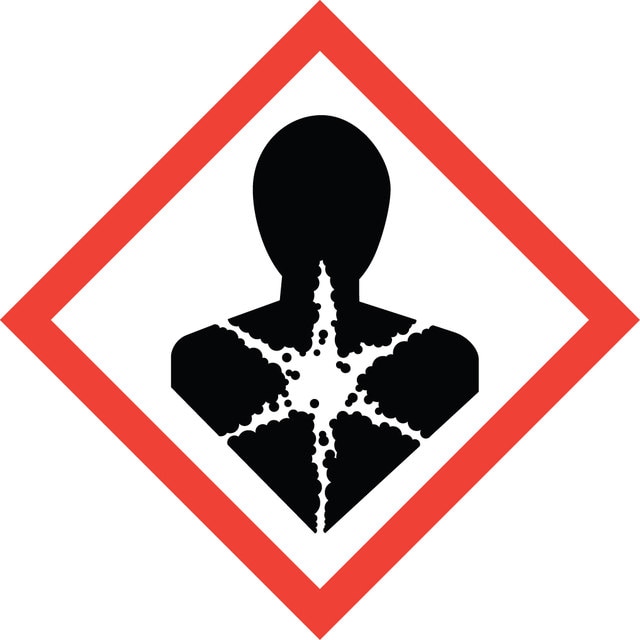
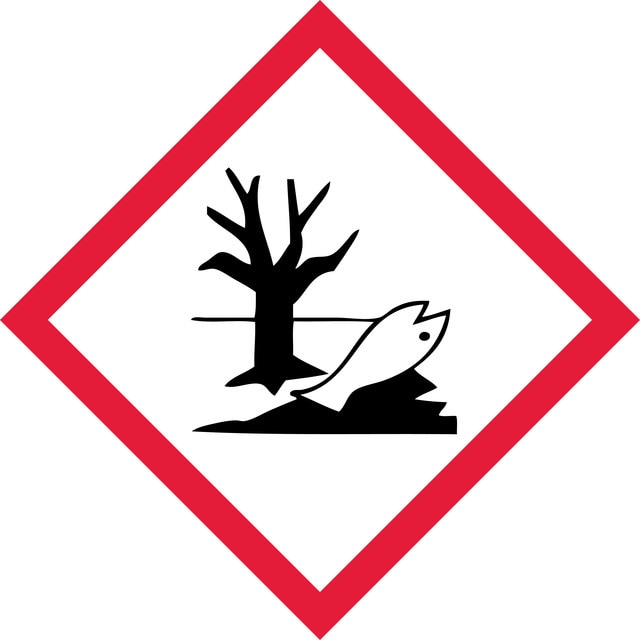
Acute Tox. 4 Oral - Aquatic Acute 1 - Aquatic Chronic 1 - Carc. 2 - Flam. Sol. 2

Storage Class

4.1B - Flammable solid hazardous materials

wgk

WGK 3

flash_point_f

173.3 °F - closed cup

flash_point_c

78.5 °C - closed cup

ppe

Eyeshields, Faceshields, Gloves, type P3 (EN 143) respirator cartridges


Regulatory Listings

Regulatory Listings are mainly provided for chemical products. Only limited information can be provided here for non-chemical products. No entry means none of the components are listed. It is the user’s obligation to ensure the safe and legal use of the product.

Class I Designated Chemical Substances

prtr

Substances Subject to be Indicated Names

ishl_indicated

Substances Subject to be Notified Names

ishl_notified

84679-250MG:4548173913155 + 84679-1G:4548173913148 + 84679-BULK: + 84679-VAR:

jan


Choose from one of the most recent versions:

Certificates of Analysis (COA)

Lot/Batch Number

It looks like we've run into a problem, but you can still download Certificates of Analysis from our Documents section.

If you need assistance, please contact Customer Support

Already Own This Product?

Find documentation for the products that you have recently purchased in the Document Library.

Visit the Document Library

Naphthalene DNA adduct formation and tolerance in the lung
Buchholz AB, et al.
Nucl. Instrum. Methods Phys. Res. Sect. B, 438, 119-123 (2019)
Determination of naphthalene metabolites in human urine by liquid chromatography?mass spectrometry with electrospray ionization
Andreoli R, et al.
Journal of Chromatography A, 847(1-2), 9-17 (1999)
Qiaozhen Liu et al.
Nature genetics, 51(4), 728-738 (2019-02-20)
Characterizing the stem cells responsible for lung repair and regeneration is important for the treatment of pulmonary diseases. Recently, a unique cell population located at the bronchioalveolar-duct junctions has been proposed to comprise endogenous stem cells for lung regeneration. However
P Rajamalli et al.
Langmuir : the ACS journal of surfaces and colloids, 29(5), 1609-1617 (2013-01-10)
Novel poly(aryl ether) dendron-based low-molecular-weight organogelaters (LMWG) containing naphthalene units at the core have been synthesized, and the self-assembly of the system has been examined in a variety of solvents and solvent mixtures. The compounds readily form gels with attractive
Jing-Ru Liou et al.
Phytochemistry, 88, 67-73 (2013-01-29)
Lawsonia inermis (Lythraceae) known as henna is one of the most popular and ancient plants used in cosmetics and hair dying. It is cultivated for its leaves but other parts such as seeds, flowers, stem bark and roots are also

Our team of scientists has experience in all areas of research including Life Science, Material Science, Chemical Synthesis, Chromatography, Analytical and many others.

Contact Technical Service