Skip to Content
Merck

N2780

1-Naphthol

BioXtra, ≥99%

Synonym(s):

α-Naphthol, 1-Hydroxynaphthalene

Sign In to View Organizational & Contract Pricing.

Select a Size

Change View

About This Item

Linear Formula:
C10H7OH
CAS Number:
Molecular Weight:
144.17
UNSPSC Code:
12352100
NACRES:
NA.21
PubChem Substance ID:
EC Number:
201-969-4
Beilstein/REAXYS Number:
1817321
MDL number:
Assay:
≥99%
Form:
powder
Technical Service
Need help? Our team of experienced scientists is here for you.
Let Us Assist


vapor density

4.5 (120 °C, vs air)

Quality Level

vapor pressure

1 mmHg ( 94 °C)

product line

BioXtra

assay

≥99%

form

powder

autoignition temp.

1007 °F

expl. lim.

5 %

impurities

≤0.0005% Phosphorus (P), ≤0.1% Insoluble matter

ign. residue

≤0.1%

bp

278-280 °C (lit.)

mp

94-96 °C (lit.)

solubility

ethanol: 1 M, clear

anion traces

sulfate (SO42-): ≤0.05%

cation traces

Al: ≤0.0005%, Ca: ≤0.0005%, Cu: ≤0.0005%, Fe: ≤0.0005%, K: ≤0.005%, Mg: ≤0.0005%, Na: ≤0.005%, Pb: ≤0.001%, Zn: ≤0.0005%

application(s)

diagnostic assay manufacturing
hematology
histology

storage temp.

room temp

SMILES string

Oc1cccc2ccccc12

InChI

1S/C10H8O/c11-10-7-3-5-8-4-1-2-6-9(8)10/h1-7,11H

InChI key

KJCVRFUGPWSIIH-UHFFFAOYSA-N

Gene Information

human ... CYP1A2(1544)

General description

1-Naphthol is a hydroxyl-aromatic compound. Its thermodynamic properties such as heat capacity, sublimation pressure, vapor pressure, enthalpies of combustion, formation and fusion have been estimated.

Application

1-Naphthol is used as a biomarker for exposure to polycyclic aromatic hydrocarbons (PAHs) in humans and livestock. 1-Naphthol is suitable for detecting the presence of carbohydrates and in various reactions.


Still not finding the right product?

Explore all of our products under 1-Naphthol

signalword

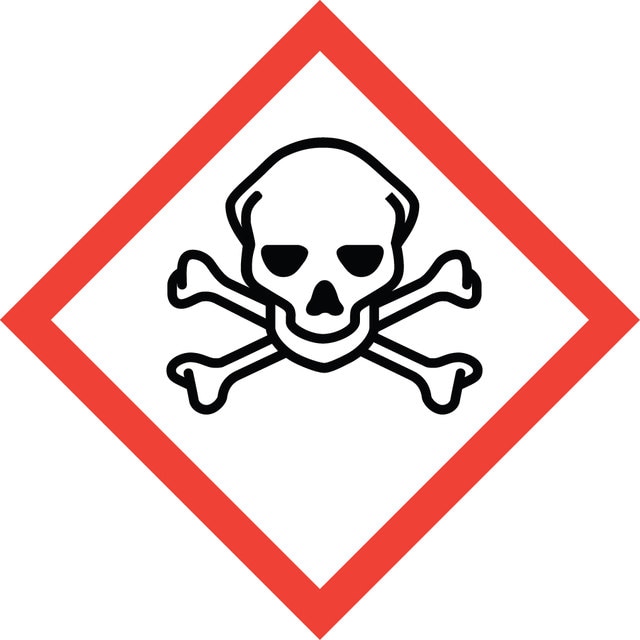
Danger

Hazard Classifications

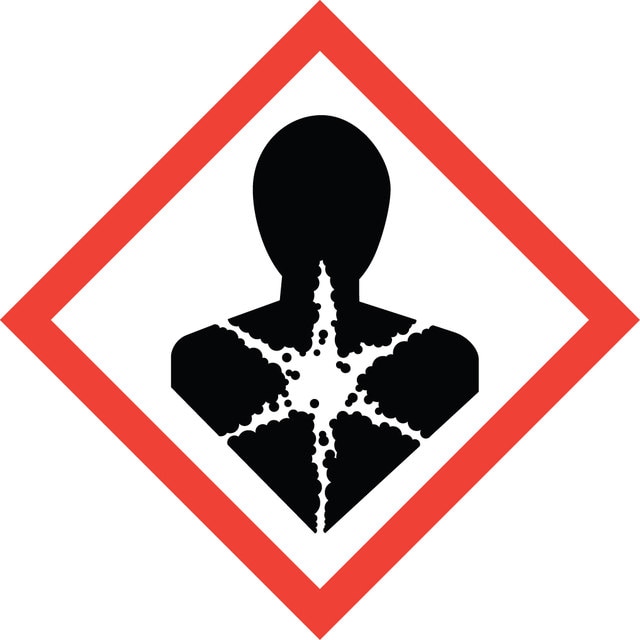
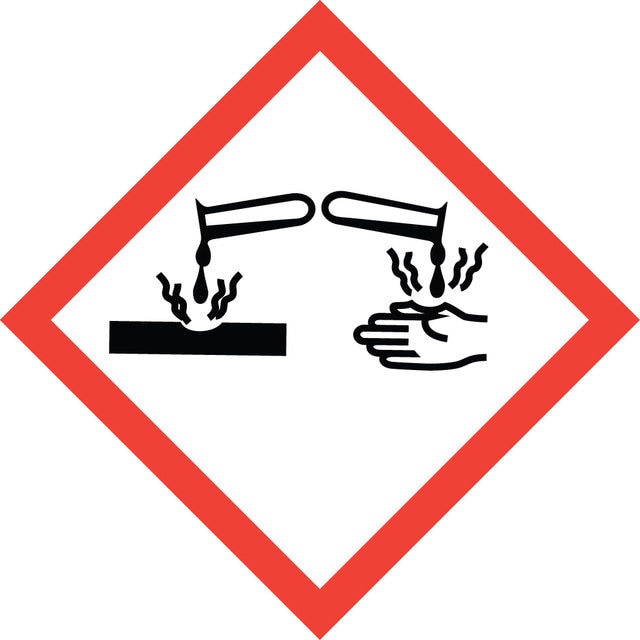
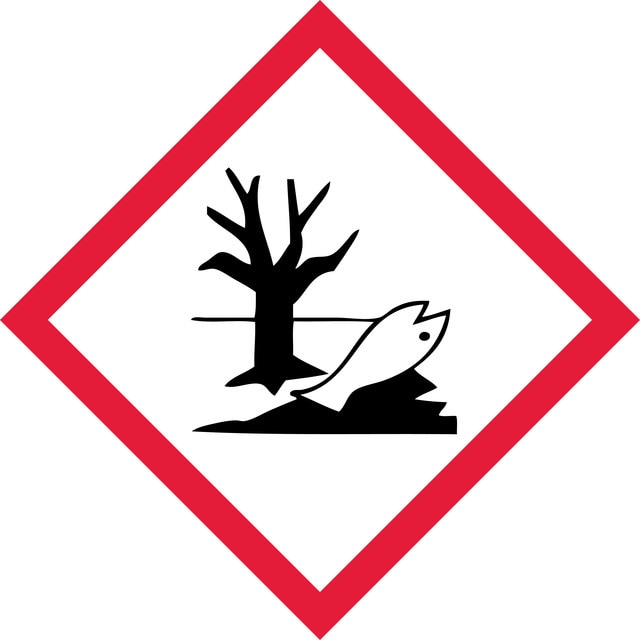
Acute Tox. 3 Dermal - Acute Tox. 4 Oral - Aquatic Acute 1 - Aquatic Chronic 3 - Eye Dam. 1 - Skin Irrit. 2 - Skin Sens. 1A - STOT SE 2 Oral - STOT SE 3

target_organs

Kidney, Respiratory system

Storage Class

6.1C - Combustible acute toxic Cat.3 / toxic compounds or compounds which causing chronic effects

wgk

WGK 1

flash_point_f

257.0 °F - closed cup

flash_point_c

125 °C - closed cup

ppe

dust mask type N95 (US), Eyeshields, Faceshields, Gloves


Regulatory Listings

Regulatory Listings are mainly provided for chemical products. Only limited information can be provided here for non-chemical products. No entry means none of the components are listed. It is the user’s obligation to ensure the safe and legal use of the product.

Substances Subject to be Indicated Names

ishl_indicated

Substances Subject to be Notified Names

ishl_notified


Choose from one of the most recent versions:

Certificates of Analysis (COA)

Lot/Batch Number

Don't see the Right Version?

If you require a particular version, you can look up a specific certificate by the Lot or Batch number.

Already Own This Product?

Find documentation for the products that you have recently purchased in the Document Library.

Visit the Document Library


Anika Kasprick et al.
European journal of immunology, 45(5), 1462-1470 (2015-02-14)
The role of mast cells (MCs) in autoimmunity is the matter of an intensive scientific debate. Based on observations in different MC-deficient mouse strains, MCs are considered as fundamental players in autoimmune diseases. However, most recent data suggest that the
Shitong Yang et al.
The Science of the total environment, 420, 214-221 (2012-02-15)
The increasing exploitation of multi-walled carbon nanotubes (MWCNTs) into many industrial processes has raised considerable concerns as they are likely to be released into the environment. The interactions of the pollutants in water with discharged MWNCTs will further influence the
Xiaoying Guo et al.
Environmental science & technology, 46(13), 7252-7259 (2012-06-09)
The sorption behavior of four hydrophobic organic contaminants (HOCs) (i.e., phenanthrene, naphthalene, lindane, and 1-naphthol) by three types of polymers namely polyethylene (PE), polystyrene (PS), and polyphenyleneoxide (PPO) was examined in this work. The organic carbon content-normalized sorption coefficients (K(oc))