Skip to Content
Merck

110264

2-Butanone

ReagentPlus®, ≥99%

Synonym(s):

Ethyl methyl ketone, MEK, Methyl ethyl ketone

Sign In to View Organizational & Contract Pricing.

Select a Size


About This Item

Linear Formula:
C2H5COCH3
CAS Number:
Molecular Weight:
72.11
UNSPSC Code:
12352115
NACRES:
NA.21
PubChem Substance ID:
EC Number:
201-159-0
Beilstein/REAXYS Number:
741880
MDL number:
Assay:
≥99%
Bp:
80 °C (lit.)
Vapor pressure:
71 mmHg ( 20 °C)
Technical Service
Need help? Our team of experienced scientists is here for you.
Let Us Assist
Technical Service
Need help? Our team of experienced scientists is here for you.
Let Us Assist

Product Name

2-Butanone, ReagentPlus®, ≥99%

InChI key

ZWEHNKRNPOVVGH-UHFFFAOYSA-N

InChI

1S/C4H8O/c1-3-4(2)5/h3H2,1-2H3

SMILES string

CC(CC)=O

vapor density

2.49 (vs air)

vapor pressure

71 mmHg ( 20 °C)

product line

ReagentPlus®

assay

≥99%

form

liquid

autoignition temp.

960 °F

expl. lim.

10.1 %

dilution

(for general lab use)

refractive index

n20/D 1.379 (lit.)

bp

80 °C (lit.)

mp

−87 °C (lit.)

density

0.805 g/mL at 25 °C (lit.)

Quality Level

Looking for similar products? Visit Product Comparison Guide

Application


  • Lipid and Volatile Profiles of Finnish Oat Batches of Pure Cultivars: Investigates the effects of storage on volatile formation including 2-Butanone in food processing, which is significant for food scientists and researchers looking into food preservation and flavor profiling (Puganen et al., 2024).

  • Changes in Volatile Compounds and Lipid Oxidation in Various Tissues of Nile Tilapia During Ice Storage: Examines the impact of storage on the volatile compound profiles of seafood, including 2-Butanone, valuable for food scientists and technologists working with seafood preservation and quality assessment (Karbsri et al., 2024).

General description

2-Butanone, also known as methyl ethyl ketone (MEK), is a commonly used organic solvent. Due to its low boiling point, low viscosity, ability to accommodate high solid concentrations, and wide diluent tolerance, it has wide applications in the polymer industry and as a solvent in adhesives and paints.

Legal Information

ReagentPlus is a registered trademark of Merck KGaA, Darmstadt, Germany

pictograms

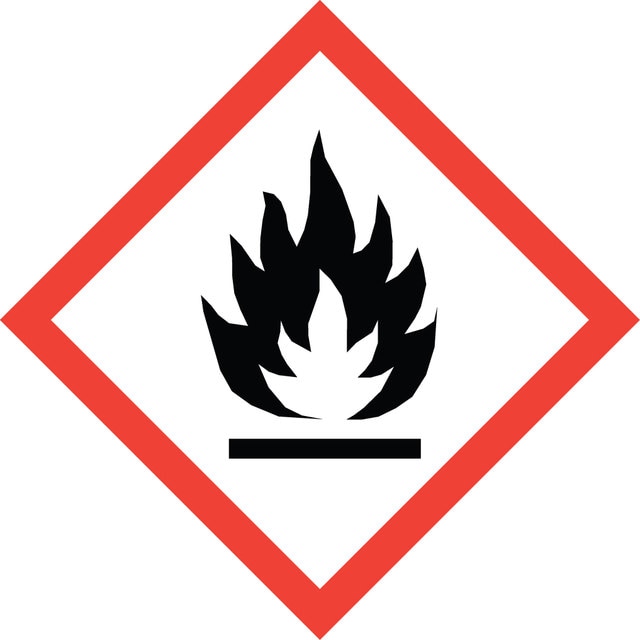
FlameExclamation mark

signalword

Danger

Hazard Classifications

Eye Irrit. 2 - Flam. Liq. 2 - STOT SE 3

target_organs

Central nervous system

supp_hazards

Storage Class

3 - Flammable liquids

wgk

WGK 1

flash_point_f

30.2 °F - closed cup

flash_point_c

-1 °C - closed cup


Choose from one of the most recent versions:

Certificates of Analysis (COA)

Lot/Batch Number

Don't see the Right Version?

If you require a particular version, you can look up a specific certificate by the Lot or Batch number.

Already Own This Product?

Find documentation for the products that you have recently purchased in the Document Library.

Visit the Document Library

"Identification of chemical interferences in aldehyde and ketone determination using dual-wavelength detection"
Analytical Chemistry, 68(19), 3354- 3358 (1996)
L B Goldsmith et al.
Contact dermatitis, 19(5), 348-350 (1988-11-01)
Irritant contact dermatitis along with an increased transepidermal water loss can result from exposing the skin to solvents. A study of the interaction of various solvents with human stratum corneum was made using thin-layer chromatography. Comparison of 10 solvents (trichloroethylene
S G Carmella et al.
Cancer research, 53(4), 721-724 (1993-02-15)
Metabolites of the tobacco-specific nitrosamine, 4-(methylnitrosamino)-1-(3-pyridyl)-1-butanone, a potent pulmonary carcinogen, have been quantified in the urine of 11 smokers. They were not detected in nonsmokers' urine. The metabolites, 4-(methylnitrosamino)-1-(3-pyridyl)-1-butanol and its glucuronide, were detected in quantities of 0.23-1.0 and 0.57-6.5
Chao Long et al.
Journal of hazardous materials, 203-204, 251-256 (2011-12-30)
A novel hypercrosslinked polymeric adsorbent (HY-1) with high surface area and specific bimodal pore size distribution in the regions of micropore (0.5-2.0 nm) and meso-macropore (30-70 nm) was prepared. Adsorption properties of benzene and methyl ethyl ketone (MEK) vapors onto
Yang Cao et al.
British journal of haematology, 168(5), 701-707 (2014-11-06)
CXCR4(WHIM) frameshift and nonsense mutations follow MYD88(L265P) as the most common somatic variants in Waldenström Macroglobulinaemia (WM), and impact clinical presentation and ibrutinib response. While the nonsense (CXCR4(S338X) ) mutation has been investigated, little is known about CXCR4 frameshift (CXCR4(FS)

Our team of scientists has experience in all areas of research including Life Science, Material Science, Chemical Synthesis, Chromatography, Analytical and many others.

Contact Technical Service