Skip to Content
Merck

34865

Tetrahydrofuran

≥99.9%, suitable for HPLC, inhibitor-free

Synonym(s):

THF, Butylene oxide, Oxolane, Tetramethylene oxide

Sign In to View Organizational & Contract Pricing.

Select a Size


About This Item

Empirical Formula (Hill Notation):
C4H8O
CAS Number:
Molecular Weight:
72.11
NACRES:
NA.21
PubChem Substance ID:
UNSPSC Code:
41116105
EC Number:
203-726-8
MDL number:
Beilstein/REAXYS Number:
102391
Assay:
≥99.9%
Grade:
HPLC grade
Technique(s):
HPLC: suitable
Bp:
65-67 °C (lit.)
Vapor pressure:
114 mmHg ( 15 °C), 143 mmHg ( 20 °C)
Technical Service
Need help? Our team of experienced scientists is here for you.
Let Us Assist
Technical Service
Need help? Our team of experienced scientists is here for you.
Let Us Assist

Product Name

Tetrahydrofuran, inhibitor-free, suitable for HPLC, ≥99.9%

grade

HPLC grade

Quality Level

vapor density

2.5 (vs air)

vapor pressure

114 mmHg ( 15 °C), 143 mmHg ( 20 °C)

assay

≥99.9%

form

liquid

autoignition temp.

610 °F

expl. lim.

1.8-11.8 %

technique(s)

HPLC: suitable

impurities

≤0.0005% non-volatile matter, ≤0.002% free acid (as CH3COOH), ≤0.05% peroxides (as H2O2), ≤0.05% water (Karl Fischer)

evapn. residue

≤0.0005%

color

APHA: ≤10

refractive index

n20/D 1.407 (lit.)

pH

~7

bp

65-67 °C (lit.)

mp

−108 °C (lit.)

density

0.889 g/mL at 25 °C (lit.)

absorption

≤0.0044 at 315 nm, ≤0.005 at 350 nm, ≤0.005 at 400 nm, ≤0.02 at 300 nm, ≤0.046 at 275 nm, ≤0.18 at 250 nm, ≤0.26 at 245 nm, ≤1.0 at 212 nm

UV absorption

λ: 245 nm Amax: ≤0.26, λ: 275 nm Amax: ≤0.046, λ: 315 μm Amax: ≤0.0044

suitability

complies for IR spectroscopy

application(s)

food and beverages

SMILES string

C1CCOC1

InChI

1S/C4H8O/c1-2-4-5-3-1/h1-4H2

InChI key

WYURNTSHIVDZCO-UHFFFAOYSA-N

Looking for similar products? Visit Product Comparison Guide

General description

Tetrahydrofuran (THF) is widely employed as a solvent. It constitutes the key fragment of various natural products (polyether antibiotics). THF forms a double hydrate with hydrogen sulfide. Crystal structure of this double hydrate has been investigated by three-dimensional single-crystal studies. Butane-1,4-diol is formed as an intermediate during the synthesis of THF. Hot THF is useful for the dissolution of polyvinylidene chloride (PVDV).

Application

Suitable for HPLC, spectrophotometry, environmental testing
Tetrahydrofuran may be used for the dissolution of poly-ε-caprolactone (PCL) and 1,3-diaminopentane, during the preparation of poly-ε-caprolactone (PCL)-hydroxyapatite (HA) scaffolds and acrylate-terminated poly(5-amino-1-pentanol-co-1,4-butanediol diacrylate) (C32)- 1,3-diaminopentane (117) polymer, respectively.

Packaging

M-Bottle for Solvents
As a global leader in lab reagents, we are constantly looking for new ways to optimize the safety of our products. The newly developed 4L solvent bottle design features advanced sealing technology that eliminates leaks to make the handling of solvents safer and more convenient than ever before.
See all the new features here!

Other Notes

Important notice
  • The article number 34865-4X2.5L will be discontinued. Please order the single bottle 34865-2.5L which is physically identical with the same exact specifications.
  • The article number 34865-6X1L will be discontinued. Please order the single bottle 34865-1L which is physically identical with the same exact specifications.
Discover LiChropur reagents ideal for HPLC or LC-MS analysis

signalword

Danger

target_organs

Central nervous system, Respiratory system

supp_hazards

Storage Class

3 - Flammable liquids

flash_point_f

-6.2 °F - closed cup

flash_point_c

-21.2 °C - closed cup
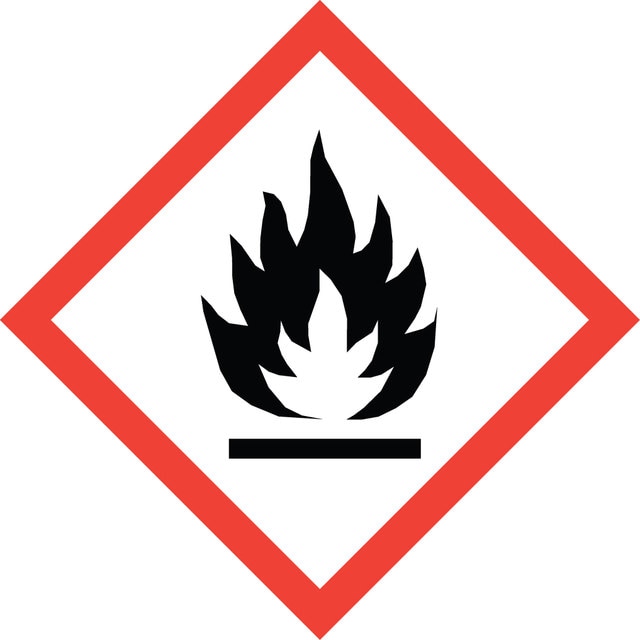
Hazard Classifications

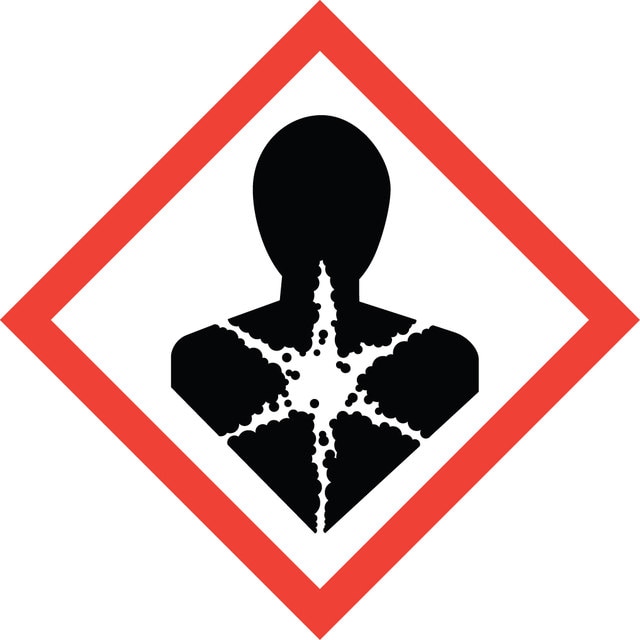
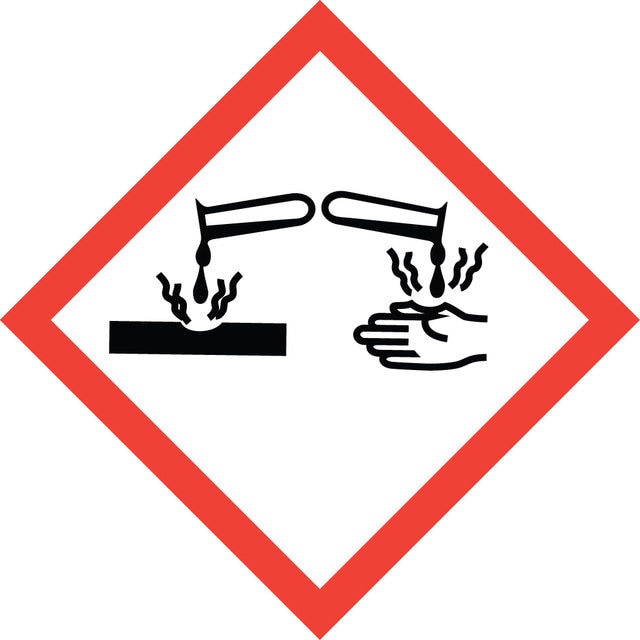
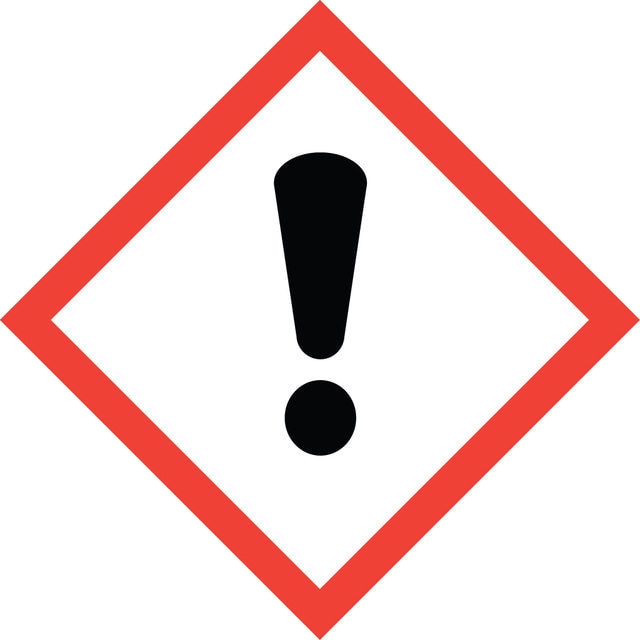
Acute Tox. 4 Oral - Carc. 2 - Eye Dam. 1 - Flam. Liq. 2 - STOT SE 3


Regulatory Listings

Regulatory Listings are mainly provided for chemical products. Only limited information can be provided here for non-chemical products. No entry means none of the components are listed. It is the user’s obligation to ensure the safe and legal use of the product.

Class I Designated Chemical Substances

prtr

Group 4: Flammable liquids + Type 1 petroleums + Hazardous rank II + Water soluble liquid

fsl

Substances Subject to be Indicated Names

ishl_indicated

Substances Subject to be Notified Names

ishl_notified

34865S-5BAR-200L: + 34865-4X2.5L:4548174011249 + 34865-20L:4548173260310 + 34865-72X2.5L: + 34865-VAR: + 34865-45L:4548173260327 + 34865-4L-PW: + 34865-144X1L: + 34865-4X4L: + 34865-7L:4548173260358 + 34865-12X100ML: + 34865-1L:4548173218465 + 34865JP-6X1L:4548173260372 + 34865-100ML:4548173218458 + 34865-200L-P2: + 34865-BULK: + 34865-200L-P2-LS: + 34865-6X1L:4548173260341 + 34865-2.5L:4548173260297 + 34865-200L:4548173260303 + 34865-2L:4548173216096 + 34865-4L:4548173952970 + 34865S-200L-RC: + 34865JP-4X2.5L:4548173260365 + 34865-20L-P2: + 34865-18L:

jan


Choose from one of the most recent versions:

Certificates of Analysis (COA)

Lot/Batch Number

It looks like we've run into a problem, but you can still download Certificates of Analysis from our Documents section.

If you need assistance, please contact Customer Support

Already Own This Product?

Find documentation for the products that you have recently purchased in the Document Library.

Visit the Document Library

Haiying Yu et al.
Biomaterials, 30(4), 508-517 (2008-11-01)
Natural bone growth greatly depends on the precedent vascular network that supplies oxygen and essential nutrients and removes metabolites. Likewise, it is crucial for tissue-engineered bone to establish a vascular network that temporally precedes new bone formation, and spatially originates
Todd J Harris et al.
Biomaterials, 31(5), 998-1006 (2009-10-24)
The use of biomaterials for gene delivery can potentially avoid many of the safety concerns with viral gene delivery. However, the efficacy of polymeric gene delivery methods is low, particularly in vivo. One significant concern is that the interior and
Polyhedral clathrate hydrates. X. Structure of the double hydrate of tetrahydrofuran and hydrogen sulfide.
Mak TCW, et al.
J. Chem. Phys., 42(8), 2732-2737 (1965)
Synthetic routes to tetrahydrofuran, tetrahydropyran, and spiroketal units of polyether antibiotics and a survey of spiroketals of other natural products.
Boivin TLB.
Tetrahedron, 43(15), 3309-3362 (1987)
Eagleson M.
Concise Encyclopedia Chemistry, 883-883 (1994)

Articles

Substances are said to be miscible in one another if they dissolve to form a uniform solution. Bookmark or download our miscibility table for common lab solvents.

Our team of scientists has experience in all areas of research including Life Science, Material Science, Chemical Synthesis, Chromatography, Analytical and many others.

Contact Technical Service