
D201863

1,4-Dioxane
ReagentPlus®, ≥99%, contains ≤50 ppm BHT as stabilizer
Synonym(s):
Diethylene oxide, Dioxane
Select a Size
About This Item
vapor density
3 (vs air)
Quality Segment
vapor pressure
27 mmHg ( 20 °C), 40 mmHg ( 25 °C)
product line
ReagentPlus®
assay
≥99%
form
liquid
autoignition temp.
356 °F
contains
≤50 ppm BHT as stabilizer
expl. lim.
22 %
technique(s)
thin layer chromatography (TLC): suitable
refractive index
n20/D 1.422 (lit.)
pH
6.0-8 (20 °C, 500 g/L)
bp
100-102 °C (lit.)
mp
10-12 °C (lit.)
density
1.034 g/mL at 25 °C (lit.)
SMILES string
C1COCCO1
InChI
1S/C4H8O2/c1-2-6-4-3-5-1/h1-4H2
InChI key
RYHBNJHYFVUHQT-UHFFFAOYSA-N
Application
- To synthesize 1,3-diamines and amino alcohols via 2-azaallyl anion benzylic ring-opening of aziridines.
- In the RAFT polymerization of acryclic acid.
- In the synthesis of cross-linked triblock copolymer hydrogels.
Legal Information
Still not finding the right product?
Explore all of our products under 1,4-Dioxane
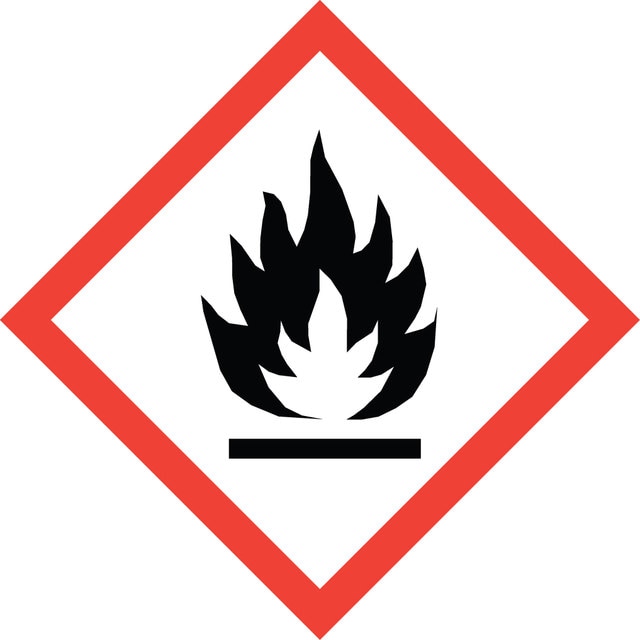


signalword
Danger
hcodes
Hazard Classifications
Carc. 1B - Eye Irrit. 2 - Flam. Liq. 2 - STOT SE 3
target_organs
Respiratory system
supp_hazards
Storage Class
3 - Flammable liquids
flash_point_f
51.8 °F - closed cup
flash_point_c
11 °C - closed cup
Regulatory Listings
Regulatory Listings are mainly provided for chemical products. Only limited information can be provided here for non-chemical products. No entry means none of the components are listed. It is the user’s obligation to ensure the safe and legal use of the product.
Class I Designated Chemical Substances
prtr
Group 4: Flammable liquids + Type 1 petroleums + Hazardous rank II + Water soluble liquid
fsl
Substances Subject to be Indicated Names
ishl_indicated
Substances Subject to be Notified Names
ishl_notified
D201863-20L:4.548173193861E12 + D201863-4L:4.548173193878E12 + D201863-18L:4.548173193847E12 + D201863-1L:4.548173193854E12
jan
Choose from one of the most recent versions:
Already Own This Product?
Find documentation for the products that you have recently purchased in the Document Library.