Skip to Content
Merck

E4143

(−)-Epigallocatechin gallate

≥95%

Synonym(s):

(−)-cis-2-(3,4,5-Trihydroxyphenyl)-3,4-dihydro-1(2H)-benzopyran-3,5,7-triol 3-gallate, (−)-cis-3,3′,4′,5,5′,7-Hexahydroxy-flavane-3-gallate, EGCG

Sign In to View Organizational & Contract Pricing.

Select a Size


About This Item

Empirical Formula (Hill Notation):
C22H18O11
CAS Number:
Molecular Weight:
458.37
NACRES:
NA.25
PubChem Substance ID:
UNSPSC Code:
12352205
MDL number:
Technical Service
Need help? Our team of experienced scientists is here for you.
Let Us Assist
Technical Service
Need help? Our team of experienced scientists is here for you.
Let Us Assist

Product Name

(−)-Epigallocatechin gallate, ≥95%

InChI

1S/C22H18O11/c23-10-5-12(24)11-7-18(33-22(31)9-3-15(27)20(30)16(28)4-9)21(32-17(11)6-10)8-1-13(25)19(29)14(26)2-8/h1-6,18,21,23-30H,7H2/t18-,21-/m1/s1

SMILES string

Oc1cc(O)c2C[C@@H](OC(=O)c3cc(O)c(O)c(O)c3)[C@H](Oc2c1)c4cc(O)c(O)c(O)c4

InChI key

WMBWREPUVVBILR-WIYYLYMNSA-N

assay

≥95%

solubility

H2O: ≥5 mg/mL, clear

application(s)

metabolomics
vitamins, nutraceuticals, and natural products

storage temp.

2-8°C

Quality Level

Gene Information

human ... CYP1A2(1544)

Looking for similar products? Visit Product Comparison Guide

Application

(-)-Epigallocatechin gallate has been used:
  • as an anti-tumor agent on murine TRAMP metastatic prostate cell line by cell proliferation assay, apoptosis detection and modified Boyden-chamber assay
  • induces cell death in acute myeloid leukaemia through death associated protein kinase-2 pathway analyzed through cell viability, cell cycle and apoptosis assay
  • as an inhibitor of osteoclast differentiation in murine preosteoclast cell line RAW264.7
  • to promote myogenic differentiation

Biochem/physiol Actions

(-)-Epigallocatechin gallate (EGCG), an antioxidant polyphenol flavonoid exerts anti-tumor properties by inhibiting telomerase and DNA methyltransferase activity. EGCG inhibits the expression of matrix metalloproteinase-2 (MMP-2), MMP-9 and reduces the invasiveness. EGCG blocks the activation of epidermal growth factor (EGF) receptors and human epidermal growth factor receptor-2 (HER-2). EGCG increases bone mineral density and reduces bone resorption. EGCG inhibits osteoclastogenesis by inhibiting receptor activator of nuclear factor κ-B ligand (RANKL) induced nuclear factor κ B (NF-κB) transcriptional activity. EGCG reduces skeletal muscle atrophy. EGCG has anti-aging property and increases myogenic differentiation. EGCG inhibits fatty acid synthase and glutamate dehydrogenase activity.

General description

(−)-Epigallocatechin gallate from green tea is the prime bioactive component, accounting for 50-80% of the total catechin content. It comprises a chemical structure similar to that of epicatechin gallate (ECG), an ester of gallic acid and epigallocatechin.

pictograms

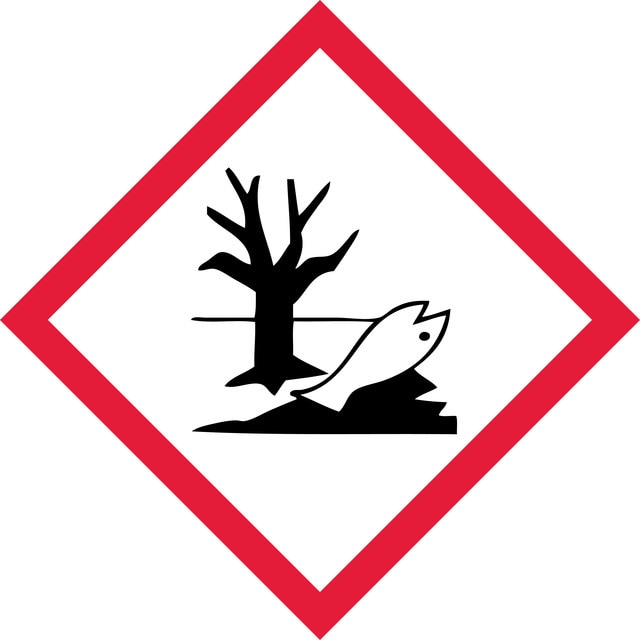
Exclamation markEnvironment

signalword

Warning

Hazard Classifications

Acute Tox. 4 Oral - Aquatic Chronic 2 - Eye Irrit. 2 - Skin Sens. 1

Storage Class

11 - Combustible Solids

wgk

WGK 2

flash_point_f

Not applicable

flash_point_c

Not applicable

ppe

Eyeshields, Gloves, type N95 (US)


Choose from one of the most recent versions:

Certificates of Analysis (COA)

Lot/Batch Number

Don't see the Right Version?

If you require a particular version, you can look up a specific certificate by the Lot or Batch number.

Already Own This Product?

Find documentation for the products that you have recently purchased in the Document Library.

Visit the Document Library

(-)-Epigallocatechin-3-gallate stimulates myogenic differentiation through TAZ activation
Kim AR, et al.
Biochemical and Biophysical Research Communications, 486(2), 378-384 (2017)
(-)-Epigallocatechin gallate inhibition of osteoclastic differentiation via NF-kappaB
Lin RW, et al.
Biochemical and Biophysical Research Communications, 379(4), 1033-1037 (2009)
Proposed mechanisms of (-)-epigallocatechin-3-gallate for anti-obesity
Moon HS, et al.
Chemico-Biological Interactions, 167(2), 85-98 (2007)
Prostate carcinoma and green tea:(-) epigallocatechin-3-gallate inhibits inflammation-triggered MMP-2 activation and invasion in murine TRAMP model
Sartor L, et al.
International Journal of Cancer. Journal International Du Cancer, 112(5), 823-829 (2004)
Bing Fu et al.
Oxidative medicine and cellular longevity, 2019, 7824684-7824684 (2019-04-10)
Green tea is one of the most beverages with antioxidants and nutrients. As one of the major components of green tea, (-)-epicatechin gallate (ECG) was evaluated for its antioxidative properties in the present study. Cell proliferation assay, tube formation, cell

Articles

Antioxidants protect biological systems from oxidative damage produced by oxygen-containing free radicals and from redoxactive transition metal ions such as iron, copper, and cadmium.

Sigma article discusses tumor cell metabolic pathways, focusing on aerobic glycolysis and mitochondrial activity.

Chronic inflammation is an underlying factor in the development and progression of many of the chronic diseases of aging, such as arthritis, atherosclerosis, diabetes, and cancer.

Fatty acid synthesis supports cancer cell proliferation, essential for membrane generation, protein modification, and bioenergetics.

See All

Our team of scientists has experience in all areas of research including Life Science, Material Science, Chemical Synthesis, Chromatography, Analytical and many others.

Contact Technical Service