Skip to Content
Merck

G6910

Ginkgolide B from Ginkgo biloba leaves

≥90% (HPLC)

Synonym(s):

BN-52021

Sign In to View Organizational & Contract Pricing.

Select a Size


About This Item

Empirical Formula (Hill Notation):
C20H24O10
CAS Number:
Molecular Weight:
424.40
NACRES:
NA.24
PubChem Substance ID:
UNSPSC Code:
85151701
MDL number:
Technical Service
Need help? Our team of experienced scientists is here for you.
Let Us Assist
Technical Service
Need help? Our team of experienced scientists is here for you.
Let Us Assist

InChI

1S/C20H24O10/c1-6-12(23)28-11-9(21)18-8-5-7(16(2,3)4)17(18)10(22)13(24)29-15(17)30-20(18,14(25)27-8)19(6,11)26/h6-11,15,21-22,26H,5H2,1-4H3/t6-,7+,8-,9+,10+,11+,15+,17+,18+,19-,20-/m1/s1

SMILES string

C[C@@H]1C(=O)O[C@H]2[C@H](O)[C@@]34[C@H]5C[C@@H](C(C)(C)C)[C@@]36[C@@H](O)C(=O)O[C@H]6O[C@@]4(C(=O)O5)[C@@]12O

InChI key

SQOJOAFXDQDRGF-MMQTXUMRSA-N

assay

≥90% (HPLC)

technique(s)

HPLC: suitable, gas chromatography (GC): suitable

application(s)

food and beverages

format

neat

storage temp.

−20°C

Quality Level

Looking for similar products? Visit Product Comparison Guide

Related Categories

Application

Ginkgolide B from Ginkgo biloba leaves is used as an analytical reference standard:
  • For the chromatographic separation of the analyte in Ginkgo biloba leaves extract and to study the antimicrobial activity exerted on a variety of Gram-positive and -negative bacteria and yeasts.
  • For the determination of the analyte in Ginkgo biloba L. phytopharmaceuticals using high-performance liquid chromatography technique.

Refer to the product′s Certificate of Analysis for more information on a suitable instrument technique. Contact Technical Service for further support.

Biochem/physiol Actions

Primary constituent of Ginkgo biloba. Potential anticancer agent and neuroprotective.

General description

Ginkgolide B from Ginkgo biloba leaves is a terpene lactone and one of the main molecular form of ginkgolides, present in Ginkgo biloba leaves. It is widely used to treat peripheral and cerebral circulation disorders.

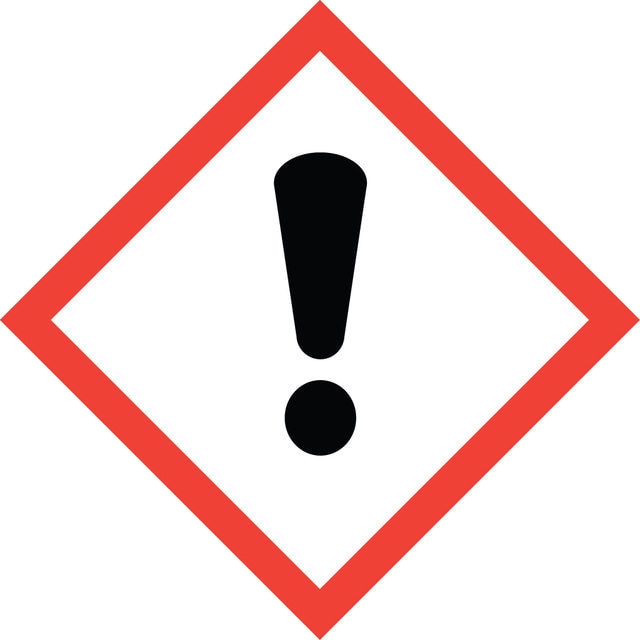
pictograms

Exclamation mark

signalword

Warning

Hazard Classifications

Eye Irrit. 2 - Skin Irrit. 2 - STOT SE 3

target_organs

Respiratory system

Storage Class

11 - Combustible Solids

wgk

WGK 3

flash_point_f

Not applicable

flash_point_c

Not applicable

ppe

Eyeshields, Gloves, type N95 (US)


Regulatory Listings

Regulatory Listings are mainly provided for chemical products. Only limited information can be provided here for non-chemical products. No entry means none of the components are listed. It is the user’s obligation to ensure the safe and legal use of the product.

G6910-VAR: + G6910-10MG: + G6910-BULK: + G6910-50MG:

jan


Choose from one of the most recent versions:

Certificates of Analysis (COA)

Lot/Batch Number

Don't see the Right Version?

If you require a particular version, you can look up a specific certificate by the Lot or Batch number.

Already Own This Product?

Find documentation for the products that you have recently purchased in the Document Library.

Visit the Document Library

Christoph A Reichel et al.
PloS one, 6(2), e17229-e17229 (2011-03-03)
Clinical trials revealed beneficial effects of the broad-spectrum serine protease inhibitor aprotinin on the prevention of ischemia-reperfusion (I/R) injury. The underlying mechanisms remained largely unclear. Using in vivo microscopy on the cremaster muscle of male C57BL/6 mice, aprotinin as well
Antimicrobial investigation of semi-purified fractions of Ginkgo biloba leaves
Mazzanti.G, et al.
Journal of Ethnopharmacology, 71(1-2), 83-88 (2005)
Vyala Hanumanthareddy Chaithra et al.
Journal of lipid research, 59(11), 2063-2074 (2018-08-25)
Platelet-activating factor (PAF) is a potent inflammatory mediator that exerts its actions via the single PAF receptor (PAF-R). Cells that biosynthesize alkyl-PAF also make abundant amounts of the less potent PAF analogue acyl-PAF, which competes for PAF-R. Both PAF species
Karyn M Maclennan et al.
Progress in neurobiology, 67(3), 235-257 (2002-08-10)
Ginkgo biloba extracts such as EGb-761 have been suggested to have a multitude of beneficial effects on CNS function, from enhancing cognitive function in dementia to facilitating recovery from acute forms of neural damage such as hypoxia/ischemia. Ginkgolide B, one
Xiao Chu et al.
Molecules (Basel, Switzerland), 16(9), 7634-7648 (2011-09-09)
Ginkgolide B is an anti-inflammatory extract of Ginkgo biloba and has been used therapeutically. It is a known inhibitor of platelet activating factor (PAF), which is important in the pathogenesis of asthma. Here, a non-infectious mouse model of asthma is

Our team of scientists has experience in all areas of research including Life Science, Material Science, Chemical Synthesis, Chromatography, Analytical and many others.

Contact Technical Service