
P8139

Phorbol 12-myristate 13-acetate
≥99% (TLC), film or powder, PKC activator
Synonym(s):
12-O-Tetradecanoylphorbol 13-acetate, 4β,9α,12β,13α,20-Pentahydroxytiglia-1,6-dien-3-one 12-tetradecanoate 13-acetate, PMA, TPA
Select a Size
About This Item
Product Name
Phorbol 12-myristate 13-acetate, ≥99% (TLC), film or powder
InChI
1S/C36H56O8/c1-7-8-9-10-11-12-13-14-15-16-17-18-29(39)43-32-24(3)35(42)27(30-33(5,6)36(30,32)44-25(4)38)20-26(22-37)21-34(41)28(35)19-23(2)31(34)40/h19-20,24,27-28,30,32,37,41-42H,7-18,21-22H2,1-6H3/t24-,27+,28-,30-,32-,34-,35-,36-/m1/s1
SMILES string
CCCCCCCCCCCCCC(=O)O[C@@H]1[C@@H](C)[C@@]2(O)C(C=C(CO)C[C@@]3(O)C2C=C(C)C3=O)C4C(C)(C)[C@]14OC(C)=O
InChI key
PHEDXBVPIONUQT-RGYGYFBISA-N
assay
≥99% (TLC)
form
film or powder
solubility
DMSO: soluble, ethanol: soluble (Dissolve in water-miscible organic solvent prior to preparing aqueous solutions.)
storage temp.
−20°C
Quality Level
Looking for similar products? Visit Product Comparison Guide
Related Categories
General description
Application
- to induce differentiation of THP-1monocytes to macrophage.
- to stimulate the proliferation of peripheral blood lymphocytes.
- to induce respiratory bursts and enhance the generation of ultra-weak photon emission (UPE) from the neutrophil-like cells derived from HL-60 cells.
- in conjugation with Ionomycin calcium salt to stimulate T-cell activation
- for the stimulation of various cells including spleen cells, quiescent lymphocytes, and fetal thymocytes.
- for the activation of PKC (protein kinase C) in cells.
Features and Benefits
Disclaimer

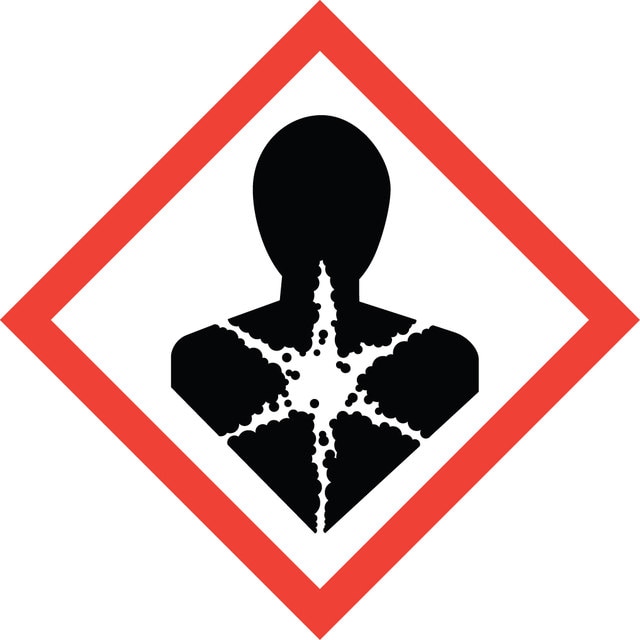

signalword
Danger
Hazard Classifications
Acute Tox. 1 Dermal - Acute Tox. 1 Inhalation - Acute Tox. 2 Oral - Carc. 2 - Eye Dam. 1 - Resp. Sens. 1 - Skin Corr. 1B - Skin Sens. 1
Storage Class
6.1A - Combustible acute toxic Cat. 1 and 2 / very toxic hazardous materials
wgk
WGK 3
ppe
dust mask type N95 (US), Eyeshields, Gloves
Regulatory Listings
Regulatory Listings are mainly provided for chemical products. Only limited information can be provided here for non-chemical products. No entry means none of the components are listed. It is the user’s obligation to ensure the safe and legal use of the product.
P8139-25MG: + P8139-5MG: + P8139-1MG-PW: + P8139-10MG: + P8139-1MG: + P8139-10MG-PW: + P8139-BULK: + P8139-25MG-PW: + P8139-VAR: + P8139-5MG-PW:
jan
Choose from one of the most recent versions:
Already Own This Product?
Find documentation for the products that you have recently purchased in the Document Library.
Articles
Cancer research has revealed that the classical model of carcinogenesis, a three step process consisting of initiation, promotion, and progression, is not complete.
Cancer research has revealed that the classical model of carcinogenesis, a three step process consisting of initiation, promotion, and progression, is not complete.
Related Content
Our team of scientists has experience in all areas of research including Life Science, Material Science, Chemical Synthesis, Chromatography, Analytical and many others.
Contact Technical Service