
109819

プロピルアミン
98%
別名:
1-アミノプロパン
ログインで組織・契約価格をご覧ください。
サイズを選択してください
表示を変更する
この商品について
化学式:
CH3CH2CH2NH2
CAS番号:
分子量:
59.11
NACRES:
NA.22
PubChem Substance ID:
eCl@ss:
39030103
UNSPSC Code:
12352100
EC Number:
203-462-3
MDL number:
Beilstein/REAXYS Number:
1098243
Assay:
98%
vapor density
2 (vs air)
Quality Level
vapor pressure
4.79 psi ( 20 °C)
assay
98%
autoignition temp.
604 °F
expl. lim.
10.4 %
refractive index
n20/D 1.388 (lit.)
bp
48 °C (lit.)
mp
−83 °C (lit.)
solubility
H2O: miscible, alcohol: miscible, diethyl ether: miscible
density
0.719 g/mL at 25 °C (lit.)
functional group
amine
storage temp.
2-8°C
SMILES string
CCCN
InChI
1S/C3H9N/c1-2-3-4/h2-4H2,1H3
InChI key
WGYKZJWCGVVSQN-UHFFFAOYSA-N
Application
プロピルアミンはシリカフェリエライトの単結晶の合成に用いられています。
Still not finding the right product?
Explore all of our products under プロピルアミン
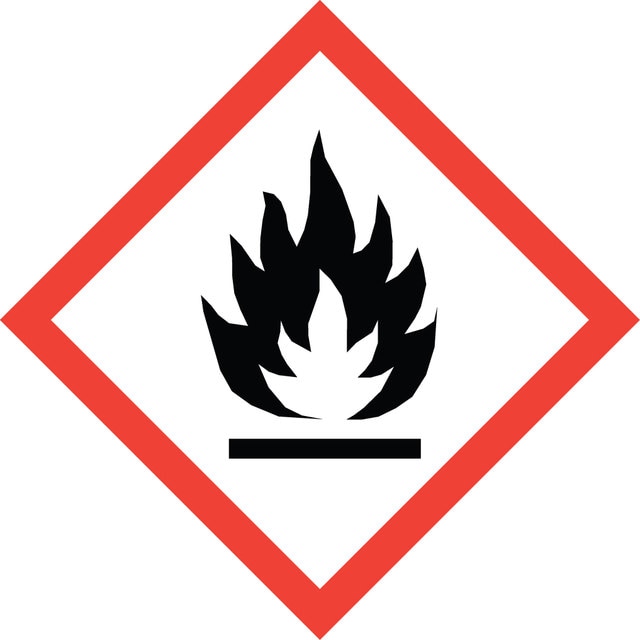
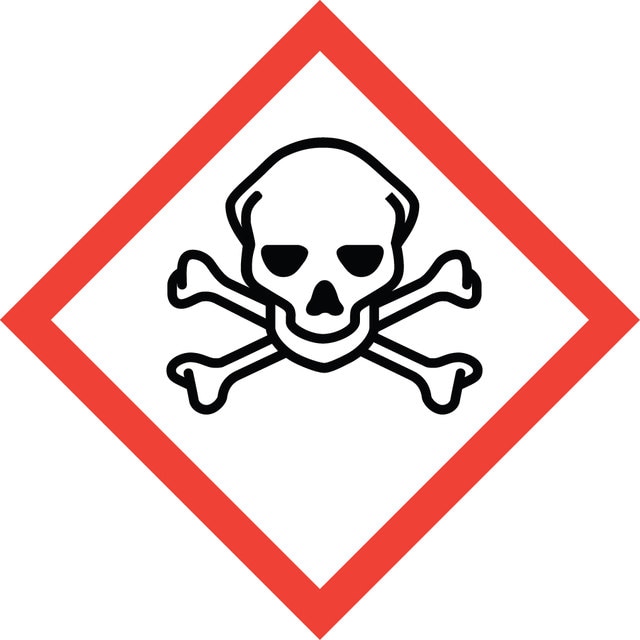

signalword
Danger
Hazard Classifications
Acute Tox. 3 Dermal - Acute Tox. 3 Inhalation - Acute Tox. 4 Oral - Eye Dam. 1 - Flam. Liq. 2 - Met. Corr. 1 - Skin Corr. 1B - STOT SE 3
target_organs
Respiratory system
保管分類
3 - Flammable liquids
wgk
WGK 1
flash_point_f
<-31.0 °F
flash_point_c
< -35 °C
ppe
Faceshields, Gloves, Goggles
適用法令
試験研究用途を考慮した関連法令を主に挙げております。化学物質以外については、一部の情報のみ提供しています。 製品を安全かつ合法的に使用することは、使用者の義務です。最新情報により修正される場合があります。WEBの反映には時間を要することがあるため、適宜SDSをご参照ください。
第4類:引火性液体 + 第一石油類 + 危険等級II + 水溶性液体
fsl
名称等を表示すべき危険物及び有害物
ishl_indicated
名称等を通知すべき危険物及び有害物
ishl_notified
109819-1L:4.548173396583E12 + 109819-250ML:4.54817339659E12
jan
Synthesis and characterisation of a linear [Cu (pyr) 2] 2+ complex in siliceous ferrierite.
Journal of Materials Chemistry, 10(9), 2109-2113 (2000)
Hernán Ariel Castro et al.
Environmental science and pollution research international, 25(22), 21403-21410 (2017-03-25)
Polystyrene divinylbenzene-based ion exchange resins are employed extensively within nuclear power plants (NPPs) and research reactors for purification and chemical control of the cooling water system. To maintain the highest possible water quality, the resins are regularly replaced as they
Chaoqun Wu et al.
Nanomaterials (Basel, Switzerland), 9(5) (2019-05-10)
Zwitterionic polymers are suitable for replacing poly(ethylene glycol) (PEG) polymers because of their better antifouling properties, but zwitterionic polymers have poor mechanical properties, strong water absorption, and their homopolymers should not be used directly. To solve these problems, a reversible-addition