
139181

ブロモジクロロメタン
≥97%
別名:
ジクロロブロモメタン
ログインで組織・契約価格をご覧ください。
サイズを選択してください
この商品について
化学式:
BrCHCl2
CAS番号:
分子量:
163.83
UNSPSC Code:
12352100
NACRES:
NA.22
PubChem Substance ID:
EC Number:
200-856-7
Beilstein/REAXYS Number:
1697005
MDL number:
Assay:
≥97%
Form:
liquid
InChI key
FMWLUWPQPKEARP-UHFFFAOYSA-N
InChI
1S/CHBrCl2/c2-1(3)4/h1H
SMILES string
ClC(Cl)Br
assay
≥97%
form
liquid
contains
potassium carbonate as stabilizer
refractive index
n20/D 1.497 (lit.)
bp
87 °C (lit.)
mp
−55 °C (lit.)
solubility
water: insoluble
density
1.98 g/mL at 25 °C (lit.)
functional group
bromo, chloro
Quality Level
類似した製品をお探しですか? 訪問 製品比較ガイド
関連するカテゴリー
Application
ブロモジクロロメタンは、マウスでのクロロジブロモメタン、ブロモジクロロメタンおよびブロモホルムのin vivo遺伝毒性の研究に使用されました。
Biochem/physiol Actions
ブロモジクロロメタン(BDCM)はヒト肝臓の脂肪性肝炎様障害を誘発します。BDCMは様々な組織における細胞増殖および雄のF344ラットにおける腎細管細胞増殖による腎臓の障害を誘発します。
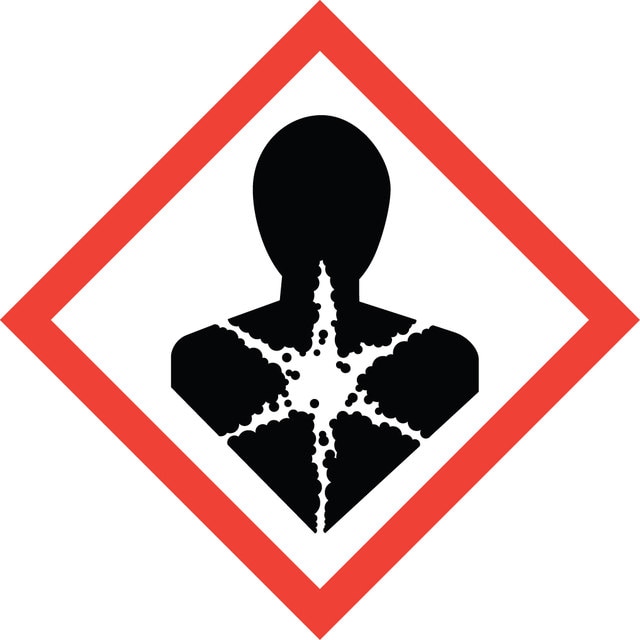
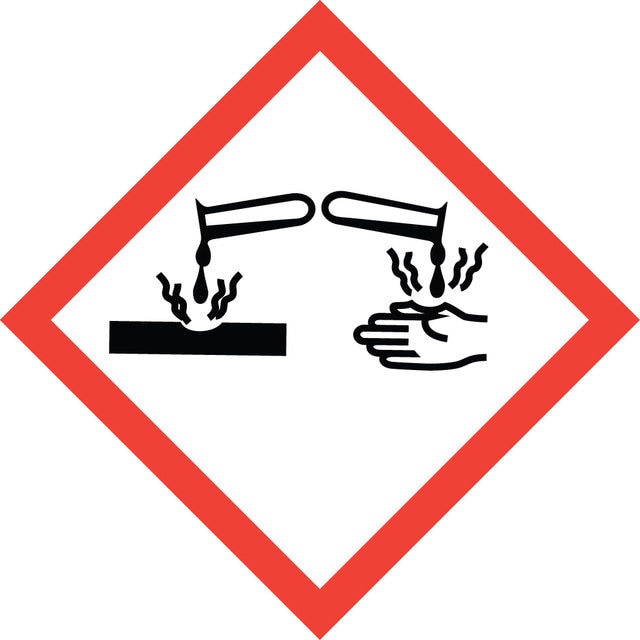

signalword
Danger
hcodes
Hazard Classifications
Acute Tox. 4 Oral - Carc. 2 - Eye Dam. 1 - Skin Irrit. 2 - STOT SE 3
target_organs
Respiratory system
保管分類
10 - Combustible liquids
wgk
WGK 3
flash_point_f
Not applicable
flash_point_c
Not applicable
ppe
Eyeshields, Faceshields, Gloves, type ABEK (EN14387) respirator filter
適用法令
試験研究用途を考慮した関連法令を主に挙げております。化学物質以外については、一部の情報のみ提供しています。 製品を安全かつ合法的に使用することは、使用者の義務です。最新情報により修正される場合があります。WEBの反映には時間を要することがあるため、適宜SDSをご参照ください。
第一種指定化学物質
prtr
名称等を表示すべき危険物及び有害物
ishl_indicated
名称等を通知すべき危険物及び有害物
ishl_notified
139181-10G:4548173928753 + 139181-BULK: + 139181-50G:4548173928760 + 139181-VAR: + 139181-100G:4548173928746
jan
K J Stocker et al.
Mutagenesis, 12(3), 169-173 (1997-05-01)
Chlorination of drinking water results in the formation of chlorodibromomethane, bromodichloromethane and bromoform. These trihalomethanes have all shown evidence of genotoxicity in bacterial and mammalian cell systems in vitro and some evidence of carcinogenicity in rodents. Chlorodibromomethane and bromodichloromethane have
Suvarthi Das et al.
American journal of physiology. Gastrointestinal and liver physiology, 305(12), G950-G963 (2013-10-26)
Recent studies indicate that metabolic oxidative stress, autophagy, and inflammation are hallmarks of nonalcoholic steatohepatitis (NASH) progression. However, the molecular mechanisms that link these important events in NASH remain unclear. In this study, we investigated the mechanistic role of purinergic
Ted Lock et al.
Archives of toxicology, 78(7), 410-417 (2004-05-14)
Male F344 rats exposed to bromodichloromethane (BDCM) by gavage at 50 or 100 mg/kg/day for 5 days a week for 28 days excreted large amounts of formic acid in their urine, which was accompanied by a change in urinary pH.
Regina Grazuleviciene et al.
Occupational and environmental medicine, 70(4), 274-282 (2013-02-14)
Congenital anomalies have been inconsistently associated with maternal crude estimated exposure to drinking water trihalomethane (THM). We investigated the relationship between individual THM uptake during the first trimester of pregnancy and congenital anomalies. We estimated maternal THM uptake for 3074
Teresa L Leavens et al.
Toxicological sciences : an official journal of the Society of Toxicology, 99(2), 432-445 (2007-07-28)
Exposure to bromodichloromethane (BDCM), one of the most prevalent disinfection byproducts in drinking water, can occur via ingestion of water and by dermal absorption and inhalation during activities such as bathing and showering. The objectives of this research were to
ライフサイエンス、有機合成、材料科学、クロマトグラフィー、分析など、あらゆる分野の研究に経験のあるメンバーがおります。.
製品に関するお問い合わせはこちら(テクニカルサービス)