コンテンツへスキップ
Merck

437867

臭化銅(II)

99.999% trace metals basis

別名:

臭化第二銅

ログインで組織・契約価格をご覧ください。

サイズを選択してください


この商品について

化学式:
CuBr2
CAS番号:
分子量:
223.35
NACRES:
NA.23
PubChem Substance ID:
UNSPSC Code:
12352302
EC Number:
232-167-2
MDL number:
Assay:
99.999% trace metals basis
Form:
solid
テクニカルサービス
お困りのことがあれば、経験豊富なテクニカルサービスチームがお客様をサポートします。
お手伝いします
テクニカルサービス
お困りのことがあれば、経験豊富なテクニカルサービスチームがお客様をサポートします。
お手伝いします

InChI key

QTMDXZNDVAMKGV-UHFFFAOYSA-L

InChI

1S/2BrH.Cu/h2*1H;/q;;+2/p-2

SMILES string

Br[Cu]Br

assay

99.999% trace metals basis

form

solid

reaction suitability

core: copper

impurities

≤15.0 ppm Trace Metal Analysis

mp

498 °C (lit.)

density

4.77 g/mL at 25 °C (lit.)

Quality Level

類似した製品をお探しですか? 訪問 製品比較ガイド

General description

Copper bromide is a monoclinic crystalline material. It is soluble in water, alcohol and acetone. It may be synthesized by neutralizing oxides, carbonates or hydroxides of copper with hydrobromic acid. Another synthesis technique is by oxidizing copper either with bromine water or bromine solutions in alcohol.

Application

Copper bromide may be used as a catalyst in organic reactions and as a brominating agent. Copper catalyzed biotinylation of acetylene terminated poly(ethylene glycol) methyl ether methylacrylate (PEGMEMA) chains has been investigated. Copper dibromide in acetonitrile acts as a catalyst in the interconversion of acetals to bis(methoxyphenyl)methyl (BMPM) ethers. It has been used as a catalyst in the intramolecular decarboxylative functionalization of α-carbonyl to yield a C(sp(3))-O bond for the synthesis of furo[3,2-c]coumarins. Poly(3,4-ethylene dioxythiophene):poly(styrenesulfonate) (PEDOT:PSS) has been reportedly doped with CuBr2 to act as hole transport layer (HTL) in polymer solar cells(PSCs). Doping increase the conductivity and thereby increasing the device power conversion efficiency of PSCs.

signalword

Danger

Hazard Classifications

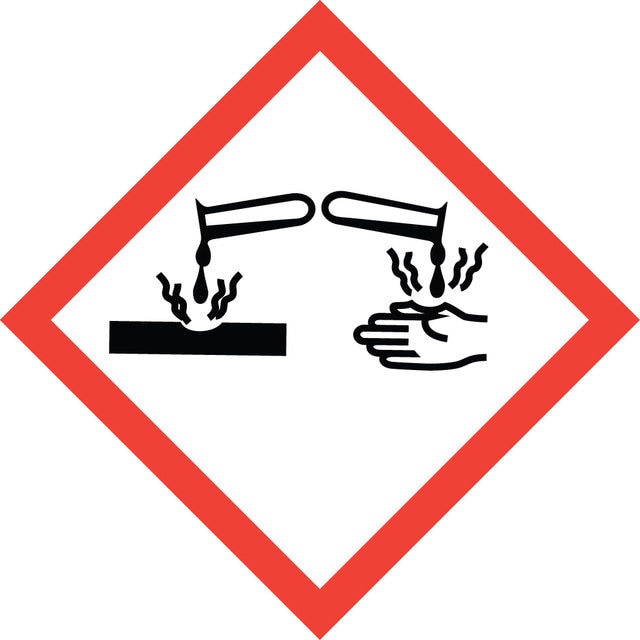
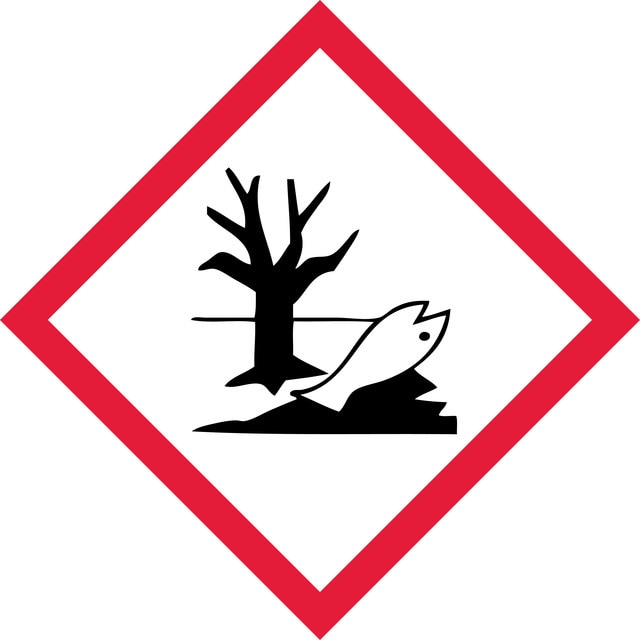
Acute Tox. 4 Oral - Aquatic Acute 1 - Aquatic Chronic 1 - Eye Dam. 1 - Skin Corr. 1B

保管分類

8A - Combustible corrosive hazardous materials

wgk

WGK 3

ppe

Eyeshields, Faceshields, Gloves, type P3 (EN 143) respirator cartridges


適用法令

試験研究用途を考慮した関連法令を主に挙げております。化学物質以外については、一部の情報のみ提供しています。 製品を安全かつ合法的に使用することは、使用者の義務です。最新情報により修正される場合があります。WEBの反映には時間を要することがあるため、適宜SDSをご参照ください。

劇物

pdsc

第一種指定化学物質

prtr

名称等を表示すべき危険物及び有害物

ishl_indicated

名称等を通知すべき危険物及び有害物

ishl_notified

437867-25G:4548173150321 + 437867-BULK: + 437867-VAR: + 437867-5G:4548173150338

jan


最新バージョンのいずれかを選択してください:

試験成績書(COA)

Lot/Batch Number

適切なバージョンが見つかりませんか。

特定のバージョンが必要な場合は、ロット番号またはバッチ番号で特定の証明書を検索できます。

以前この製品を購入いただいたことがある場合

文書ライブラリで、最近購入した製品の文書を検索できます。

文書ライブラリにアクセスする

Copper(II) bromide as an efficient catalyst for acetal to bisarylmethyl ether interconversion
Mezaache R, et al.
Tetrahedron Letters, 55(52), 7167-7171 (2014)
Richardson HW
Handbook of Copper Compounds and Applications null
Gavin T Knight et al.
Journal of visualized experiments : JoVE, 92(92), e52186-e52186 (2014-11-20)
In tissue engineering, it is desirable to exhibit spatial control of tissue morphology and cell fate in culture on the micron scale. Culture substrates presenting grafted poly(ethylene glycol) (PEG) brushes can be used to achieve this task by creating microscale
Zhiqiang Zhao et al.
ACS applied materials & interfaces, 7(3), 1439-1448 (2014-12-24)
Copper(II) bromide (CuBr2) salt has been applied to dope poly(3,4-ethylene dioxythiophene):poly(styrenesulfonate) (PEDOT:PSS) as the hole transport layer (HTL) in polymer solar cells (PSCs), improving dramatically the conductivity of PEDOT:PSS film and consequently the device power conversion efficiency (PCE). Under the
Copper(ii) bromide-catalyzed intramolecular decarboxylative functionalization to form a C(sp(3))-O bond for the synthesis of furo[3,2-c]coumarins.
Zhang WL, et al.
Organic & Biomolecular Chemistry, 13(12), 3602-3609 null

資料

Oxidation and reduction reactions are some of the most common transformations encountered in organic synthesis

Micro Review:RAFT(可逆的付加/開裂連鎖移動)重合

Micro review of reversible addition/fragmentation chain transfer (RAFT) polymerization.

プロトコル

We present an article about RAFT, or Reversible Addition/Fragmentation Chain Transfer, which is a form of living radical polymerization.

Polymerization via ATRP procedures demonstrated by Prof. Dave Haddleton's research group at the University of Warwick.

We presents an article featuring procedures that describe polymerization of methyl methacrylate and vinyl acetate homopolymers and a block copolymer as performed by researchers at CSIRO.

ウォーリック大学のProf. Dave Haddletonの研究グループによって実証された、ATRPによる重合。

すべて表示

ライフサイエンス、有機合成、材料科学、クロマトグラフィー、分析など、あらゆる分野の研究に経験のあるメンバーがおります。.

製品に関するお問い合わせはこちら(テクニカルサービス)