コンテンツへスキップ
Merck

517453

酢酸銅(II)

greener alternative

powder, 99.99% trace metals basis

別名:

酢酸第二銅

ログインで組織・契約価格をご覧ください。

サイズを選択してください


この商品について

化学式:
Cu(CO2CH3)2
CAS番号:
分子量:
181.63
UNSPSC Code:
12352103
NACRES:
NA.23
PubChem Substance ID:
EC Number:
205-553-3
Beilstein/REAXYS Number:
3595638
MDL number:
テクニカルサービス
お困りのことがあれば、経験豊富なテクニカルサービスチームがお客様をサポートします。
お手伝いします
テクニカルサービス
お困りのことがあれば、経験豊富なテクニカルサービスチームがお客様をサポートします。
お手伝いします

InChI key

OPQARKPSCNTWTJ-UHFFFAOYSA-L

InChI

1S/2C2H4O2.Cu/c2*1-2(3)4;/h2*1H3,(H,3,4);/q;;+2/p-2

SMILES string

CC(=O)O[Cu]OC(C)=O

vapor density

6.9 (vs air)

assay

99.99% trace metals basis

form

powder

reaction suitability

core: copper

greener alternative product characteristics

Catalysis
Learn more about the Principles of Green Chemistry.

sustainability

Greener Alternative Product

Quality Level

bp

100 °C (212 °F)

greener alternative category

類似した製品をお探しですか? 訪問 製品比較ガイド

General description

メルクは、グリーンケミストリーの12原則の1つ以上に則った、より環境に配慮した製品(グリーン代替品)をお客様にお届けできるよう最善の努力をします。この製品は、触媒効率を向上させた製品です。より詳細な情報についてはこちらをクリックしてください。
Copper(II) acetate, also known as cupric acetate, is commonly used as a precursor in the synthesis of copper-containing materials such as nanoparticles and thin films. Its good solubility in water and organic solvents makes it well-suited for solution-based methods like sol-gel processing and spin coating. It serves as a reliable source of Cu²⁺ ions, which are essential for producing copper-based nanomaterials, metal–organic frameworks (MOFs), and various catalysts. Additionally, it decomposes into copper oxides (CuO, Cu₂O) at moderate temperatures, making it valuable for thin-film deposition in applications like sensors, solar cells, and semiconductor devices

Application

Copper acetate (Cu(OAc)₂) is used as a precursor:
  • For the synthesis of copper(I) oxide (Cu₂O) thin films via atomic layer deposition (ALD) which are used in the fabrication of photoconductor devices solar cells, and thin film transistors.
  • In the synthesis of Cu-Doped ZnO Thin Films via Sol–Gel process for Optoelectronic Applications.
  • In the green synthesis of copper and copper oxide nanoparticles. The resulting nanoparticles exhibited antibacterial and antifungal activities, making them valuable in biomedical applications and environmental remediation.

Features and Benefits

  • (99.99% trace metals basis) ensures that there are minimal impurities, which enhances the efficiency and selectivity of the catalytic processes, such as oxidation and coupling reactions leading to higher yields and fewer by-products.
  • The absence of impurities in high purity copper(II) acetate leads to vibrant colours and improved stability of the pigments, enhancing the overall quality of the final products

signalword

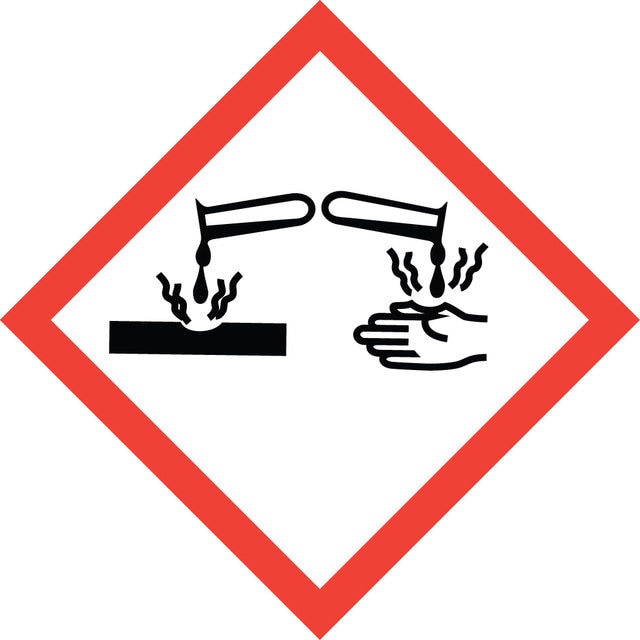
Danger

Hazard Classifications

Acute Tox. 4 Oral - Aquatic Acute 1 - Aquatic Chronic 2 - Skin Corr. 1B

保管分類

8B - Non-combustible corrosive hazardous materials

wgk

WGK 3

flash_point_f

does not flash

flash_point_c

does not flash

ppe

dust mask type N95 (US), Eyeshields, Gloves


適用法令

試験研究用途を考慮した関連法令を主に挙げております。化学物質以外については、一部の情報のみ提供しています。 製品を安全かつ合法的に使用することは、使用者の義務です。最新情報により修正される場合があります。WEBの反映には時間を要することがあるため、適宜SDSをご参照ください。

劇物

pdsc

第一種指定化学物質

prtr

名称等を表示すべき危険物及び有害物

ishl_indicated

名称等を通知すべき危険物及び有害物

ishl_notified

517453-5G:4548173165004 + 517453-BULK: + 517453-VAR: + 517453-25G:4548173164991

jan


最新バージョンのいずれかを選択してください:

試験成績書(COA)

Lot/Batch Number

適切なバージョンが見つかりませんか。

特定のバージョンが必要な場合は、ロット番号またはバッチ番号で特定の証明書を検索できます。

以前この製品を購入いただいたことがある場合

文書ライブラリで、最近購入した製品の文書を検索できます。

文書ライブラリにアクセスする

Stereoselective differentiation between ribonucleosides and deoxynucleosides by reaction with the copper(II) acetate dimer.
N A Berger et al.
Nature: New biology, 239(95), 237-240 (1972-10-25)
Quantitative densitometric thin-layer chromatography of lipids using copper acetate reagent.
M E Fewster et al.
Journal of chromatography, 43(1), 120-126 (1969-08-05)
Michael Devereux et al.
Journal of inorganic biochemistry, 98(6), 1023-1031 (2004-05-20)
Thiabendazole (TBZH) reacts with iron(III) nitrate causing protonation of the ligand to yield the nitrate salt [TBZH(2)NO(3)] (1). Reaction of TBZH with copper(II) acetate results in the deprotonation of the ligand yielding [Cu(TBZ)2.(H2O)2] (2). Reactions of TBZH with the chloride
Manpreet Kaur et al.
Nanoscale research letters, 13(1), 182-182 (2018-06-20)
Here, we report efficient composition-tunable Cu-doped ZnInS/ZnS (core and core/shell) colloidal nanocrystals (CNCs) synthesized by using a colloidal non-injection method. The initial precursors for the synthesis were used in oleate form rather than in powder form, resulting in a nearly
Hanmei Zheng et al.
The Journal of organic chemistry, 74(2), 943-945 (2008-12-11)
A novel copper-catalyzed protocol for the synthesis of carbinol derivatives has been developed. In the presence of copper(II) acetate and dppf, carbinol derivatives were prepared by the addition of arylboronic acids to aromatic aldehydes in good to excellent yields. Moreover

資料

Oxidation and reduction reactions are some of the most common transformations encountered in organic synthesis

ALD開発におけるマイクロエレクトロニクス相互接続には、銅蒸着プロセスが欠かせません。

スペクトル変換におけるランタノイドイオンは、光子変換によって太陽電池の効率を高めます。

Copper metal deposition processes are an essential tool for depositing interconnects used in microelectronic applications, giving group 11 (coinage metals: Copper, Silver, and Gold) an important place in atomic layer deposition (ALD) process development.

すべて表示

ライフサイエンス、有機合成、材料科学、クロマトグラフィー、分析など、あらゆる分野の研究に経験のあるメンバーがおります。.

製品に関するお問い合わせはこちら(テクニカルサービス)