
759414

オルトケイ酸テトラエチル
packaged for use in deposition systems
別名:
オルトケイ酸テトラエチル, オルトケイ酸テトラエチルエステル, TEOS, テトラエトキシシラン
で組織・契約価格をご覧ください。
サイズを選択してください
表示を変更する
この商品について
化学式:
Si(OC2H5)4
CAS番号:
分子量:
208.33
UNSPSC Code:
12352103
NACRES:
NA.23
PubChem Substance ID:
EC Number:
201-083-8
Beilstein/REAXYS Number:
1422225
MDL number:
vapor density
7.2 (vs air)
Quality Segment
vapor pressure
<1 mmHg ( 20 °C)
assay
≥99.5% (GC)
form
liquid
refractive index
n20/D 1.382 (lit.)
bp
168 °C (lit.)
density
0.933 g/mL at 20 °C (lit.)
SMILES string
CCO[Si](OCC)(OCC)OCC
InChI
1S/C8H20O4Si/c1-5-9-13(10-6-2,11-7-3)12-8-4/h5-8H2,1-4H3
InChI key
BOTDANWDWHJENH-UHFFFAOYSA-N
Application
H+-マガジイトの層間化合物形成においてドデシルアミンと相互作用します。混合金属生体活性ガラスの研究に使用されます。
キセロゲル調製の前駆体として広く用いられています。
Tetraethyl orthosilicate (TEOS) is an oxygen containing precursor of Si used for the deposition of:
The films can be deposited at low temperatues (<250 °C). TEOS is also used to deposit mesoporous and nanoporous thin films of silica. These porous films can be doped during deposition to further enhance their properties.
- Si oxide
- Oxycarbide
- Doped silicate
- Silanol
- Siloxane polymer
- Organosilicon thin films
The films can be deposited at low temperatues (<250 °C). TEOS is also used to deposit mesoporous and nanoporous thin films of silica. These porous films can be doped during deposition to further enhance their properties.
Still not finding the right product?
Explore all of our products under オルトケイ酸テトラエチル
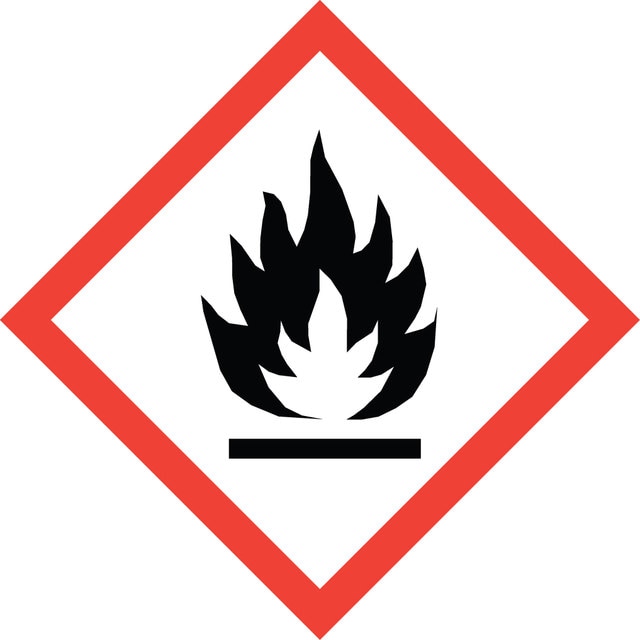

signalword
Warning
hcodes
Hazard Classifications
Acute Tox. 4 Inhalation - Eye Irrit. 2 - Flam. Liq. 3 - STOT SE 3
target_organs
Respiratory system
保管分類
3 - Flammable liquids
wgk
WGK 1
flash_point_f
113.0 °F - closed cup
flash_point_c
45 °C - closed cup
適用法令
試験研究用途を考慮した関連法令を主に挙げております。化学物質以外については、一部の情報のみ提供しています。 製品を安全かつ合法的に使用することは、使用者の義務です。最新情報により修正される場合があります。WEBの反映には時間を要することがあるため、適宜SDSをご参照ください。
第4類:引火性液体 + 第二石油類 + 危険等級III + 非水溶性液体
fsl
名称等を表示すべき危険物及び有害物
ishl_indicated
名称等を通知すべき危険物及び有害物
ishl_notified