
771937

白金
nanopowder, 200 nm particle size (SEM), 99.9% (metals basis)

より環境に優しい選択肢
別名:
Platinum black, Platinum element
ログインで組織・契約価格をご覧ください。
サイズを選択してください
表示を変更する
この商品について
化学式:
Pt
CAS番号:
分子量:
195.08
NACRES:
NA.23
PubChem Substance ID:
UNSPSC Code:
11101803
EC Number:
231-116-1
MDL number:
Quality Segment
assay
99.9% (metals basis)
form
nanopowder
reaction suitability
reagent type: catalyst
core: platinum
greener alternative product characteristics
Design for Energy Efficiency
Learn more about the Principles of Green Chemistry.
sustainability
Greener Alternative Product
resistivity
10.6 μΩ-cm, 20°C
particle size
200 nm (SEM)
bp
3827 °C (lit.)
mp
1772 °C (lit.)
density
21.45 g/cm3 (lit.)
application(s)
hydrogen and fuel cell
greener alternative category
SMILES string
[Pt]
InChI
1S/Pt
InChI key
BASFCYQUMIYNBI-UHFFFAOYSA-N
General description
Platinum nanopowder has a high catalytic activity and is used widely in catalysis, batteries, fuel cells, capacitors and sensors. They are used in the synthesis of counter electrode in dyes sensitized solar cells. Since it is difficult to directly use platinum nanoparticle as the electrode, they are usually surface supported on graphene or multi-walled carbon nanotubes.
We are committed to bringing you Greener Alternative Products that adhere to one of the four categories of Greener Alternatives. This is an enabling product that can be integrated with titanium nanotubes to optimize energy applications, enhancing efficiency in energy storage and conversion systems. Click here for more information.
Application
Nanoscale platinum powders possess improved reaction rates compared to bulk powders owing to their high surface area. Platinum nanopowders have found use in applications including in fuel cells and oxidation catalysts.
Features and Benefits
High catalytic functionality, high conductivity and chemical stability in an acid-base environment.
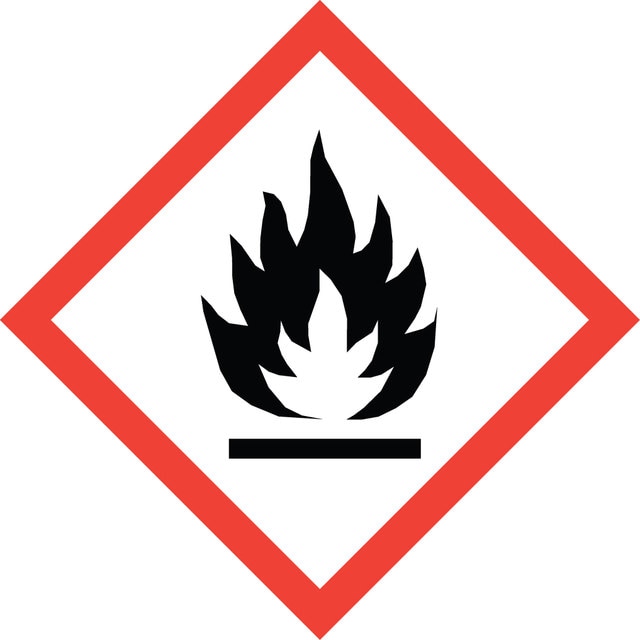
注意喚起語
Danger
ハザードコード
Hazard Classifications
Flam. Sol. 1
保管分類
4.1B - Flammable solid hazardous materials
一体何が起きているの?
nwg
引火点 (F)
Not applicable
引火点(°C)
Not applicable
適用法令
試験研究用途を考慮した関連法令を主に挙げております。化学物質以外については、一部の情報のみ提供しています。 製品を安全かつ合法的に使用することは、使用者の義務です。最新情報により修正される場合があります。WEBの反映には時間を要することがあるため、適宜SDSをご参照ください。
第2類:可燃性固体 + 金属粉末 + 危険等級II + 第一種可燃性固体
fsl
名称等を表示すべき危険物及び有害物
ishl_indicated
名称等を通知すべき危険物及び有害物
ishl_notified
771937-250MG:4548173924830 + 771937-BULK: + 771937-VAR:
jan