
940321

硫化リチウム

99.995% trace metals basis (basis), low sodium, battery grade
別名:
Dilithium monosulfide, Dilithium sulfide
ログインで組織・契約価格をご覧ください。
サイズを選択してください
表示を変更する
この商品について
Quality Level
grade
battery grade
description
application(s): battery manufacturing
assay
99.995% trace metals basis (basis)
form
powder
mol wt
45.95
composition
Li2S
reaction suitability
core: lithium
greener alternative product characteristics
Design for Energy Efficiency
Learn more about the Principles of Green Chemistry.
sustainability
Greener Alternative Product
particle size
100 mesh
bp
1,372 °C ((lit.))
mp
900-975 °C
solubility
soluble (reacts with water)
density
1.66 g/mL at 25 °C (lit.)
cation traces
Na: <35 ppm
greener alternative category
storage temp.
2-8°C
SMILES string
[Li]S[Li]
InChI
1S/2Li.S
InChI key
ZWDBUTFCWLVLCQ-UHFFFAOYSA-N
General description
Lithium sulfide (Li₂S) is a high-purity, inorganic compound that appears as a white to yellowish crystalline powder. It has a molecular weight of 45.95 g/mol and a density of 1.66 g/cm³. Lithium sulfide is known for its strong nucleophilic properties and its ability to react readily with water to produce lithium hydroxide and hydrogen sulfide gas. It is also soluble in certain organic solvents, such as pyridine and dimethyl sulfoxide. Lithium sulfide crystallizes in an antifluorite structure and melts in the temperature range of 900-975°C. Our high-purity material (99.995% trace metals) is specifically formulated for low sodium content, with less than 35 ppm of sodium metal. Additionally, the material is passed through a 100 mesh sieve, ensuring that most particles are less than 150 microns in size.
Lithium Sulfide is a key material in advanced lithium-sulfur batteries, offering high energy density and low cost. Its use supports greener technologies by enabling lighter, longer-lasting batteries with reduced reliance on scarce metals, promoting sustainable and environmentally friendly energy storage solutions. Click here for more information.
Lithium Sulfide is a key material in advanced lithium-sulfur batteries, offering high energy density and low cost. Its use supports greener technologies by enabling lighter, longer-lasting batteries with reduced reliance on scarce metals, promoting sustainable and environmentally friendly energy storage solutions. Click here for more information.
Application
High-purity lithium sulfide is primarily used as a precursor in the synthesis of other lithium compounds. In chemical manufacturing, it acts as a precursor for lithium hydride, lithium borohydride, lithium amide, lithium thioacetate, lithium tetrafluoroborate, and others. In the battery industry, our battery grade lithium sulfide is used as a precursor to synthesize sulfide-based solid electrolytes like Li₃PS₄ ([https://www.sigmaaldrich.com/US/en/product/aldrich/916374]), Li₆PS₅Cl ([https://www.sigmaaldrich.com/US/en/product/aldrich/916137]), and Li₁₀SnP₂S₁₂ ([https://www.sigmaaldrich.com/US/en/product/aldrich/915114]). Lithium sulfide also serves as a cathode material in lithium-sulfur batteries, offering a theoretical capacity of up to 1166 mAh/g, nearly four times that of lithium cobalt oxide. This makes it an attractive candidate for next-generation battery technologies. Additionally, lithium sulfide is valuable in the semiconductor industry for the production of thin-film transistors (TFTs) and other electronic devices, particularly lithium sulfide-phosphorus oxide (Li₂S-P₂O₅) TFTs.
Features and Benefits
- Higher Purity (99.995%): Ensures minimal trace metal contamination, making it ideal for applications requiring high-purity materials.
- Low Sodium Content: Specifically formulated for low sodium content (<35 ppm) to meet the stringent requirements of sensitive applications.
- Controlled Particle Size: Passed through a 100 mesh sieve, ensuring most particles are less than 150 microns, which is crucial for consistent performance in various applications.
Still not finding the right product?
Explore all of our products under 硫化リチウム
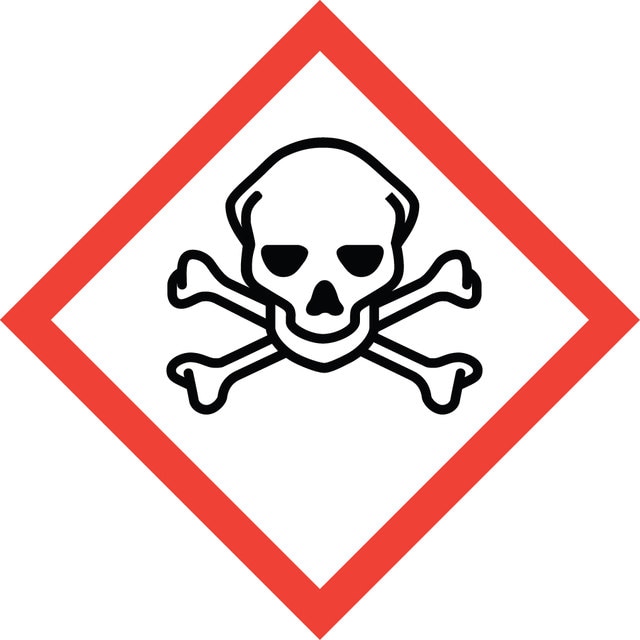
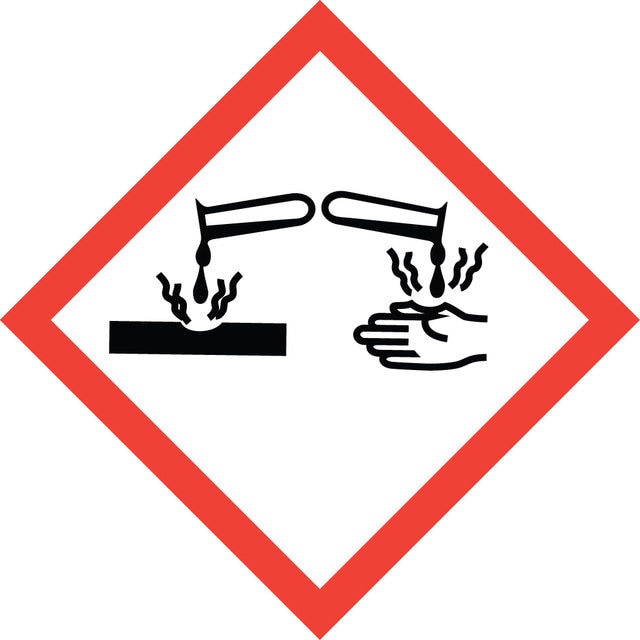
signalword
Danger
hcodes
Hazard Classifications
Acute Tox. 3 Oral - Eye Dam. 1 - Skin Corr. 1B
保管分類
6.1C - Combustible acute toxic Cat.3 / toxic compounds or compounds which causing chronic effects
wgk
WGK 3
flash_point_f
Not applicable
flash_point_c
Not applicable