
D74002

4,7-ジクロロキノリン
97%
ログインで組織・契約価格をご覧ください。
サイズを選択してください
この商品について
実験式(ヒル表記法):
C9H5Cl2N
CAS番号:
分子量:
198.05
UNSPSC Code:
12352100
NACRES:
NA.22
PubChem Substance ID:
EC Number:
201-714-7
Beilstein/REAXYS Number:
125359
MDL number:
Assay:
97%
Form:
powder
Quality Level
assay
97%
form
powder
mp
81-83 °C (lit.)
SMILES string
Clc1ccc2c(Cl)ccnc2c1
InChI
1S/C9H5Cl2N/c10-6-1-2-7-8(11)3-4-12-9(7)5-6/h1-5H
InChI key
HXEWMTXDBOQQKO-UHFFFAOYSA-N
類似した製品をお探しですか? 訪問 製品比較ガイド
関連するカテゴリー
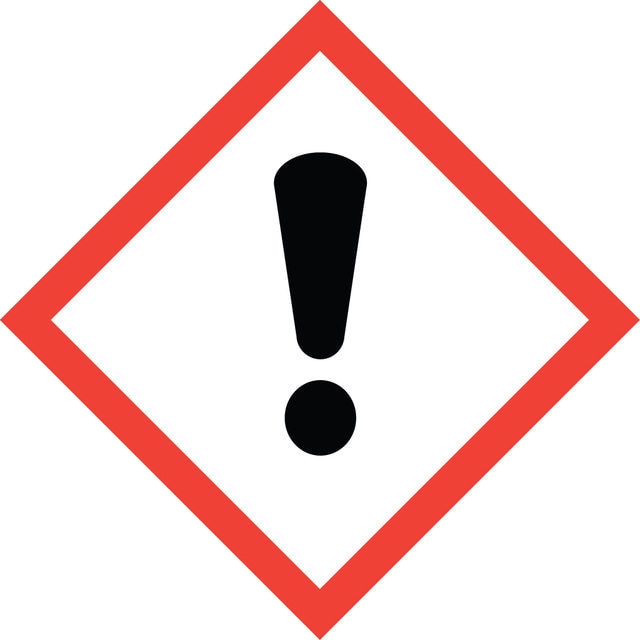
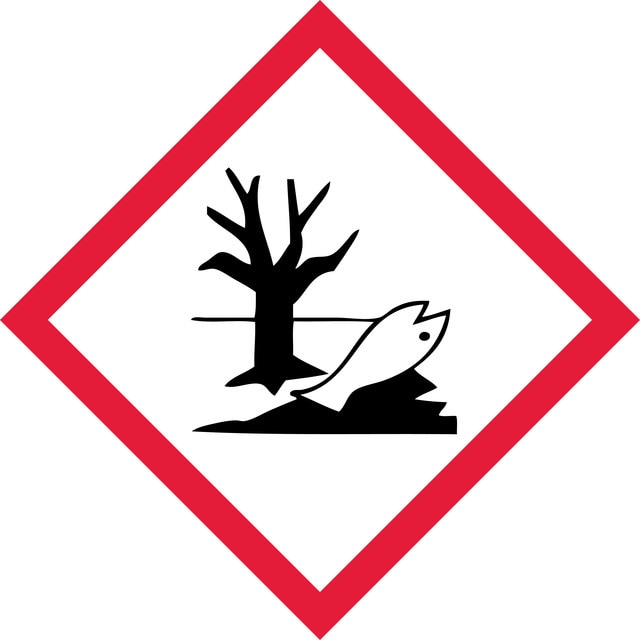
signalword
Warning
hcodes
Hazard Classifications
Aquatic Chronic 2 - Eye Irrit. 2 - Skin Irrit. 2 - Skin Sens. 1
保管分類
13 - Non Combustible Solids
wgk
WGK 3
flash_point_f
Not applicable
flash_point_c
Not applicable
ppe
dust mask type N95 (US), Eyeshields, Gloves
適用法令
試験研究用途を考慮した関連法令を主に挙げております。化学物質以外については、一部の情報のみ提供しています。 製品を安全かつ合法的に使用することは、使用者の義務です。最新情報により修正される場合があります。WEBの反映には時間を要することがあるため、適宜SDSをご参照ください。
D74002-VAR: + D74002-1KG: + D74002-BULK: + D74002-25G: + D74002-100G:
jan
Elaine S Coimbra et al.
Chemical biology & drug design, 75(6), 628-631 (2010-03-27)
We report herein the condensation of 4,7-dichloroquinoline (1) with tryptamine (2) and D-tryptophan methyl ester (3). Hydrolysis of the methyl ester adduct (5) yielded the free acid (6). The compounds were evaluated in vitro for activity against four different species
J T Mague et al.
Acta crystallographica. Section C, Crystal structure communications, 51 ( Pt 7), 1423-1425 (1995-07-15)
The title compound C14H12C12N2O, has been shown to have an E configuration about the double bond in the propenal moiety. Significant delocalization of the lone pair on the N atom of the dimethylamino group into the pi system of this
Allergic contact dermatitis from 4,7-dichloroquinoline.
F C Pickering et al.
Contact dermatitis, 8(4), 269-270 (1982-07-01)
Mostafa M Ghorab et al.
Acta pharmaceutica (Zagreb, Croatia), 64(3), 285-297 (2014-10-10)
Novel nineteen compounds based on a 4-aminoquinoline scaffold were designed and synthesized as potential antiproliferative agents. The new compounds were N-substituted at the 4-position by aryl or heteroaryl (1-9), quinolin- 3-yl (10), 2-methylquinolin-3-yl (11), thiazol-2-yl (12), and dapsone moieties (13
Howaida I Abd-Alla et al.
Natural product research, 23(11), 1035-1049 (2009-06-13)
The chemical constituents and biological activities of leaves and roots of Aloe hijazensis, collected in Saudi Arabia, are reported here for the first time. Twenty-two compounds were obtained, among them eight hydroxyquinones: aloe-emodin (1), emodin (2), chrysophanol (3), aloesaponarin II
ライフサイエンス、有機合成、材料科学、クロマトグラフィー、分析など、あらゆる分野の研究に経験のあるメンバーがおります。.
製品に関するお問い合わせはこちら(テクニカルサービス)