コンテンツへスキップ
Merck

W203408

アリルイソチオシアナート

≥95%, FCC

別名:

AITC, マスタードオイル

ログインで組織・契約価格をご覧ください。

サイズを選択してください


この商品について

化学式:
CH2=CHCH2NCS
CAS番号:
分子量:
99.15
FEMA Number:
2034
Council of Europe no.:
2110
UNSPSC Code:
12164502
PubChem Substance ID:
Flavis number:
12.025
EC Number:
200-309-2
NACRES:
NA.21
MDL number:
Beilstein/REAXYS Number:
773748
Organoleptic:
horseradish; pungent
Grade:
Halal, Kosher
Biological source:
synthetic
Food allergen:
no known allergens
テクニカルサービス
お困りのことがあれば、経験豊富なテクニカルサービスチームがお客様をサポートします。
お手伝いします
テクニカルサービス
お困りのことがあれば、経験豊富なテクニカルサービスチームがお客様をサポートします。
お手伝いします

SMILES string

C=CCN=C=S

InChI

1S/C4H5NS/c1-2-3-5-4-6/h2H,1,3H2

InChI key

ZOJBYZNEUISWFT-UHFFFAOYSA-N

biological source

synthetic

grade

Halal, Kosher

reg. compliance

FCC, FDA 21 CFR 117, FDA 21 CFR 172.515

assay

≥95%

refractive index

n20/D 1.529 (lit.)

bp

150 °C (lit.)

mp

−80 °C (lit.)

density

1.013 g/mL at 25 °C (lit.)

application(s)

flavors and fragrances

documentation

see Safety & Documentation for available documents

food allergen

no known allergens

organoleptic

horseradish; pungent

storage temp.

2-8°C

Quality Level

類似した製品をお探しですか? 訪問 製品比較ガイド

General description

アリルイソチオシアネートは、主にマスタード、キャベツ、ブロッコリーなど、アブラナ科の種に含まれています。グルコシノレートであるシニグリンの分解によって形成されます。

Biochem/physiol Actions

アブラナ科の野菜に含まれる天然成分です。

Disclaimer

研究開発用途向け、またはEU以外の食品用途向け。&小売販売用ではありません。

signalword

Danger

Hazard Classifications

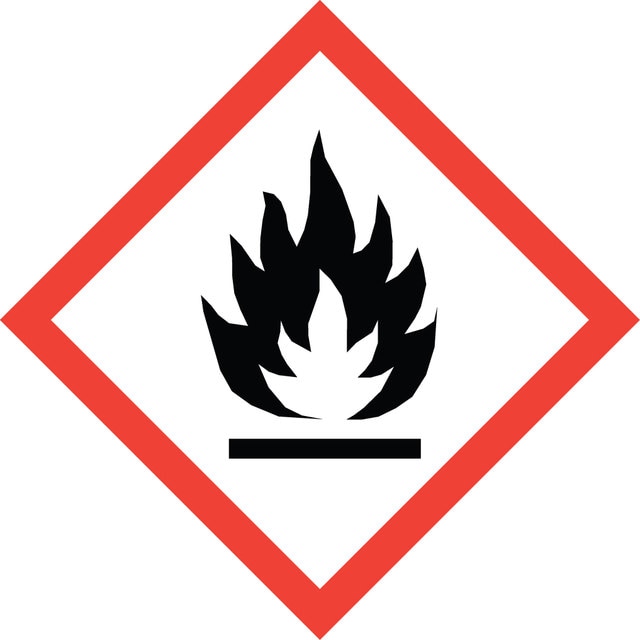
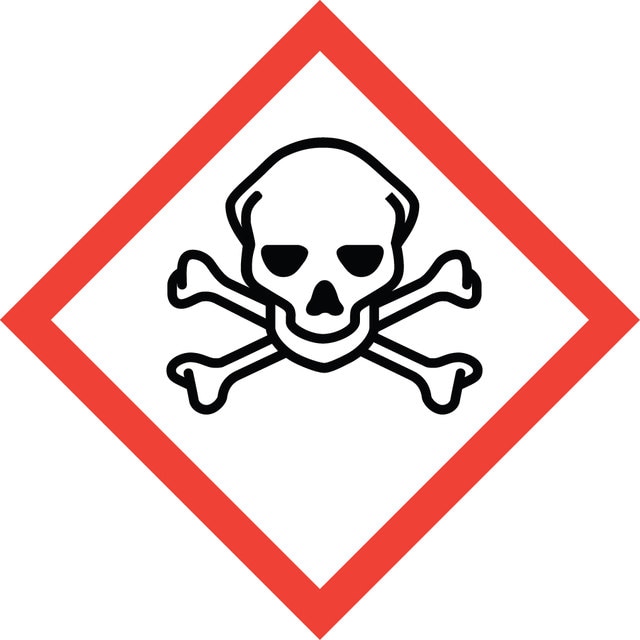
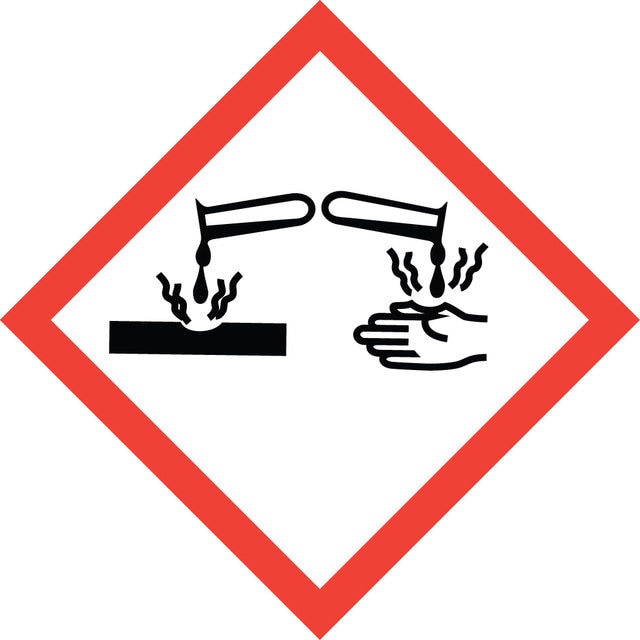
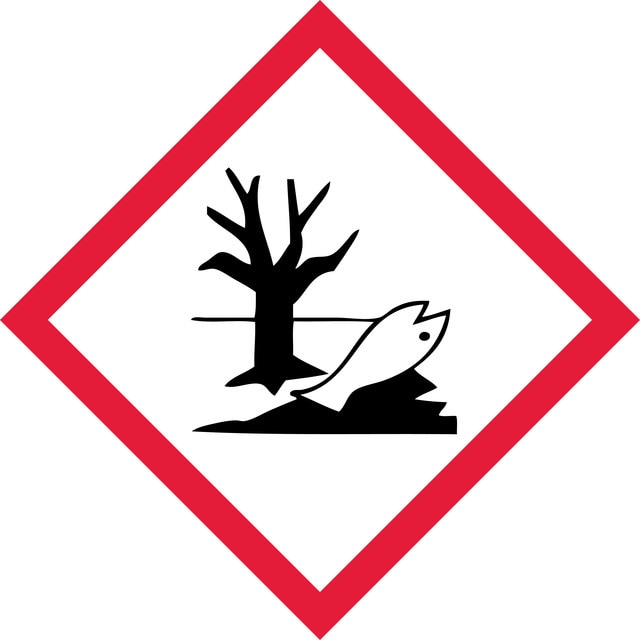
Acute Tox. 2 Dermal - Acute Tox. 2 Inhalation - Acute Tox. 4 Oral - Aquatic Acute 1 - Aquatic Chronic 1 - Eye Dam. 1 - Flam. Liq. 3 - Skin Corr. 1B - Skin Sens. 1

保管分類

3 - Flammable liquids

wgk

WGK 3

flash_point_f

113.0 °F - closed cup

flash_point_c

45 °C - closed cup

ppe

Eyeshields, Faceshields, Gloves, type ABEK (EN14387) respirator filter


適用法令

試験研究用途を考慮した関連法令を主に挙げております。化学物質以外については、一部の情報のみ提供しています。 製品を安全かつ合法的に使用することは、使用者の義務です。最新情報により修正される場合があります。WEBの反映には時間を要することがあるため、適宜SDSをご参照ください。

第4類:引火性液体 + 第二石油類 + 危険等級III + 非水溶性液体

fsl

名称等を表示すべき危険物及び有害物

ishl_indicated

名称等を通知すべき危険物及び有害物

ishl_notified

W203408-BULK-K: + W203408-SAMPLE: + W203408-SAMPLE-K: + W203408-500G-K: + W203408-1KG: + W203408-VAR: + W203408-500G: + W203408-1KG-K: + W203408-10KG-K: + W203408-10KG: + W203408-5KG-K: + W203408-VAR-K: + W203408-BULK: + W203408-5KG:

jan


最新バージョンのいずれかを選択してください:

試験成績書(COA)

Lot/Batch Number

適切なバージョンが見つかりませんか。

特定のバージョンが必要な場合は、ロット番号またはバッチ番号で特定の証明書を検索できます。

以前この製品を購入いただいたことがある場合

文書ライブラリで、最近購入した製品の文書を検索できます。

文書ライブラリにアクセスする

Antibacterial mechanism of allyl isothiocyanate.
Lin CM, et al.
Journal of Food Protection, 63(6), 727-734 (2000)
Sensitization and desensitization to allyl isothiocyanate (mustard oil) in the nasal cavity.
Brand G & Jacquot L.
Chemical Senses, 27(7), 593-598 (2002)
Dong Xiao et al.
Carcinogenesis, 24(5), 891-897 (2003-05-29)
Dietary isothiocyanates (ITCs) are highly effective in affording protection against chemically induced cancers in laboratory animals. In the present study, we demonstrate that allyl isothiocyanate (AITC), a constituent of cruciferous vegetables, significantly inhibits proliferation of cultured PC-3 (androgen-independent) and LNCaP
Yuesheng Zhang
Molecular nutrition & food research, 54(1), 127-135 (2009-12-05)
Allyl isothiocyanate (AITC), which occurs in many common cruciferous vegetables, is widely and often frequently consumed by humans. Besides antimicrobial activity against a wide spectrum of pathogens, it showed anticancer activity in both cultured cancer cells and animal models, although
M Murata et al.
Free radical biology & medicine, 28(5), 797-805 (2000-04-08)
Several isothiocyanates have been proposed as promising chemopreventive agents for human cancers. However, it has been reported that allyl isothiocyanate exhibit carcinogenic potential, and benzyl isothiocyanate and phenethyl isothiocyanate have tumor-promoting activities. We investigated whether these isothiocyanates could cause DNA

ライフサイエンス、有機合成、材料科学、クロマトグラフィー、分析など、あらゆる分野の研究に経験のあるメンバーがおります。.

製品に関するお問い合わせはこちら(テクニカルサービス)