ログインで組織・契約価格をご覧ください。
サイズを選択してください
表示を変更する
この商品について
化学式:
(CH3)2CHCH2OH
CAS番号:
分子量:
74.12
EC Number:
201-148-0
UNSPSC Code:
12352001
PubChem Substance ID:
Beilstein/REAXYS Number:
1730878
MDL number:
Assay:
≥99.0%
Grade:
JIS special grade
Bp:
108 °C (lit.)
Vapor pressure:
8 mmHg ( 20 °C), 8.8 mmHg ( 0 °C)
grade
JIS special grade
vapor density
2.55 (vs air)
vapor pressure
8 mmHg ( 20 °C), 8.8 mmHg ( 0 °C)
assay
≥99.0%
form
liquid
autoignition temp.
801 °F
expl. lim.
10.6 %
availability
available only in Japan
dilution
(for analytical testing)
refractive index
n20/D 1.396 (lit.)
bp
108 °C (lit.)
mp
−108 °C (lit.)
density
0.803 g/mL at 25 °C (lit.)
SMILES string
CC(C)CO
InChI
1S/C4H10O/c1-4(2)3-5/h4-5H,3H2,1-2H3
InChI key
ZXEKIIBDNHEJCQ-UHFFFAOYSA-N
Still not finding the right product?
Explore all of our products under 2-メチル-1-プロパノール
signalword
Danger
hcodes
Hazard Classifications
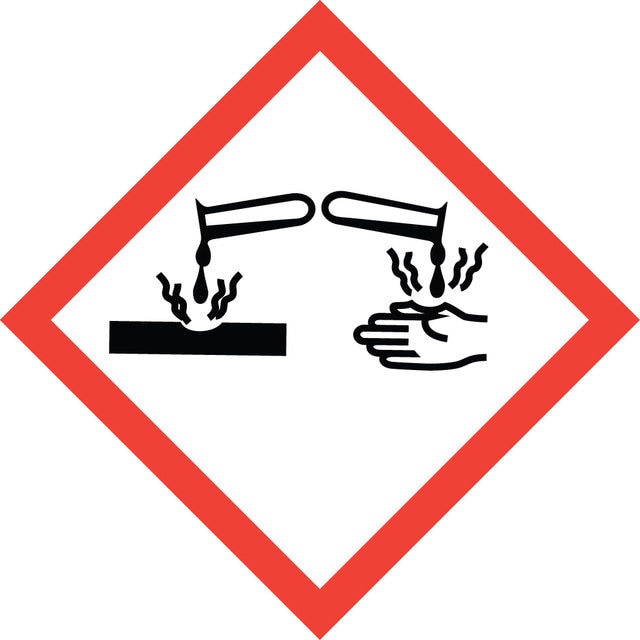
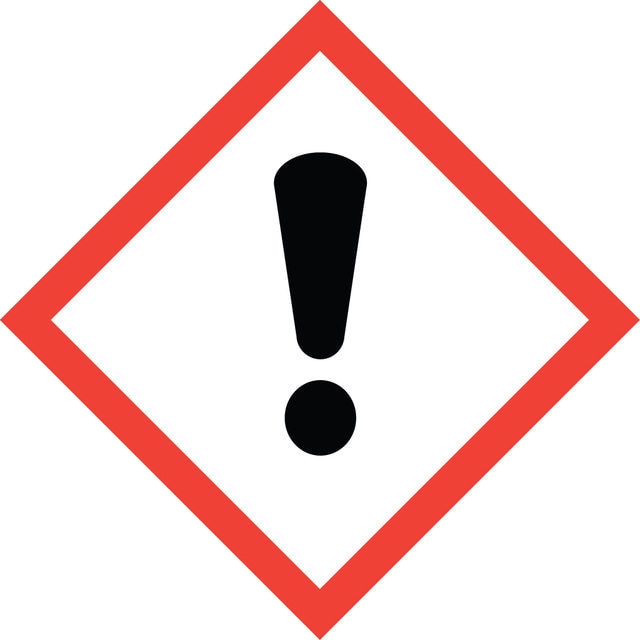
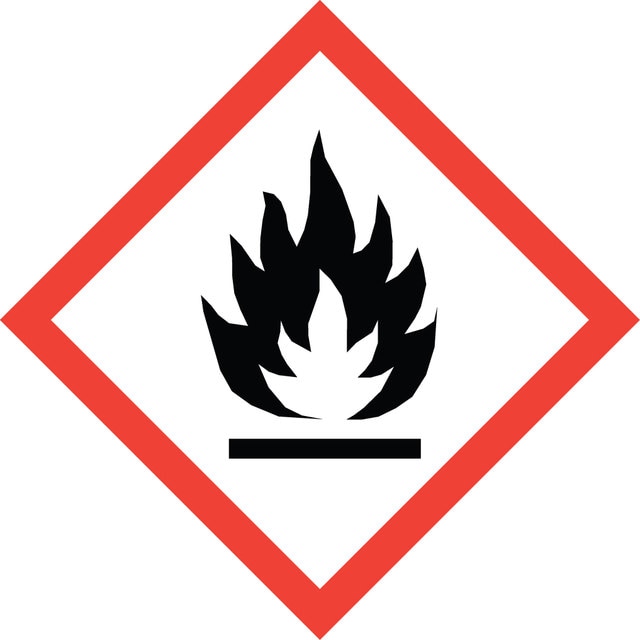
Eye Dam. 1 - Flam. Liq. 3 - Skin Irrit. 2 - STOT SE 3
target_organs
Central nervous system, Respiratory system
保管分類
3 - Flammable liquids
wgk
WGK 1
flash_point_f
82.4 °F - closed cup
flash_point_c
28 °C - closed cup
ppe
Eyeshields, Faceshields, Gloves, type ABEK (EN14387) respirator filter
適用法令
試験研究用途を考慮した関連法令を主に挙げております。化学物質以外については、一部の情報のみ提供しています。 製品を安全かつ合法的に使用することは、使用者の義務です。最新情報により修正される場合があります。WEBの反映には時間を要することがあるため、適宜SDSをご参照ください。
第4類:引火性液体 + 第二石油類 + 危険等級III + 非水溶性液体
fsl
名称等を表示すべき危険物及び有害物
ishl_indicated
名称等を通知すべき危険物及び有害物
ishl_notified
15-1790-5-500ML-J:4.548173004518E12
jan
Jeremy J Minty et al.
Proceedings of the National Academy of Sciences of the United States of America, 110(36), 14592-14597 (2013-08-21)
Synergistic microbial communities are ubiquitous in nature and exhibit appealing features, such as sophisticated metabolic capabilities and robustness. This has inspired fast-growing interest in engineering synthetic microbial consortia for biotechnology development. However, there are relatively few reports of their use
Han Li et al.
Science (New York, N.Y.), 335(6076), 1596-1596 (2012-03-31)
One of the major challenges in using electrical energy is the efficiency in its storage. Current methods, such as chemical batteries, hydraulic pumping, and water splitting, suffer from low energy density or incompatibility with current transportation infrastructure. Here, we report
D Norbäck et al.
Occupational and environmental medicine, 52(6), 388-395 (1995-06-01)
As a part of the worldwide European Community respiratory health survey, possible relations between symptoms of asthma, building characteristics, and indoor concentration of volatile organic compounds (VOCs) in dwellings were studied. The study comprised 88 subjects, aged 20-45 years, from