コンテンツへスキップ
Merck

35952

フェノール

PESTANAL®, analytical standard

別名:

ヒドロキシベンゼン

ログインで組織・契約価格をご覧ください。

サイズを選択してください

表示を変更する

この商品について

化学式:
C6H5OH
CAS番号:
分子量:
94.11
UNSPSC Code:
12352104
NACRES:
NA.24
PubChem Substance ID:
EC Number:
203-632-7
Beilstein/REAXYS Number:
969616
MDL number:
テクニカルサービス
お困りのことがあれば、経験豊富なテクニカルサービスチームがお客様をサポートします。
お手伝いします


grade

analytical standard

Quality Level

vapor density

3.24 (vs air)

vapor pressure

0.09 psi ( 55 °C), 0.36 mmHg ( 20 °C)

product line

PESTANAL®

autoignition temp.

1319 °F

shelf life

limited shelf life, expiry date on the label

expl. lim.

8.6 %

technique(s)

HPLC: suitable, gas chromatography (GC): suitable

bp

182 °C (lit.)

mp

40-42 °C (lit.)

density

1.071 g/mL at 25 °C (lit.)

application(s)

agriculture
cleaning products
cosmetics
environmental
flavors and fragrances
food and beverages
personal care

format

neat

SMILES string

Oc1ccccc1

InChI

1S/C6H6O/c7-6-4-2-1-3-5-6/h1-5,7H

InChI key

ISWSIDIOOBJBQZ-UHFFFAOYSA-N

General description

This substance is listed on the positive list of the EU regulation 10/2011 for plastics intended to come into contact with food. Find all available reference materials for compounds listed in 10/2011 here

Application

Refer to the product′s Certificate of Analysis for more information on a suitable instrument technique. Contact Technical Service for further support.

Other Notes

Find a digital Reference Material for this product available on our online platform ChemisTwin® for NMR. You can use this digital equivalent on ChemisTwin® for your sample identity confirmation and compound quantification (with digital external standard). An NMR spectrum of this substance can be viewed and an online comparison against your sample can be performed with a few mouseclicks. Learn more here and start your free trial.

Legal Information

PESTANAL is a registered trademark of Merck KGaA, Darmstadt, Germany


Still not finding the right product?

Explore all of our products under フェノール
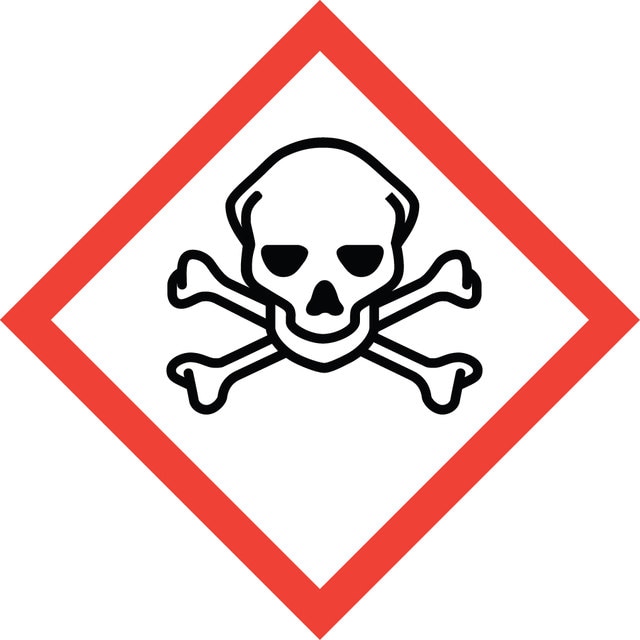

signalword

Danger

Hazard Classifications

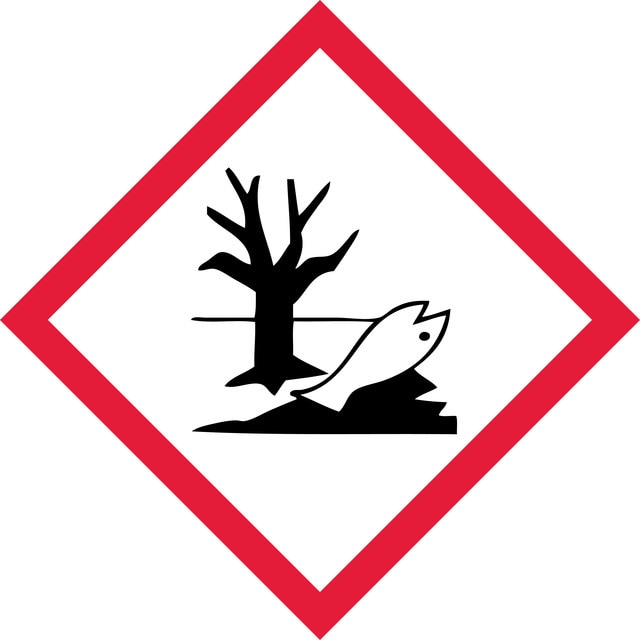
Acute Tox. 3 Dermal - Acute Tox. 3 Inhalation - Acute Tox. 3 Oral - Aquatic Chronic 2 - Eye Dam. 1 - Muta. 2 - Skin Corr. 1B - STOT RE 2

target_organs

Nervous system,Kidney,Liver,Skin

保管分類

6.1A - Combustible acute toxic Cat. 1 and 2 / very toxic hazardous materials

wgk

WGK 2

flash_point_f

177.8 °F - closed cup

flash_point_c

81 °C - closed cup

ppe

Eyeshields, Faceshields, Gloves, type P2 (EN 143) respirator cartridges, type P3 (EN 143) respirator cartridges


適用法令

試験研究用途を考慮した関連法令を主に挙げております。化学物質以外については、一部の情報のみ提供しています。 製品を安全かつ合法的に使用することは、使用者の義務です。最新情報により修正される場合があります。WEBの反映には時間を要することがあるため、適宜SDSをご参照ください。

第一種指定化学物質

prtr

名称等を表示すべき危険物及び有害物

ishl_indicated

名称等を通知すべき危険物及び有害物

ishl_notified

35952-1G:4.548173355085E12 + 35952-500MG:4.548173355092E12

jan


最新バージョンのいずれかを選択してください:

試験成績書(COA)

Lot/Batch Number

It looks like we've run into a problem, but you can still download Certificates of Analysis from our 資料 section.

サポートが必要な場合は、お問い合わせください カスタマーサポート

以前この製品を購入いただいたことがある場合

文書ライブラリで、最近購入した製品の文書を検索できます。

文書ライブラリにアクセスする


プロトコル

Analytical standard separation of various phenols for research and industrial applications.


Masaharu Nakamura et al.
Bioorganic & medicinal chemistry, 21(7), 1643-1651 (2013-03-07)
We previously reported that bis-phenol derivatives, including LG190178 (3a), possess not only vitamin D receptor (VDR) agonistic activity, but also androgen receptor (AR) antagonistic activity. Here, we describe the design, synthesis and evaluation of silicon-containing bis-phenol derivatives, with the objective
Rita A Busuttil et al.
Clinical cancer research : an official journal of the American Association for Cancer Research, 20(10), 2761-2772 (2014-03-25)
Gene-expression profiling has revolutionized the way we think about cancer and confers the ability to observe the synchronous expression of thousands of genes. The use of putative genome-level expression profiles has allowed biologists to observe the complex interactions of genes
Britta T Eklund et al.
Marine pollution bulletin, 46(2), 171-181 (2003-02-15)
Toxic effects on macroalgae have been compiled. Eighty-two articles have been found in literature during 1959-2000. A total of 120 substances were investigated using 65 different macroalgae species. About one-third of the tested compounds were organic substances (33%), another third