ログインで組織・契約価格をご覧ください。
サイズを選択してください
この商品について
化学式:
LiCl
CAS番号:
分子量:
42.39
NACRES:
NB.61
PubChem Substance ID:
UNSPSC Code:
26111700
MDL number:
General description
塩化リチウム溶液は、一般にハイブリッド太陽乾燥剤冷却システムのための液体乾燥剤として使用されます。これは本質的に腐食性ですが、周囲条件で空気中に蒸発しません。
Application
非水溶液中の滴定に用いられる参照電極のための充填溶液です
signalword
Danger
hcodes
Hazard Classifications
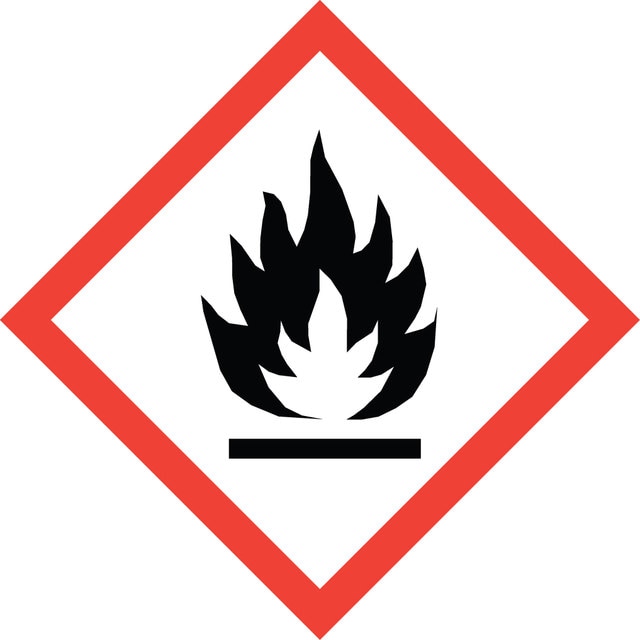
Eye Irrit. 2 - Flam. Liq. 2
保管分類
3 - Flammable liquids
flash_point_f
57.2 °F - closed cup
flash_point_c
14 °C - closed cup
ppe
Eyeshields, Faceshields, Gloves, type ABEK (EN14387) respirator filter
適用法令
試験研究用途を考慮した関連法令を主に挙げております。化学物質以外については、一部の情報のみ提供しています。 製品を安全かつ合法的に使用することは、使用者の義務です。最新情報により修正される場合があります。WEBの反映には時間を要することがあるため、適宜SDSをご参照ください。
第4類:引火性液体 + アルコール類 + 危険等級II
fsl
名称等を表示すべき危険物及び有害物
ishl_indicated
名称等を通知すべき危険物及び有害物
ishl_notified
62481-BULK-F: + 62481-250ML-F: + 62481-VAR-F:
jan
Study of an aqueous lithium chloride desiccant system: air dehumidification and desiccant regeneration
Fumo, Nelson, and D. Y. Goswami.
Solar Energy, 72 (4), 351-361 (2002)
A M Petrosyan et al.
Spectrochimica acta. Part A, Molecular and biomolecular spectroscopy, 105, 623-625 (2013-02-07)
We argue that the recently reported crystals "L-threonine formate" as well as "L-alanine lithium chloride" and "bis L-alanine lithium chloride" actually are the well-known crystals L-threonine and L-alanine, respectively.
A Abu-Baker et al.
Cell death & disease, 4, e821-e821 (2013-10-05)
Expansion of polyalanine tracts causes at least nine inherited human diseases. Among these, a polyalanine tract expansion in the poly (A)-binding protein nuclear 1 (expPABPN1) causes oculopharyngeal muscular dystrophy (OPMD). So far, there is no treatment for OPMD patients. Developing
Aitor González et al.
PloS one, 8(1), e53323-e53323 (2013-01-18)
The mouse segmentation is established from somites, which are iteratively induced every two hours from the presomitic mesoderm (PSM) by a system known as the segmentation clock. A crucial component of the segmentation clock is the gene Hes7, which is
A Briolay et al.
Biochemical and biophysical research communications, 430(3), 1072-1077 (2012-12-26)
Although anti-tumor necrosis factor (TNF)-α treatments efficiently block inflammation in ankylosing spondylitis (AS), they are inefficient to prevent excessive bone formation. In AS, ossification seems more prone to develop in sites where inflammation has resolved following anti-TNF therapy, suggesting that
ライフサイエンス、有機合成、材料科学、クロマトグラフィー、分析など、あらゆる分野の研究に経験のあるメンバーがおります。.
製品に関するお問い合わせはこちら(テクニカルサービス)