コンテンツへスキップ
Merck

648566

トルエン

suitable for HPLC, ≥99.9%

ログインで組織・契約価格をご覧ください。

サイズを選択してください


この商品について

化学式:
C6H5CH3
CAS番号:
分子量:
92.14
EC Number:
203-625-9
UNSPSC Code:
12190000
PubChem Substance ID:
Beilstein/REAXYS Number:
635760
MDL number:
テクニカルサービス
お困りのことがあれば、経験豊富なテクニカルサービスチームがお客様をサポートします。
お手伝いします
テクニカルサービス
お困りのことがあれば、経験豊富なテクニカルサービスチームがお客様をサポートします。
お手伝いします

製品名

トルエン, suitable for HPLC, ≥99.9%

InChI key

YXFVVABEGXRONW-UHFFFAOYSA-N

InChI

1S/C7H8/c1-7-5-3-2-4-6-7/h2-6H,1H3

SMILES string

Cc1ccccc1

grade

HPLC grade

vapor density

3.2 (vs air)

vapor pressure

22 mmHg ( 20 °C)
26 mmHg ( 25 °C)

assay

≥99.9%

form

liquid

autoignition temp.

997 °F

expl. lim.

7 %

technique(s)

HPLC: suitable

impurities

≤0.02% water

evapn. residue

≤0.0005%

color

colorless

refractive index

n/D 1.496 (lit.)

bp

110-111 °C (lit.)

mp

-93 °C (lit.)

density

0.865 g/mL at 25 °C (lit.)

UV absorption

λ: 290 nm Amax: 0.30
λ: 310 nm Amax: 0.05
λ: 350 nm Amax: 0.004

Quality Level

類似した製品をお探しですか? 訪問 製品比較ガイド

Application

Toluene may be used in the following studies:
  • As a doping agent during the quantitative estimation of triacylglycerols (TAGs) by liquid chromatography-atmospheric pressure photoionization-mass spectrometry (LC-APPIMS). It has been reported to improve the sensitivity of analysis.
  • For the decontamination of microbial cultures and lyse bacterial cells in bacterial enzyme assays.
  • As a solvent for the preparation of 4-arm polylactide-based (PLA) star oligomer.

General description

Toluene, a benzene analog, is widely employed as an organic solvent. It has been reported to be a biotoxic solvent (toxic to many microorganisms at 0.1%v/v concentrations). Its anaerobic biodegradation to CO2, by the denitrifying bacterium Thauera arornatica has been reported. It forms syndiotactic polystyrene-toluene molecular compound. Crystal structure of this molecular compound has been investigated by X-ray diffraction studies.

Other Notes

Discover LiChropur reagents ideal for HPLC or LC-MS analysis

Packaging

M-Bottle for Solvents
As a global leader in lab reagents, we are constantly looking for new ways to optimize the safety of our products. The newly developed 4L solvent bottle design features advanced sealing technology that eliminates leaks to make the handling of solvents safer and more convenient than ever before.
See all the new features here!

signalword

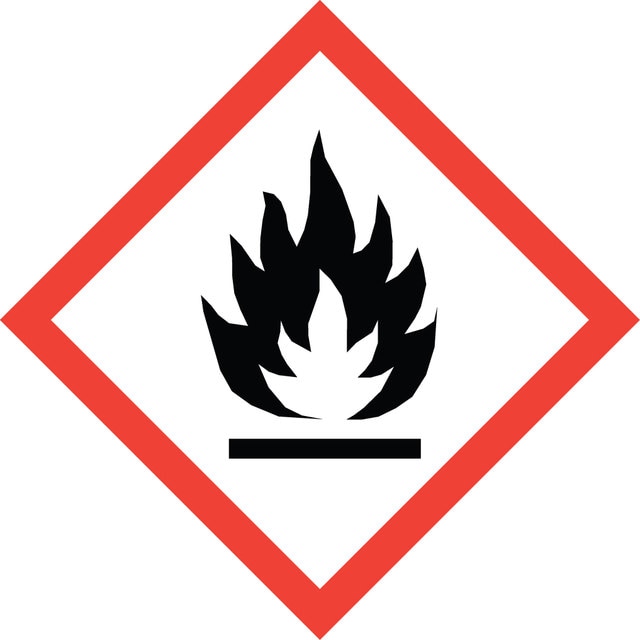
Danger

Hazard Classifications

Aquatic Chronic 3 - Asp. Tox. 1 - Flam. Liq. 2 - Repr. 2 - Skin Irrit. 2 - STOT RE 2 Inhalation - STOT SE 3

target_organs

Central nervous system

保管分類

3 - Flammable liquids

wgk

WGK 3

flash_point_f

39.9 °F - closed cup

flash_point_c

4.4 °C - closed cup

ppe

Eyeshields, Faceshields, Gloves, type ABEK (EN14387) respirator filter


最新バージョンのいずれかを選択してください:

試験成績書(COA)

Lot/Batch Number

適切なバージョンが見つかりませんか。

特定のバージョンが必要な場合は、ロット番号またはバッチ番号で特定の証明書を検索できます。

以前この製品を購入いただいたことがある場合

文書ライブラリで、最近購入した製品の文書を検索できます。

文書ライブラリにアクセスする

V Melissinaki et al.
Biofabrication, 3(4), 045005-045005 (2011-09-21)
This study reports on the production of high-resolution 3D structures of polylactide-based materials via multi-photon polymerization and explores their use as neural tissue engineering scaffolds. To achieve this, a liquid polylactide resin was synthesized in house and rendered photocurable via
A Pseudomonas thrives in high concentrations of toluene.
Inoue A and Horikoshi K.
Nature, 338, 264-266 (1989)
Structural study on syndiotactic polystyrene: 2. Crystal structure of molecular compound with toluene.
Chatani Y, et al.
Polymer, 34(8), 1620-1620 (1993)
Sheng-Suan Cai et al.
Journal of chromatography. A, 1173(1-2), 88-97 (2007-10-30)
In this work, we evaluate the performance of liquid chromatography-atmospheric pressure photoionization-mass spectrometry (LC-APPI-MS) for non-aqueous reversed phase analysis of six triacylglycerol model compounds using six binary mobile phases including MeOH/iPrOH, MeOH/CHCl(3), MeOH/CH(2)Cl(2), CH(3)CN/iPrOH, CH(3)CN/CHCl(3), and CH(3)CN/CH(2)Cl(2). All mobile phases
T Biegert et al.
European journal of biochemistry, 238(3), 661-668 (1996-06-15)
Toluene is degraded anoxically to CO2 by the denitrifying bacterium Thauera aromatica. Toluene first becomes oxidized to benzoyl-CoA by O2-independent reactions. Benzoyl-CoA is then reduced to non-aromatic products by benzoyl-CoA reductase. We set out to study the reactions employed for

ライフサイエンス、有機合成、材料科学、クロマトグラフィー、分析など、あらゆる分野の研究に経験のあるメンバーがおります。.

製品に関するお問い合わせはこちら(テクニカルサービス)