
901351

1-ブタノール

100% BioRenewable, reagent grade, ≥99.4%
別名:
n-ブタノール, ブチルアルコール
サイズを選択してください
この商品について
Quality Segment
grade
reagent grade
vapor density
2.55 (vs air)
assay
≥99.4%
form
liquid
autoignition temp.
649 °F
expl. lim.
11.2 %
greener alternative product characteristics
Safer Solvents and Auxiliaries
Use of Renewable Feedstocks
Learn more about the Principles of Green Chemistry.
sustainability
Greener Alternative Product
renewable carbon content
100%
dilution
(for analytical testing)
impurities
≤0.0008 meq/g Titr. acid, ≤0.01% butyraldehyde, ≤0.1% water, ≤0.2% butyl ether
evapn. residue
≤0.005%
color
APHA: ≤10
refractive index
n20/D 1.399 (lit.)
bp
116-118 °C (lit.)
mp
−90 °C (lit.)
density
0.81 g/mL at 25 °C (lit.)
greener alternative category
, Aligned
SMILES string
CCCCO
InChI
1S/C4H10O/c1-2-3-4-5/h5H,2-4H2,1H3
InChI key
LRHPLDYGYMQRHN-UHFFFAOYSA-N
General description
This ACS grade 1-Butanol is a drop-in replacement for traditional 1-Butanol applications. Made from 100% renewable carbon (verified through C14 ASTM D6866-16 testing) and produced in an environmentally-friendly way which reduces the carbon footprint of production and reduces reliance on fossil-fuels.
It is also free from many contaminants that are present in petroleum derived 1-Butanol, such as isobutanol and aldehydes.
Application
1-Butanol may be used in applications such as:
- Extraction and purification of compounds
- Solvent in chemical synthesis
- Intermediate in polymer synthesis
- Adhesives and sealants formulation
- Coatings
Features and Benefits
- ASTM D6866 - Standard Test Methods for Determining the Biobased Content
- Renewable Carbon Content – ≥99.9%
- Made from Renewable Resource
- Replacement for Petroleum-based 1-Butanol
Still not finding the right product?
Explore all of our products under 1-ブタノール
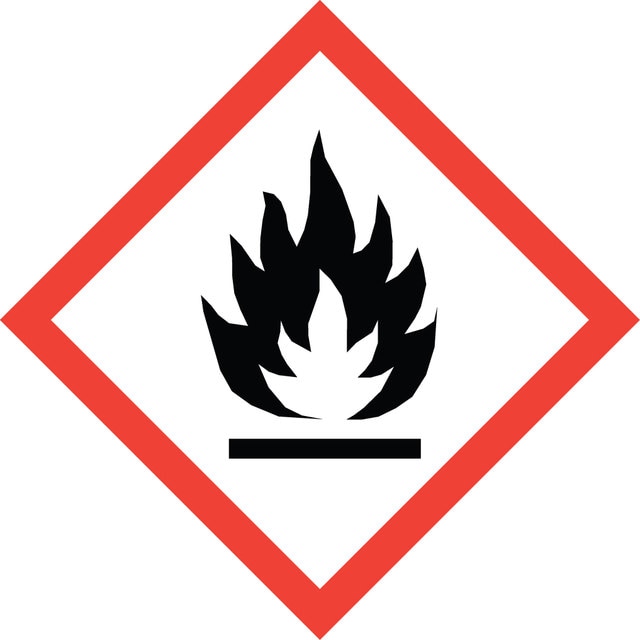
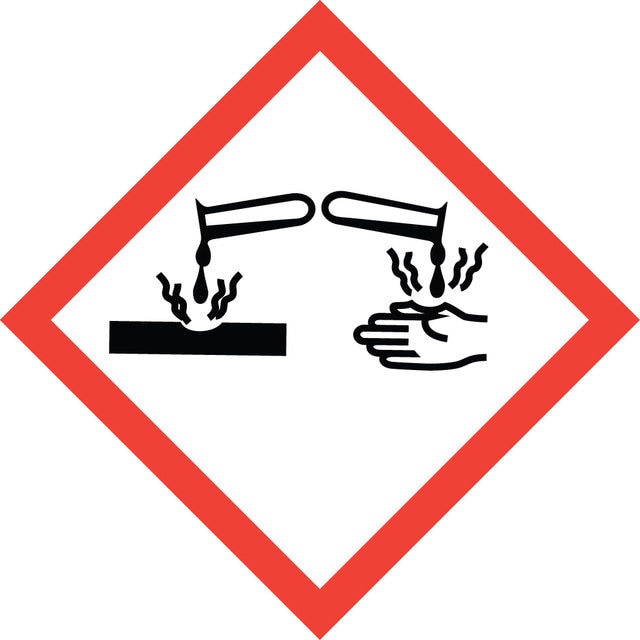

signalword
Danger
Hazard Classifications
Acute Tox. 4 Oral - Eye Dam. 1 - Flam. Liq. 3 - Skin Irrit. 2 - STOT SE 3
target_organs
Central nervous system, Respiratory system
保管分類
3 - Flammable liquids
wgk
WGK 1
flash_point_f
95.0 °F - Pensky-Martens closed cup
flash_point_c
35 °C - Pensky-Martens closed cup
適用法令
試験研究用途を考慮した関連法令を主に挙げております。化学物質以外については、一部の情報のみ提供しています。 製品を安全かつ合法的に使用することは、使用者の義務です。最新情報により修正される場合があります。WEBの反映には時間を要することがあるため、適宜SDSをご参照ください。
第4類:引火性液体 + 第二石油類 + 危険等級III + 非水溶性液体
fsl
名称等を表示すべき危険物及び有害物
ishl_indicated
名称等を通知すべき危険物及び有害物
ishl_notified