
932183

Hexaammineruthenium(III) chloride ChemBeads
solid
で組織・契約価格をご覧ください。
サイズを選択してください
表示を変更する
この商品について
実験式(ヒル表記法):
H18Cl3N6Ru
CAS番号:
分子量:
309.61
MDL number:
UNSPSC Code:
12352302
NACRES:
NA.22
製品名
Hexaammineruthenium(III) chloride ChemBeads,
Quality Segment
product line
ChemBeads
form
solid
storage temp.
2-8°C
SMILES string
[Ru+3].[Cl-].[Cl-].[Cl-].N.N.N.N.N.N
InChI
1S/3ClH.6H3N.Ru/h3*1H;6*1H3;/q;;;;;;;;;+3/p-3
InChI key
GBDZMMXUOBAJMN-UHFFFAOYSA-K
General description
Hexaammineruthenium III/II (HexRu(III)|HexRu(II)) couple is a commonly used electrochemical redox couple due to its chemical and electrochemical reversibility.
Application
Hexaammineruthenium(III) chloride can be used to synthesize chloropentaammineruthenium(III) chloride.
ChemBeads are chemical coated glass beads. ChemBeads offer improved flowability and chemical uniformity perfect for automated solid dispensing and high-throughput experimentation. The method of creating ChemBeads uses no other chemicals or surfactants allowing the user to accurately dispense sub-milligram amounts of chemical.
Learn more about ChemBeads products
Product is also available as neat precatalyst 262005
ChemBeads are chemical coated glass beads. ChemBeads offer improved flowability and chemical uniformity perfect for automated solid dispensing and high-throughput experimentation. The method of creating ChemBeads uses no other chemicals or surfactants allowing the user to accurately dispense sub-milligram amounts of chemical.
Learn more about ChemBeads products
Product is also available as neat precatalyst 262005
Other Notes
High-Throughput Reaction Screening with Nanomoles of Solid Reagents Coated on Glass Beads
Versatile Methods to Dispense Sub-Milligram Quantities of Solids using Chemical Coated Beads for High-Throughput Experimentation
ChemBead Enabled High-Throughput Cross-Electrophile Coupling Reveals a New Complementary Ligand
Versatile Methods to Dispense Sub-Milligram Quantities of Solids using Chemical Coated Beads for High-Throughput Experimentation
ChemBead Enabled High-Throughput Cross-Electrophile Coupling Reveals a New Complementary Ligand
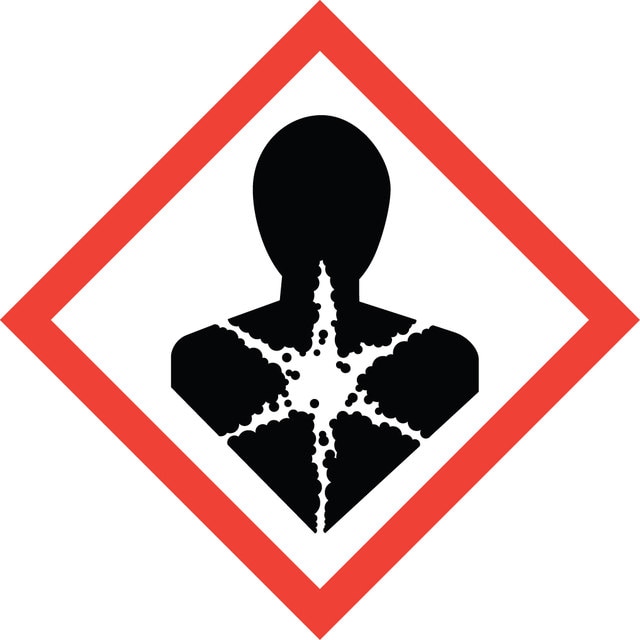
signalword
Danger
hcodes
Hazard Classifications
Carc. 1B Inhalation
保管分類
6.1C - Combustible acute toxic Cat.3 / toxic compounds or compounds which causing chronic effects
wgk
WGK 3