
SMB01383

PhIP
≥95% (HPLC)
別名:
2-Amino-1-methyl-6-phenylimidazo[4,5-b]pyridine
で組織・契約価格をご覧ください。
サイズを選択してください
表示を変更する
この商品について
実験式(ヒル表記法):
C13H12N4
CAS番号:
分子量:
224.26
UNSPSC Code:
12352100
NACRES:
NA.28
MDL number:
biological source
synthetic
Quality Segment
assay
≥95% (HPLC)
form
solid
shipped in
2-8°C
storage temp.
2-8°C
SMILES string
NC1=NC2=NC=C(C3=CC=CC=C3)C=C2N1C
InChI
1S/C13H12N4/c1-17-11-7-10(9-5-3-2-4-6-9)8-15-12(11)16-13(17)14/h2-8H,1H3,(H2,14,15,16)
InChI key
UQVKZNNCIHJZLS-UHFFFAOYSA-N
General description
PhIP (2-Amino-1-methyl-6-phenylimidazo(4,5-b)pyridine) is a dietary genotoxic carcinogen formed in heat processed meat and fish via the Maillard reaction. PhIP is a primary metabolite activated by CYP1A2 and N-acetyltransferase 1 or sulfotransferase to DNA reactive metabolite.
Biochem/physiol Actions
Carcinogen developed in grilled meats. Induces breast and colon cancer in rats.
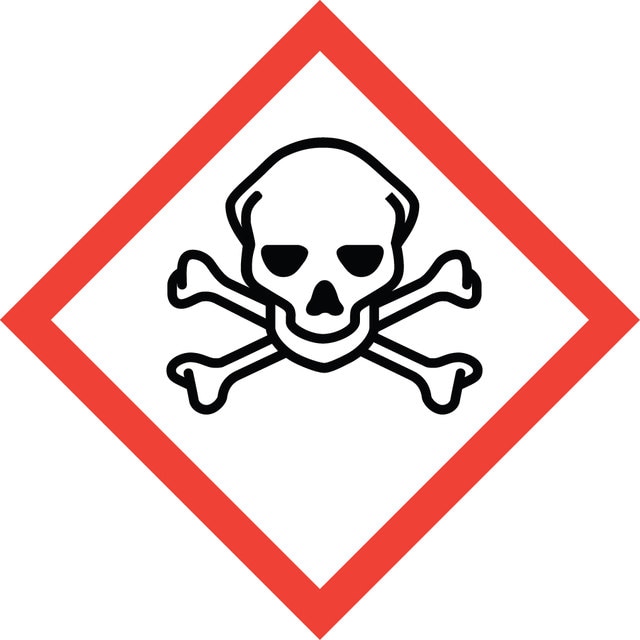

signalword
Danger
hcodes
Hazard Classifications
Acute Tox. 3 Oral - Carc. 2 - Eye Irrit. 2 - Skin Irrit. 2 - STOT SE 3
target_organs
Respiratory system
保管分類
6.1C - Combustible acute toxic Cat.3 / toxic compounds or compounds which causing chronic effects
wgk
WGK 3
flash_point_f
Not applicable
flash_point_c
Not applicable