
208841

酸化銅(II)
powder, <10 μm, 98%
別名:
酸化第二銅
ログインで組織・契約価格をご覧ください。
サイズを選択してください
この商品について
実験式(ヒル表記法):
CuO
CAS番号:
分子量:
79.55
NACRES:
NA.21
PubChem Substance ID:
UNSPSC Code:
12352303
EC Number:
215-269-1
MDL number:
Assay:
98%
Form:
powder
Application
Copper(II) oxide can be used as a catalyst for the:
- Hydroamination of di(cyclo)alkylcarbodiimides.
- Wet oxidation of disodium malonate to sodium oxalate.
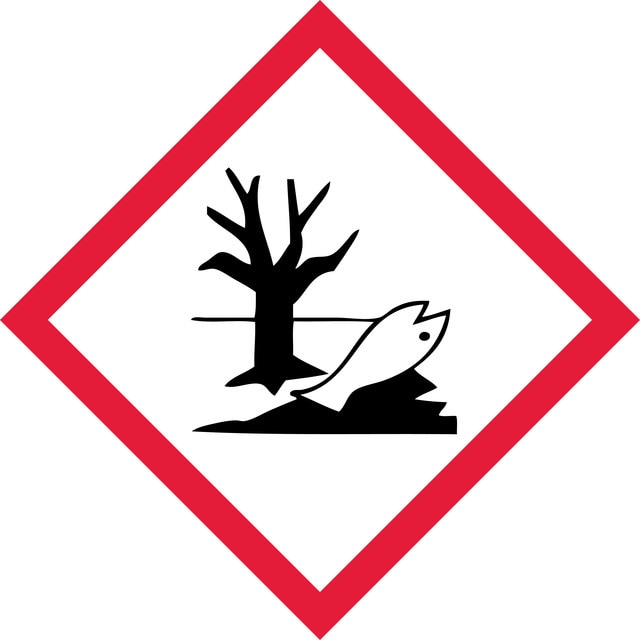
signalword
Warning
hcodes
pcodes
Hazard Classifications
Aquatic Acute 1 - Aquatic Chronic 1
保管分類
13 - Non Combustible Solids
wgk
WGK 3
flash_point_f
Not applicable
flash_point_c
Not applicable
適用法令
試験研究用途を考慮した関連法令を主に挙げております。化学物質以外については、一部の情報のみ提供しています。 製品を安全かつ合法的に使用することは、使用者の義務です。最新情報により修正される場合があります。WEBの反映には時間を要することがあるため、適宜SDSをご参照ください。
名称等を表示すべき危険物及び有害物
ishl_indicated
名称等を通知すべき危険物及び有害物
ishl_notified
208841-25KG: + 208841-500G:4548173931333 + 208841-VAR: + 208841-BULK: + 208841-2KG:4548173931326 + 208841-25G:4548173931319 + 208841-12KG:4548173931302
jan
Bettina Maria Strauch et al.
Nanomaterials (Basel, Switzerland), 10(4) (2020-04-09)
The toxicity of the copper oxide nanoparticles (CuO NP) has been attributed to the so-called "Trojan horse"-type mechanism, relying on the particle uptake and extensive intracellular release of copper ions, due to acidic pH in the lysosomes. Nevertheless, a clear
Eagleson M.
Concise Encyclopedia Chemistry, 523-523 (1994)
Copper (II) oxide nanowires for p-type conductometric NH3 sensing.
Shao F, et al.
Applied Surface Science, 311, 177-181 (2014)
DSC kinetics of the thermal decomposition of copper (II) oxalate by isoconversional and maximum rate (peak) methods.
Muraleedharan K and Kripa S.
Journal of Thermal Analysis and Calorimetry, 115(2), 1969-1978 (2014)
A refinement of the crystal structure of copper (II) oxide with a discussion of some exceptional esd's.
?sbrink S and Norrby LJ.
Acta Crystallographica Section B, Structural Science, 26(1), 8-15 (1970)
ライフサイエンス、有機合成、材料科学、クロマトグラフィー、分析など、あらゆる分野の研究に経験のあるメンバーがおります。.
製品に関するお問い合わせはこちら(テクニカルサービス)