
299537

トリフルオロ酢酸
≥99%, for protein sequencing
別名:
TFA
ログインで組織・契約価格をご覧ください。
サイズを選択してください
表示を変更する
この商品について
化学式:
CF3COOH
CAS番号:
分子量:
114.02
UNSPSC Code:
12352106
NACRES:
NA.21
PubChem Substance ID:
EC Number:
200-929-3
Beilstein/REAXYS Number:
742035
MDL number:
Assay:
≥99%
Form:
liquid
vapor density
3.9 (vs air)
Quality Segment
vapor pressure
97.5 mmHg ( 20 °C)
type
for protein sequencing
assay
≥99%
form
liquid
impurities
<0.05% water
evapn. residue
<0.005%
refractive index
n
pH
1 (20 °C, 10 g/L)
bp
72.4 °C (lit.)
mp
−15.4 °C (lit.)
solubility
water: soluble 10.000 g/L
density
1.489 g/mL at 20 °C (lit.)
SMILES string
OC(C(F)(F)F)=O
InChI
1S/C2HF3O2/c3-2(4,5)1(6)7/h(H,6,7)
InChI key
DTQVDTLACAAQTR-UHFFFAOYSA-N
General description
トリフルオロ酢酸は天然に存在する有機溶媒であり、微生物の作用によって生分解されます。加溶媒分解、転位、還元、酸化、トリフルオロメチル化などのさまざまな有機変換の触媒としても使用できます。
Our biotech solvents offer exceptional quality for reliable RNA extraction, ensuring optimal laboratory performance. With low water content and minimal residue, give clean UV spectra to minimize contamination.
- High-Quality Biotech Solvents: Designed for optimal laboratory performance with low water content and minimal residues.
- Ideal for RNA Extraction: Essential for genetic testing and research applications like PCR.
- Ensures Integrity of Genetic Material: Promotes reliable and reproducible results.
- Industry Compliant: Suitable for both academic and commercial laboratories, enhancing research efficiency.
Application
トリフルオロ酢酸は、以下の溶媒として使用できます:
- タンパク質同定のための質量分析。
- 一臭素化イソオキサゾールおよびピラゾールを合成するためのN-ブロモスクシンイミドを用いたイソオキサゾールおよびピラゾールのマイクロ波照射臭素化
- ルイス酸触媒による2-(2-アリールエチニル)ヘテロアリールエステルの複素環ラクトンへの6-endo-digcyclization。
- 対応するナノ繊維膜を調製するための酢酸セルロースのエレクトロスピニング。
Still not finding the right product?
Explore all of our products under トリフルオロ酢酸
注意喚起語
Danger
保管分類
8A - Combustible corrosive hazardous materials
引火点 (F)
No data available
引火点(°C)
No data available
supp_hazards
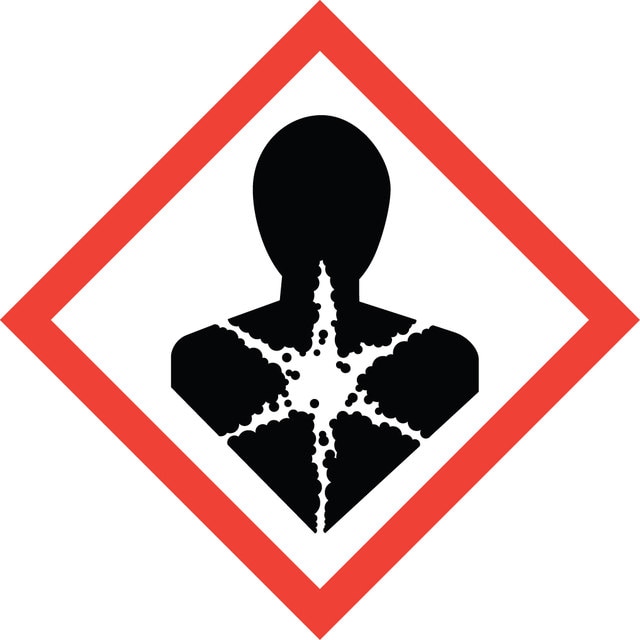


ハザードコード
Hazard Classifications
Acute Tox. 4 Inhalation - Aquatic Chronic 3 - Eye Dam. 1 - Repr. 2 - Skin Corr. 1A
適用法令
試験研究用途を考慮した関連法令を主に挙げております。化学物質以外については、一部の情報のみ提供しています。 製品を安全かつ合法的に使用することは、使用者の義務です。最新情報により修正される場合があります。WEBの反映には時間を要することがあるため、適宜SDSをご参照ください。
名称等を表示すべき危険物及び有害物
ishl_indicated
名称等を通知すべき危険物及び有害物
ishl_notified
299537-50G:4548173393698 + 299537-50ML: + 299537-100G:4548173385372 + 299537-2L: + 299537-5KG: + 299537-25G:4548173393674 + 299537-BULK: + 299537-VAR: + QR-047-100G: + 299537-500G:4548173393681
jan