コンテンツへスキップ
Merck

494453

ジクロロメタン

biotech. grade, 99.9%, contains 40-150 ppm amylene as stabilizer

別名:

塩化メチレン

ログインで組織・契約価格をご覧ください。

サイズを選択してください


この商品について

実験式(ヒル表記法):
CH2Cl2
CAS番号:
分子量:
84.93
UNSPSC Code:
12352101
NACRES:
NA.04
PubChem Substance ID:
EC Number:
200-838-9
Beilstein/REAXYS Number:
1730800
MDL number:
Grade:
biotech. grade
Assay:
99.9%
Bp:
39.8-40 °C (lit.)
Vapor pressure:
24.45 psi ( 55 °C)
6.83 psi ( 20 °C)
テクニカルサービス
お困りのことがあれば、経験豊富なテクニカルサービスチームがお客様をサポートします。
お手伝いします
テクニカルサービス
お困りのことがあれば、経験豊富なテクニカルサービスチームがお客様をサポートします。
お手伝いします

製品名

ジクロロメタン, biotech. grade, 99.9%, contains 40-150 ppm amylene as stabilizer

InChI key

YMWUJEATGCHHMB-UHFFFAOYSA-N

InChI

1S/CH2Cl2/c2-1-3/h1H2

SMILES string

ClCCl

grade

biotech. grade

vapor density

2.9 (vs air)

vapor pressure

24.45 psi ( 55 °C)
6.83 psi ( 20 °C)

assay

99.9%

form

liquid

autoignition temp.

1223 °F

contains

40-150 ppm amylene as stabilizer

expl. lim.

22 %

impurities

<0.002% water

evapn. residue

<0.0003%

refractive index

n20/D 1.424 (lit.)

bp

39.8-40 °C (lit.)

mp

−95 °C (lit.)

density

1.325 g/mL at 25 °C (lit.)

λ

H2O reference

UV absorption

λ: 235 nm Amax: 1.0
λ: 240 nm Amax: 0.20
λ: 250 nm Amax: 0.05
λ: 260 nm Amax: 0.02
λ: 340-400 nm Amax: 0.01

Quality Level

類似した製品をお探しですか? 訪問 製品比較ガイド

Preparation Note

0.2 μmフィルターで濾過滅菌済みの製品。

General description

Our biotech solvents offer exceptional quality for reliable RNA extraction, ensuring optimal laboratory performance. With low water content and minimal residue, give clean UV spectra to minimize contamination.
  • High-Quality Biotech Solvents: Designed for optimal laboratory performance with low water content and minimal residues.
  • Ideal for RNA Extraction: Essential for genetic testing and research applications like PCR.
  • Ensures Integrity of Genetic Material: Promotes reliable and reproducible results.
  • Industry Compliant: Suitable for both academic and commercial laboratories, enhancing research efficiency.

pictograms

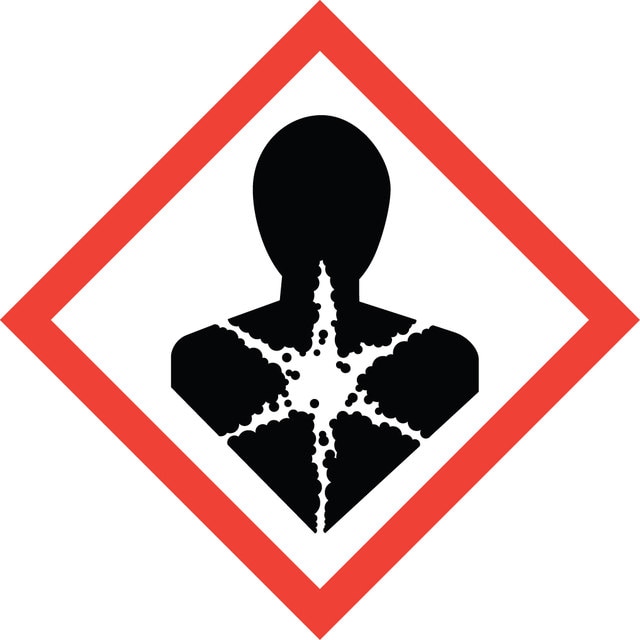
Health hazardExclamation mark

signalword

Warning

Hazard Classifications

Carc. 2 - Eye Irrit. 2 - Skin Irrit. 2 - STOT SE 3

target_organs

Central nervous system

保管分類

6.1D - Non-combustible acute toxic Cat.3 / toxic hazardous materials or hazardous materials causing chronic effects

wgk

WGK 2

flash_point_f

does not flash

flash_point_c

does not flash


最新バージョンのいずれかを選択してください:

試験成績書(COA)

Lot/Batch Number

適切なバージョンが見つかりませんか。

特定のバージョンが必要な場合は、ロット番号またはバッチ番号で特定の証明書を検索できます。

以前この製品を購入いただいたことがある場合

文書ライブラリで、最近購入した製品の文書を検索できます。

文書ライブラリにアクセスする

Daniela Giustarini et al.
Nature protocols, 8(9), 1660-1669 (2013-08-10)
This protocol describes a procedure for determining glutathione (GSH) and glutathione disulfide (GSSG) concentrations in blood and other tissues. Artifactual oxidation to GSSG of 5-15% of the GSH found in a sample can occur during deproteination of biological samples with
Rodney C Baker et al.
Methods in enzymology, 538, 89-105 (2014-02-18)
Mass spectrometry technology has enabled significant advances in detailing the alterations of the lipidome in response to pathological conditions or experimental manipulations. Lipids comprise a wide range of compounds with functions that include structural, intracellular signaling, trafficking, and storage. Characterization
Jane A Mullaney et al.
Journal of agricultural and food chemistry, 61(12), 3039-3046 (2013-03-07)
Glucosinolates from the genus Brassica can be converted into bioactive compounds known to induce phase II enzymes, which may decrease the risk of cancers. Conversion via hydrolysis is usually by the brassica enzyme myrosinase, which can be inactivated by cooking
Vitamin B12-mediated hydrodechlorination of dichloromethane by bimetallic Cu/Al particles.
Huang CC, et al.
Chemical Engineering Journal, 273, 413-420 (2015)
Dichloromethane Detection Based on Near-Infrared Absorptive Sensing.
Han JH and Yoon SM
IEEE Journal of Selected Topics in Quantum Electronics, 18(5), 1547-1552 (2012)

ライフサイエンス、有機合成、材料科学、クロマトグラフィー、分析など、あらゆる分野の研究に経験のあるメンバーがおります。.

製品に関するお問い合わせはこちら(テクニカルサービス)