
676934

1,4-ジオキサン
ACS reagent, ≥99.0%, contains <=25 ppm BHT as stabilizer
別名:
ジエチレンオキシド, ジオキサン
ログインで組織・契約価格をご覧ください。
サイズを選択してください
この商品について
実験式(ヒル表記法):
C4H8O2
CAS番号:
分子量:
88.11
UNSPSC Code:
12352005
NACRES:
NA.21
PubChem Substance ID:
EC Number:
204-661-8
Beilstein/REAXYS Number:
102551
MDL number:
Grade:
ACS reagent
Assay:
≥99.0%
Technique(s):
thin layer chromatography (TLC): suitable
Bp:
100-102 °C (lit.)
Vapor pressure:
27 mmHg ( 20 °C)
40 mmHg ( 25 °C)
40 mmHg ( 25 °C)
製品名
1,4-ジオキサン, ACS reagent, ≥99.0%, contains <=25 ppm BHT as stabilizer
InChI key
RYHBNJHYFVUHQT-UHFFFAOYSA-N
InChI
1S/C4H8O2/c1-2-6-4-3-5-1/h1-4H2
SMILES string
C1COCCO1
grade
ACS reagent
vapor density
3 (vs air)
vapor pressure
27 mmHg ( 20 °C)
40 mmHg ( 25 °C)
assay
≥99.0%
form
liquid
autoignition temp.
356 °F
expl. lim.
22 %
technique(s)
thin layer chromatography (TLC): suitable
impurities
≤0.0016 meq/g Titr. acid
≤0.005% Peroxide as (H2O2)
≤0.01% Carbonyl (as HCHO)
≤0.05% water
evapn. residue
≤0.005%
color
APHA: ≤20
refractive index
n20/D 1.422 (lit.)
pH
6.0-8 (20 °C, 500 g/L)
bp
100-102 °C (lit.)
mp
10-12 °C (lit.)
transition temp
freezing point ≥11.0
density
1.034 g/mL at 25 °C (lit.)
Quality Level
類似した製品をお探しですか? 訪問 製品比較ガイド
関連するカテゴリー
Application
1,4-Dioxane may be employed as solvent in the synthesis of N-(4-(prop-2-ynyloxy)phenyl)acetamide and 3-(4-(prop-2-ynyloxy)phenyl)-3,4-dihydro-2H-benzo[e][1,3]oxazine.
General description
1,4-Dioxane is widely used as a solvent for various organic compounds in industry. It is a non-biodegradable contaminant found in industrial effluents. Its oxidative degradation by using oxygen and ozone has been useful in converting it into biodegradable products, which can be easily removed by conventional methods.
Our premium ACS solvents are ideal for routine chemical synthesis, drying, purification, and critical labware cleaning. They meet or exceed the rigorous standards of the American Chemical Society (ACS), ensuring high-quality results for your research needs.
Premium ACS Solvents: Our solvents meet or exceed the stringent standards set by the American Chemical Society, ensuring high quality and reliability for your laboratory applications.
Replicable and Publishable Results: Designed for consistency, our solvents deliver results that can be reliably reproduced, making them ideal for research that requires publication.
Versatile Applications: Suitable for routine chemical synthesis, drying, purification, and critical labware cleaning, our solvents cater to a wide range of research needs in the laboratory.
Premium ACS Solvents: Our solvents meet or exceed the stringent standards set by the American Chemical Society, ensuring high quality and reliability for your laboratory applications.
Replicable and Publishable Results: Designed for consistency, our solvents deliver results that can be reliably reproduced, making them ideal for research that requires publication.
Versatile Applications: Suitable for routine chemical synthesis, drying, purification, and critical labware cleaning, our solvents cater to a wide range of research needs in the laboratory.
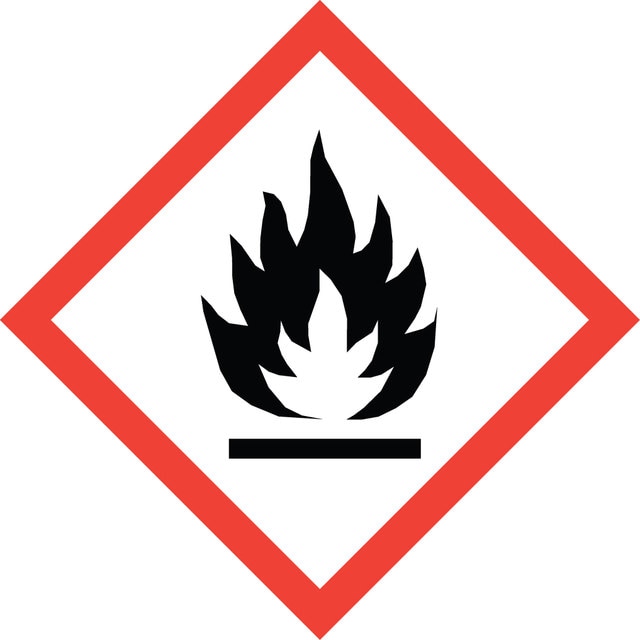
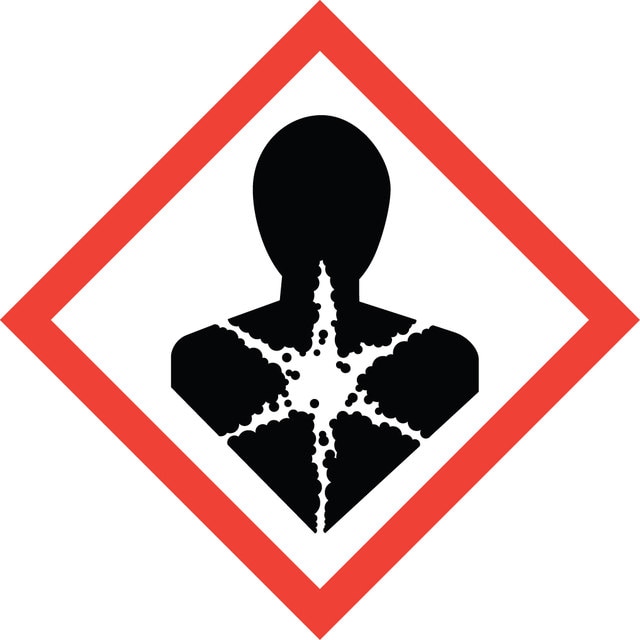
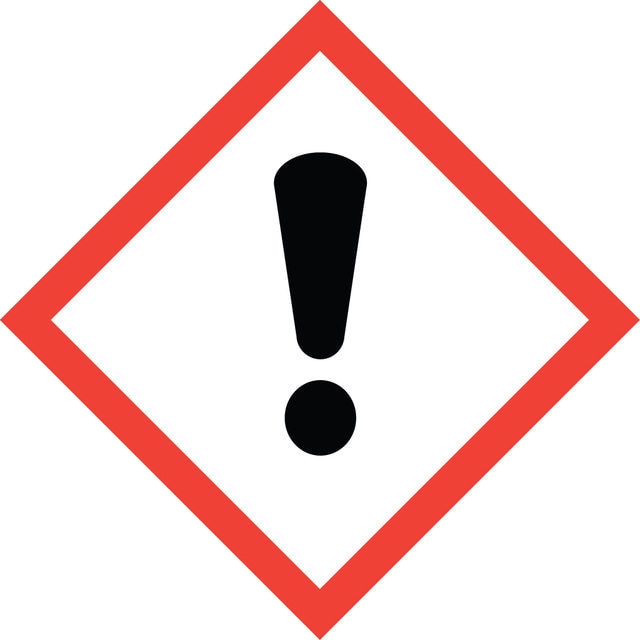
signalword
Danger
hcodes
Hazard Classifications
Carc. 1B - Eye Irrit. 2 - Flam. Liq. 2 - STOT SE 3
target_organs
Respiratory system
supp_hazards
保管分類
3 - Flammable liquids
wgk
WGK 3
flash_point_f
51.8 °F - closed cup
flash_point_c
11 °C - closed cup
Oxidation and biodegradability enhancement of 1,4-dioxane using hydrogen peroxide and ozone.
C D Adams et al.
Environmental science & technology, 28(11), 1812-1818 (1994-10-01)
Self-curable benzoxazine functional polybutadienes synthesized by click chemistry.
Kukut M, et al.
Designed Monomers and Polymers, 12(2), 167-176 (2009)
Xiaohua Liu et al.
Biomaterials, 31(2), 259-269 (2009-09-29)
It remains a challenge to synthesize functional materials that can develop advanced scaffolding architectures for tissue engineering. In this study, a series of biodegradable amphiphilic poly(hydroxyalkyl (meth)acrylate)-graft-poly(l-lactic acid) (PHAA-g-PLLA) copolymers have been synthesized and fabricated into nano-fibrous scaffolds. These copolymers
Joshua J Pacheco et al.
Proceedings of the National Academy of Sciences of the United States of America, 111(23), 8363-8367 (2014-06-10)
Terephthalic acid (PTA), a monomer in the synthesis of polyethylene terephthalate (PET), is obtained by the oxidation of petroleum-derived p-xylene. There is significant interest in the synthesis of renewable, biomass-derived PTA. Here, routes to PTA starting from oxidized products of
Daniel Gerrity et al.
Water research, 46(19), 6257-6272 (2012-10-16)
The performance of ozonation in wastewater depends on water quality and the ability to form hydroxyl radicals (·OH) to meet disinfection or contaminant transformation objectives. Since there are no on-line methods to assess ozone and ·OH exposure in wastewater, many
ライフサイエンス、有機合成、材料科学、クロマトグラフィー、分析など、あらゆる分野の研究に経験のあるメンバーがおります。.
製品に関するお問い合わせはこちら(テクニカルサービス)