
L6893

Lipopolysaccharides (rough strains) from Escherichia coli F583 (Rd mutant)
別名:
LPS
biological source
Escherichia coli (F583 Rd mutant)
form
lyophilized powder
impurities
<3% Protein (Lowry)
color
white to yellow cast
solubility
water: 4.90-5.10 mg/mL, cloudy to turbid, colorless to faintly yellow
shipped in
ambient
storage temp.
2-8°C
Quality Level
Application
Lipopolysaccharides (LPSs) are characteristic components of the cell wall of Gram-negative bacteria. LPS and its lipid A moiety stimulate cells of the innate immune system by the Toll-like receptor 4 (TLR4), a member of the Toll-like receptor protein family, which recognizes common pathogen-associated molecular-patterns (PAMPs).
Biochem/physiol Actions
Lipopolysaccharides (LPS) are localized in the outer layer of the membrane and are, in noncapsulated strains, exposed on the cell surface. They contribute to the integrity of the outer membrane, and protect the cell against the action of bile salts and lipophilic antibiotics.
General description
This product is phenol:chloroform:petroleum ether extracted from E. coli F 583 (Rd mutant). The source strain is from a private collection.
Other Notes
To gain a comprehensive understanding of our extensive range of Lipopolysaccharides for your research, we encourage you to visit our Carbohydrates Category page.
Preparation Note
Prepared by phenol-chloroform-petroleum ether extraction.
The product is soluble in water (5 mg/ml) or cell culture medium (1 mg/ml) yielding a hazy, faint yellow solution. A more concentrated, though still hazy, solution (20 mg/ml) has been achieved in aqueous saline after vortexing and warming to 70-80 oC. Lipopolysaccharides are molecules that form micelles in every solvent. Hazy solutions are observed in water and phosphate buffered saline. Organic solvents do not give clearer solutions. Methanol yields a turbid suspension with floaters, while water yields a homogeneously hazy solution.
The product is soluble in water (5 mg/ml) or cell culture medium (1 mg/ml) yielding a hazy, faint yellow solution. A more concentrated, though still hazy, solution (20 mg/ml) has been achieved in aqueous saline after vortexing and warming to 70-80 oC. Lipopolysaccharides are molecules that form micelles in every solvent. Hazy solutions are observed in water and phosphate buffered saline. Organic solvents do not give clearer solutions. Methanol yields a turbid suspension with floaters, while water yields a homogeneously hazy solution.
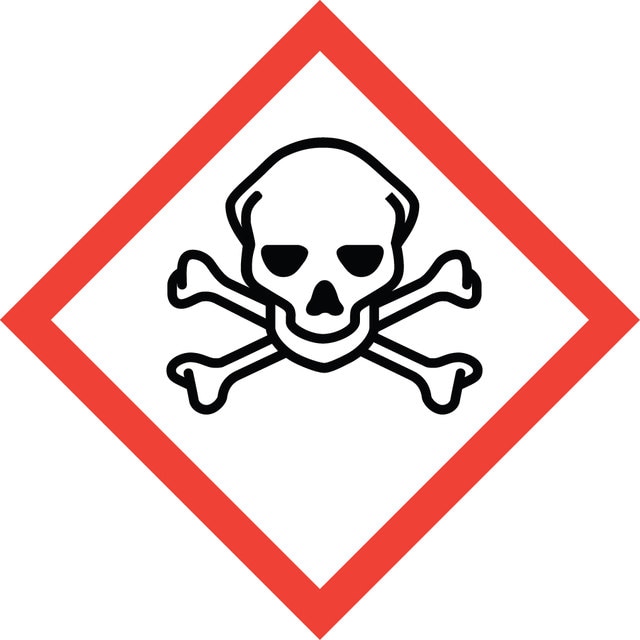
signalword
Danger
hcodes
Hazard Classifications
Acute Tox. 2 Oral
保管分類
6.1A - Combustible acute toxic Cat. 1 and 2 / very toxic hazardous materials
wgk
WGK 3
flash_point_f
Not applicable
flash_point_c
Not applicable
ppe
Eyeshields, Gloves, type N95 (US)
適用法令
試験研究用途を考慮した関連法令を主に挙げております。化学物質以外については、一部の情報のみ提供しています。 製品を安全かつ合法的に使用することは、使用者の義務です。最新情報により修正される場合があります。WEBの反映には時間を要することがあるため、適宜SDSをご参照ください。
L6893-10MG: + L6893-50MG: + L6893-5MG: + L6893-VAR: + L6893-5MG-PW: + L6893-10MG-PW: + L6893-BULK:
jan
M Worku et al.
Journal of dairy science, 92(7), 3185-3193 (2009-06-17)
The objective of this study was to evaluate the effect of smooth (S) and rough (R) forms of lipopolysaccharide (LPS) on gene expression in bovine blood neutrophils. Isolated neutrophils (10(7) cells/mL) were treated with Escherichia coli LPS serotype O111:B4 (S+R)
Yawen Ni et al.
PloS one, 12(2), e0170346-e0170346 (2017-02-09)
Occludin is a key tight junction (TJ) protein in cerebral endothelial cells (CECs) playing an important role in modulating blood-brain barrier (BBB) functions. This protein (65kDa) has been shown to engage in many signaling pathways and phosphorylation by both tyrosine
Iga Kucharska et al.
Biochemistry, 55(36), 5061-5072 (2016-08-18)
Pseudomonas aeruginosa is an opportunistic human pathogen causing pneumonias that are particularly severe in cystic fibrosis and immunocompromised patients. The outer membrane (OM) of P. aeruginosa is much less permeable to nutrients and other chemical compounds than that of Escherichia
G Werner-Felmayer et al.
Clinical and diagnostic laboratory immunology, 2(3), 307-313 (1995-05-01)
In a number of mammalian cell types, pteridine biosynthesis from guanosine 5'-triphosphate and formation of nitric oxide from L-arginine are induced by gamma interferon (IFN-gamma) and bacterial lipopolysaccharide (LPS). We assessed the possibility of using such metabolic alterations for the
資料
Explore the structure, function, and diverse applications of Lipopolysaccharides. Discover their role in bacteria, serological specificity, and research potential.
ライフサイエンス、有機合成、材料科学、クロマトグラフィー、分析など、あらゆる分野の研究に経験のあるメンバーがおります。.
製品に関するお問い合わせはこちら(テクニカルサービス)