
P1063

o-フェニレンジアミン 二塩酸塩
tablet, 60 mg substrate per tablet
別名:
1,2-Phenylenediamine tablet, OPD, OPD Tablet
ログインで組織・契約価格をご覧ください。
サイズを選択してください
この商品について
化学式:
C6H4(NH2)2·2HCl
CAS番号:
分子量:
181.06
UNSPSC Code:
12352204
NACRES:
NA.83
PubChem Substance ID:
EC Number:
210-418-7
Beilstein/REAXYS Number:
3912045
MDL number:
General description
o-フェニレンジアミン二塩酸塩(OPD)は発色基質であり、西洋ワサビペルオキシダーゼ複合体を利用して、酵素結合免疫吸着アッセイ(ELISA)法で使用できます。この基質は、オレンジがかった茶色を呈し、分光分析で450 nmで読み取れる可溶性最終産物を生成します。OPD反応は、3N HClまたは3M H2SO4で停止させることができ、492 nmで読み取ります。
o-Phenylenediamine dihydrochloride (OPD) is a chromogenic substrate that can be used in enzyme-linked immunosorbent assay (ELISA) procedures as it utilizes horseradish peroxidase conjugates. The substrate produces a soluble end product that is orange-brown and can be read spectrophotometrically at 450 nm. The OPD reaction may be stopped with 3N HCl or 3M H2SO4 and read at 492 nm.
Application
o-Phenylenediamine dihydrochloride has been used as a stop solution for evaluating bovine serum albumin (BSA) antibodies via enzyme-linked immunosorbent assay (ELISA). It has also been used to measure specific antibodies in pig serum by ELISA.
Features and Benefits
Supplied as 50 or 100 tablets per box, individually wrapped with foil for easy storage, use, and safety.
Preparation Note
必要な濃度に合わせて1タブレットを0.05 Mリン酸-クエン酸バッファー(pH 5.0)で溶解してください(通常OPDは0.4 mg/mLで使用されます)。使用直前に、基質バッファー溶液100 mL当たり新しい30%過酸化水素40 μLを加えてください。タブレットはホイルで個別包装されています。
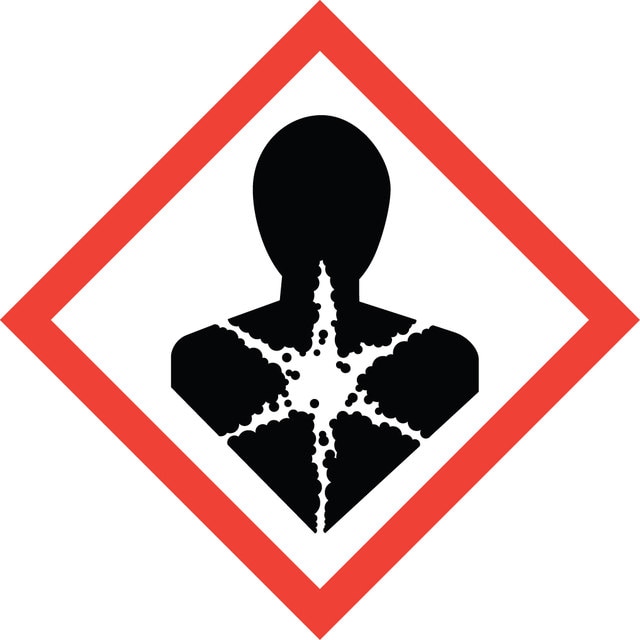


signalword
Warning
Hazard Classifications
Acute Tox. 4 Inhalation - Acute Tox. 4 Oral - Aquatic Acute 1 - Aquatic Chronic 1 - Carc. 2 - Eye Irrit. 2 - Muta. 2 - Skin Sens. 1
保管分類
11 - Combustible Solids
flash_point_f
Not applicable
flash_point_c
Not applicable
wgk
WGK 3
適用法令
試験研究用途を考慮した関連法令を主に挙げております。化学物質以外については、一部の情報のみ提供しています。 製品を安全かつ合法的に使用することは、使用者の義務です。最新情報により修正される場合があります。WEBの反映には時間を要することがあるため、適宜SDSをご参照ください。
名称等を表示すべき危険物及び有害物
ishl_indicated
名称等を通知すべき危険物及び有害物
ishl_notified
P1063-VAR: + P1063-BULK: + P1063-50TAB: + P1063-100TAB:
jan
Cassandra Koole et al.
The Journal of pharmacology and experimental therapeutics, 353(1), 52-63 (2015-01-30)
The glucagon-like peptide-1 receptor (GLP-1R) is a class B G protein-coupled receptor that has a critical role in the regulation of glucose homeostasis, principally through the regulation of insulin secretion. The receptor system is highly complex, able to be activated
Florian Krammer et al.
Clinical and vaccine immunology : CVI, 21(8), 1153-1163 (2014-06-20)
Emerging H7N9 influenza virus infections in Asia have once more spurred the development of effective prepandemic H7 vaccines. However, many vaccines based on avian influenza viruses--including H7--are poorly immunogenic, as measured by traditional correlates of protection. Here we reevaluated sera
Sarah L Rowland et al.
The Journal of experimental medicine, 211(10), 1977-1991 (2014-09-03)
Plasmacytoid dendritic cells (pDCs) have long been implicated in the pathogenesis of lupus. However, this conclusion has been largely based on a correlative link between the copious production of IFN-α/β by pDCs and the IFN-α/β "signature" often seen in human
Min Mo et al.
Infection and immunity, 76(5), 1837-1847 (2008-02-27)
Attachment of erythrocytes infected by Plasmodium falciparum to receptors of the microvasculature is a major contributor to the pathology and morbidity associated with malaria. Adhesion is mediated by the P. falciparum erythrocyte membrane protein 1 (PfEMP-1), which is expressed at
Tz-Chun Guo et al.
PloS one, 9(7), e100184-e100184 (2014-07-11)
Pancreas disease (PD) of Atlantic salmon is an emerging disease caused by Salmonid alphavirus (SAV) which mainly affects salmonid aquaculture in Western Europe. Although genome structure of SAV has been characterized and each individual viral protein has been identified, the
資料
NBT-BCIP substrate system aids in western blotting and immunohistological staining, producing a blue-purple insoluble end product.
関連コンテンツ
ライフサイエンス、有機合成、材料科学、クロマトグラフィー、分析など、あらゆる分野の研究に経験のあるメンバーがおります。.
製品に関するお問い合わせはこちら(テクニカルサービス)