
157139

2-Chloropropionyl chloride
97%
Sign In to View Organizational & Contract Pricing.
Select a Size
Change View
About This Item
Linear Formula:
CH3CHClCOCl
CAS Number:
Molecular Weight:
126.97
UNSPSC Code:
12352100
NACRES:
NA.22
PubChem Substance ID:
EC Number:
231-540-7
Beilstein/REAXYS Number:
605452
MDL number:
Assay:
97%
Form:
liquid
Quality Level
assay
97%
form
liquid
refractive index
n20/D 1.440 (lit.)
bp
109-111 °C (lit.)
density
1.308 g/mL at 25 °C (lit.)
functional group
acyl chloride, chloro
SMILES string
CC(Cl)C(Cl)=O
InChI
1S/C3H4Cl2O/c1-2(4)3(5)6/h2H,1H3
InChI key
JEQDSBVHLKBEIZ-UHFFFAOYSA-N
Application
2-Chloropropionyl chloride was used:
- as reagent in the chemical surface functionalization of parylene C
- in the preparation of a poly(ethylene glycol) macroinitiator, required for the atom transfer radical polymerization (ATRP) of styrene
- in the synthesis of (±)-mintlactone
- in the preparation of chlorine modified TiO2 nanoparticles, the ATRP initiators
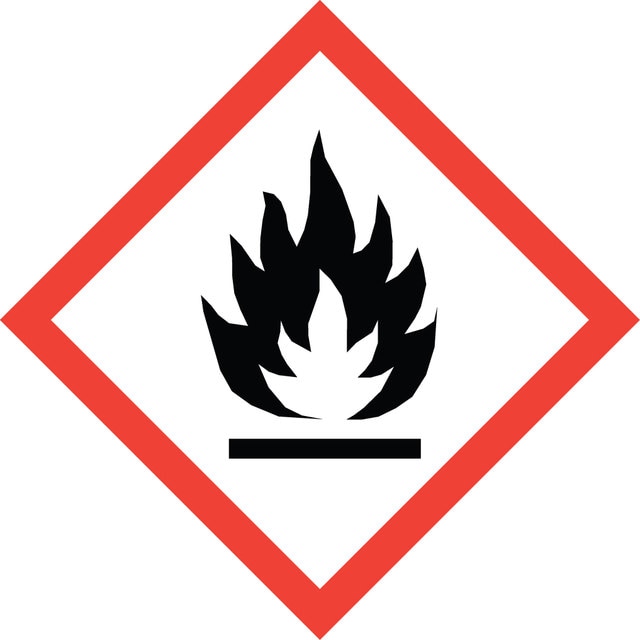
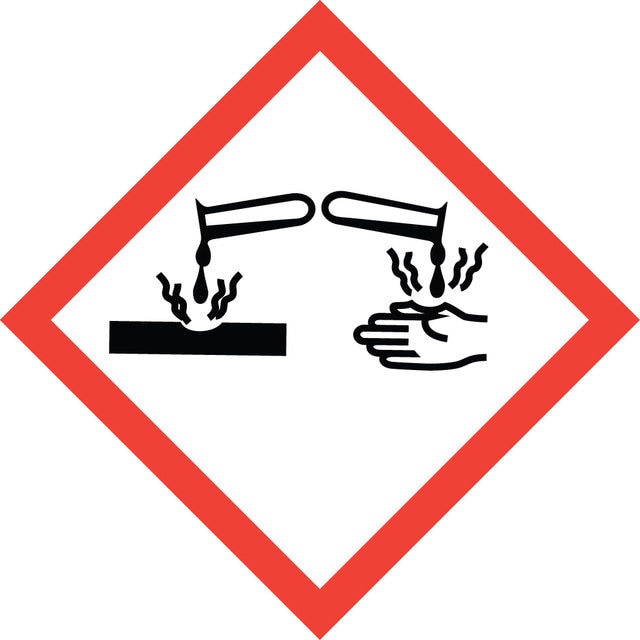

signalword
Danger
hcodes
Hazard Classifications
Acute Tox. 4 Oral - Eye Irrit. 2 - Flam. Liq. 3 - Skin Corr. 1B
Storage Class
3 - Flammable liquids
wgk
WGK 3
flash_point_f
94.1 °F - DIN 51755 Part 1
flash_point_c
34.5 °C - DIN 51755 Part 1
ppe
Faceshields, Gloves, Goggles, type ABEK (EN14387) respirator filter
Choose from one of the most recent versions:
Already Own This Product?
Find documentation for the products that you have recently purchased in the Document Library.
A Facile Synthesis of (?)-Mintlactone.
Tanyeli C, et al.
Synthetic Communications, 27(19), 3471-3476 (1997)
Controlled/?living? atom transfer radical polymerization of styrene in the synthesis of amphiphilic diblock copolymers from a poly (ethylene glycol) macroinitiator.
Jankova K, et al.
Polymer Bull., 42(2), 153-158 (1999)
Surface-initiated atom transfer radical polymerization from TiO2 nanoparticles.
Park JT, et al.
Applied Surface Science, 255(6), 3739-3744 (2009)