
168521

Luperox® DI, tert-Butyl peroxide
98%
Synonym(s):
tert-Butyl peroxide, Di-tert-butyl peroxide
Sign In to View Organizational & Contract Pricing.
Select a Size
Change View
About This Item
Linear Formula:
(CH3)3COOC(CH3)3
CAS Number:
Molecular Weight:
146.23
UNSPSC Code:
12352120
NACRES:
NA.22
PubChem Substance ID:
EC Number:
203-733-6
Beilstein/REAXYS Number:
1735581
MDL number:
Assay:
98%
Form:
liquid
vapor pressure
40 mmHg ( 20 °C)
Quality Level
assay
98%
form
liquid
reaction suitability
reagent type: oxidant
refractive index
n20/D 1.3891 (lit.)
bp
109-110 °C (lit.)
density
0.796 g/mL at 25 °C (lit.)
functional group
peroxide
storage temp.
2-8°C
SMILES string
CC(C)(C)OOC(C)(C)C
InChI
1S/C8H18O2/c1-7(2,3)9-10-8(4,5)6/h1-6H3
InChI key
LSXWFXONGKSEMY-UHFFFAOYSA-N
Application
Luperox®DI, tert-Butyl peroxide has been used as a radical initiator to induce free radical polymerization. It has also been used as a cetane enhancer in a study to determine the phase behavior of carboxylate-based extended surfactant reverse micellar microemulsions with ethanol and vegetable oil/diesel blends.
Legal Information
Product of Arkema Inc.
Luperox is a registered trademark of Arkema Inc.
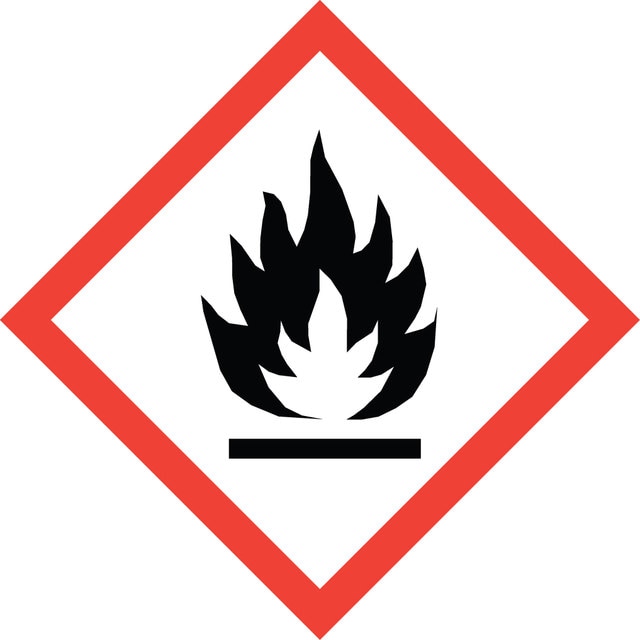
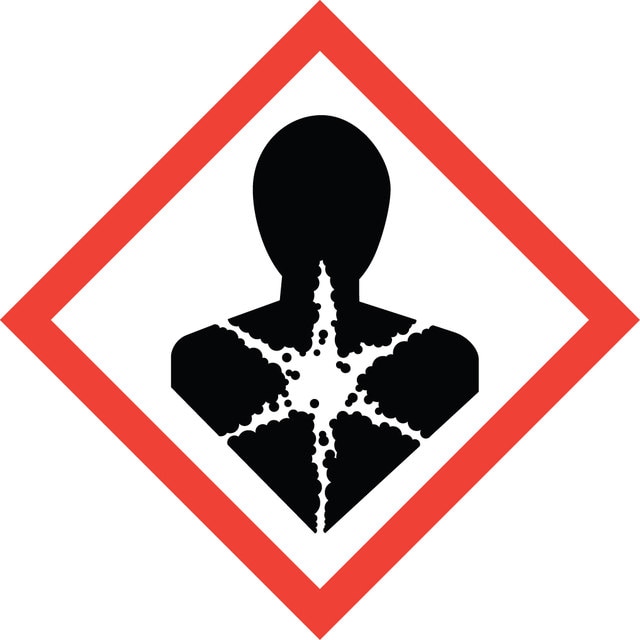
signalword
Danger
hcodes
Hazard Classifications
Aquatic Chronic 3 - Flam. Liq. 2 - Muta. 2 - Org. Perox. E
Storage Class
5.2 - Organic peroxides and self-reacting hazardous materials
wgk
WGK 1
flash_point_f
42.8 °F - closed cup
flash_point_c
6 °C - closed cup
ppe
Eyeshields, Faceshields, Gloves, type ABEK (EN14387) respirator filter
Choose from one of the most recent versions:
Already Own This Product?
Find documentation for the products that you have recently purchased in the Document Library.
Vegetable oil-based microemulsions using carboxylate-based extended surfactants and their potential as an alternative renewable biofuel.
Attaphong C
Fuel: The Science and Technology of Fuel and Energy, 94, 606-613 (2012)
Geun-Tae Yun et al.
Science advances, 4(8), eaat4978-eaat4978 (2018-08-29)
Both high static repellency and pressure resistance are critical to achieving a high-performance omniphobic surface. The cuticles of springtails have both of these features, which result from their hierarchical structure composed of primary doubly reentrant nanostructures on secondary microgrooves. Despite
A Mortensen et al.
FEBS letters, 426(3), 392-396 (1998-05-26)
Peroxyl radicals, as model for peroxyl radicals formed during autoxidation of lipids, have been generated in three solvent systems (cyclohexane, tetrahydrofuran and tert-butanol/water) by steady-state and laser flash photolysis, and their reaction with beta-carotene studied. Steady-state photolysis experiments showed that