
P1951

Phalloidin Peptide
≥90% (HPLC), solid, TRITC labeled
Synonym(s):
Phalloidin-TRITC
Sign In to View Organizational & Contract Pricing.
Select a Size
Change View
About This Item
Empirical Formula (Hill Notation):
C60H70N12O13S2
Molecular Weight:
1231.40
UNSPSC Code:
12352116
NACRES:
NA.32
MDL number:
Product Name
Phalloidin–Tetramethylrhodamine B isothiocyanate, sequence from Amanita phalloides(synthetic: peptide sequence)
biological source
sequence from Amanita phalloides (synthetic: peptide sequence)
Quality Segment
form
solid
fluorescence
λex 540-545 nm; λem 570-573 nm
storage temp.
−20°C
General description
Phalloidin is a phallotoxin produced by death cap mushroom Amanita phalloides. It is a cyclic peptide, which interacts with actin, and this was first identified in phalloidin-poisoned rats. It is a heptapeptide, cyclic in nature, with a crosslink between tryptophan at position 6 and cysteine at position 3. The side chain of amino acid 7 (γ-δ-dihydroxyleucine) in phalloidin, is accessible to modifications, through which florescent labelled phalloidin compounds can be produced.
Application
Fluorescent phallotoxin which may be used to identify filamentous actin.
Phalloidin-Tetramethylrhodamine B isothiocyanate has been used:-
Phalloidin-Tetramethylrhodamine B isothiocyanate has been used:-
Biochem/physiol Actions
Phalloidin interacts with polymeric actin, and not oligomeric or monomeric forms. This interaction leads to highly stabilized actin filaments, which resist depolymerization and disassembly. In rats, this toxin causes death due to liver hemorrhage, and cells show abnormal actin clustering. The affinity of phalloidin to actin is not significantly altered after derivatizing florescent labelled phalloidin compounds. These compounds can be used to study actin structure and organization within eukaryotic cells.
Toxin that binds polymeric F actin, stabilizing it and interfering with the function of actin-rich structures.
Other Notes
May contain mixed isomers
Signal Word
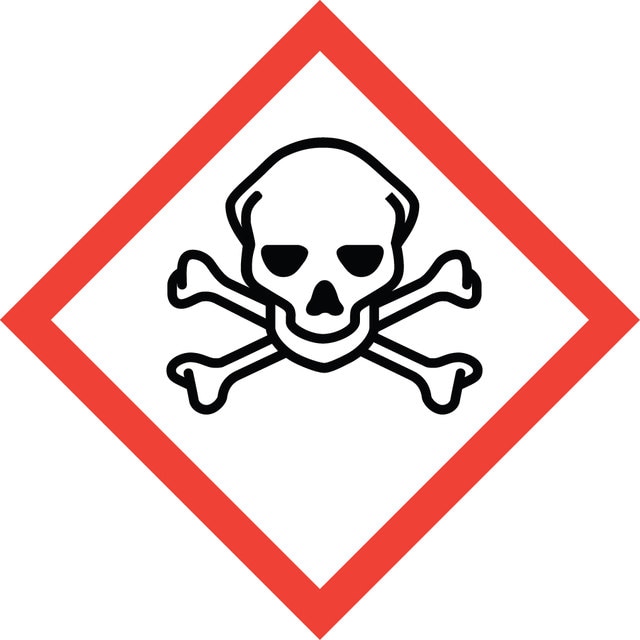
Danger
Hazard Codes
Precautionary Statements
Hazard Classifications
Acute Tox. 2 Dermal - Acute Tox. 2 Inhalation - Acute Tox. 2 Oral
Storage Class
6.1A - Combustible acute toxic Cat. 1 and 2 / very toxic hazardous materials
WGK
WGK 3
Flash Point (°F)
Not applicable
Flash Point (°C)
Not applicable
PPE (personal protective equipment)
Eyeshields, Faceshields, Gloves, type ABEK (EN14387) respirator filter
Choose from one of the most recent versions:
Already Own This Product?
Find documentation for the products that you have recently purchased in the Document Library.