콘텐츠로 건너뛰기
Merck

203149

Copper(II) chloride

99.999% trace metals basis

동의어(들):

Cupric chloride

조직 및 계약 가격을 보려면 로그인를 클릭합니다.

크기 선택


제품정보 (DICE 배송 시 비용 별도)

Linear Formula:
CuCl2
CAS 번호:
Molecular Weight:
134.45
PubChem Substance ID:
eCl@ss:
38150111
UNSPSC Code:
12352302
NACRES:
NA.23
EC Number:
231-210-2
MDL number:
Assay:
99.999% trace metals basis
Form:
powder
기술 서비스
도움이 필요하신가요? 저희 숙련된 과학자 팀이 도와드리겠습니다.
도움 문의
기술 서비스
도움이 필요하신가요? 저희 숙련된 과학자 팀이 도와드리겠습니다.
도움 문의

InChI key

ORTQZVOHEJQUHG-UHFFFAOYSA-L

InChI

1S/2ClH.Cu/h2*1H;/q;;+2/p-2

SMILES string

Cl[Cu]Cl

assay

99.999% trace metals basis

form

powder

reaction suitability

core: copper, reagent type: catalyst

impurities

≤15.0 ppm Trace Metal Analysis

mp

620 °C (lit.)

density

3.386 g/mL at 25 °C (lit.)

Quality Level

유사한 제품을 찾으십니까? 방문 제품 비교 안내

General description

Copper chloride is a white solid. It is insoluble in water. Copper(II) chloride may be prepared by dissolving excess of copper (II) oxide or copper(II) carbonate in dilute hydrochloric acid.

Application

Adding CuCl2 to AgNO3 with EG1mYAbe is used to produce uniform Ag nanowires. Copper chloride may be used as a catalyst in organic chlorination reactions. Used with palladium in a catalytic synthesis of 3-haloindoles via an annulation process.

signalword

Danger

Hazard Classifications

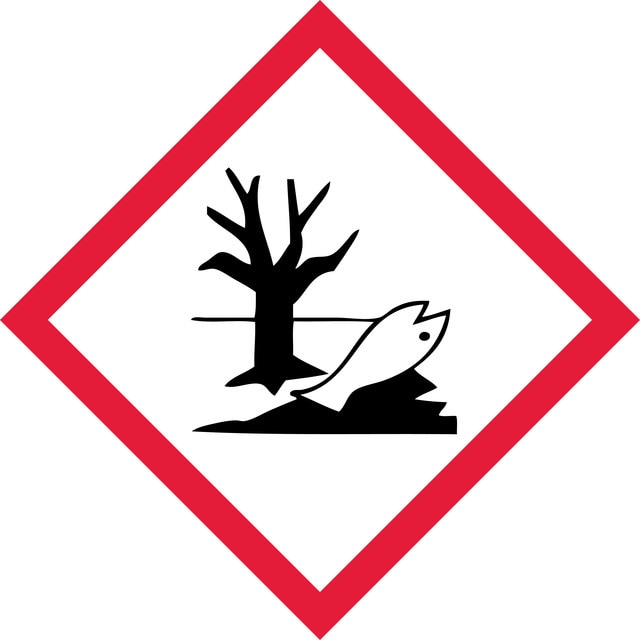
Acute Tox. 4 Dermal - Acute Tox. 4 Oral - Aquatic Acute 1 - Aquatic Chronic 2 - Eye Dam. 1 - Skin Irrit. 2

저장 등급

8A - Combustible corrosive hazardous materials

wgk

WGK 3

flash_point_f

Not applicable

flash_point_c

Not applicable

ppe

dust mask type N95 (US), Eyeshields, Gloves


가장 최신 버전 중 하나를 선택하세요:

시험 성적서(COA)

Lot/Batch Number

적합한 버전을 찾을 수 없으신가요?

특정 버전이 필요한 경우 로트 번호나 배치 번호로 특정 인증서를 찾을 수 있습니다.

이 제품을 이미 가지고 계십니까?

문서 라이브러리에서 최근에 구매한 제품에 대한 문서를 찾아보세요.

문서 라이브러리 방문

Noble-Metal Nanostructures with Controlled Morphologies
Jiang M, et al.
Material Matters, 4(1) null
Handbook of Copper Compounds and Applications null
Chemistry (Weinheim An Der Bergstrasse, Germany) null
Synthesis, 1841-1841 (2007)
Pieter Spincemaille et al.
Toxicology and applied pharmacology, 280(2), 345-351 (2014-08-20)
Wilson disease (WD) is caused by accumulation of excess copper (Cu) due to a mutation in the gene encoding the liver Cu transporter ATP7B, and is characterized by acute liver failure or cirrhosis and neuronal cell death. We investigated the

문서

Oxidation and reduction reactions are some of the most common transformations encountered in organic synthesis

The prevailing strategies for heat and electric-power production that rely on fossil and fission fuels are having a negative impact on the environment and on our living conditions.

Noble-metal nanostructures find diverse applications from catalysis to biomedical research, leveraging surface properties in various fields.

Lanthanide ions in spectral conversion enhance solar cell efficiency via photon conversion.

모두 보기

프로토콜

We present an article about RAFT, or Reversible Addition/Fragmentation Chain Transfer, which is a form of living radical polymerization.

Polymerization via ATRP procedures demonstrated by Prof. Dave Haddleton's research group at the University of Warwick.

We presents an article featuring procedures that describe polymerization of methyl methacrylate and vinyl acetate homopolymers and a block copolymer as performed by researchers at CSIRO.

관련 콘텐츠

This application note discusses the synthesis of silver nanowires.

자사의 과학자팀은 생명 과학, 재료 과학, 화학 합성, 크로마토그래피, 분석 및 기타 많은 영역을 포함한 모든 과학 분야에 경험이 있습니다..

고객지원팀으로 연락바랍니다.