
396281

2,4,6,8-Tetramethyl-2,4,6,8-tetravinylcyclotetrasiloxane
동의어(들):
2,4,6,8-Tetraethenyl-2,4,6,8-tetramethylcyclotetrasiloxane
조직 및 계약 가격을 보려면 를 클릭합니다.
크기 선택
보기 변경
제품정보 (DICE 배송 시 비용 별도)
Linear Formula:
[-Si(CH3)(CH=CH2)O-]4
CAS 번호:
Molecular Weight:
344.66
NACRES:
NA.23
PubChem Substance ID:
UNSPSC Code:
12162002
EC Number:
219-863-1
MDL number:
form
liquid
Quality Segment
refractive index
n20/D 1.434 (lit.)
bp
111-112 °C/10 mmHg (lit.)
mp
−44 °C (dec.) (lit.)
density
0.997 g/mL at 25 °C (lit.)
SMILES string
C[Si]1(O[Si](C)(O[Si](C)(O[Si](C)(O1)C=C)C=C)C=C)C=C
InChI
1S/C12H24O4Si4/c1-9-17(5)13-18(6,10-2)15-20(8,12-4)16-19(7,11-3)14-17/h9-12H,1-4H2,5-8H3
InChI key
VMAWODUEPLAHOE-UHFFFAOYSA-N
General description
In the presence of a Pd catalyst, this reagent cross-couples with aryl bromides to give styrene derivatives.
Application
- Cyclic siloxanes conjugated with fluorescent aromatic compounds as fluoride sensors: This study explores the use of cyclic siloxanes conjugated with aromatic compounds for sensing applications, offering a pathway for academic chemists interested in sensor technology and fluorescence studies (N Prigyai et al., 2020).
- Synthesis, film morphology and performance of novel crosslinked polysiloxane with end-capped epoxy groups on cotton substrates: This article examines the chemical modification of cotton substrates using polysiloxane derivatives, which can be crucial for developing advanced textile coatings (L Hao et al., 2014).
- Stabilizing Li-rich layered oxide cathode interface by using silicon-based electrolyte additive: This research investigates the use of a silicon-based additive derived from 2,4,6,8-tetramethyl-2,4,6,8-tetravinylcyclotetrasiloxane to enhance the stability of lithium-rich cathodes, important for chemists working with energy storage technologies (T Huang et al., 2024).
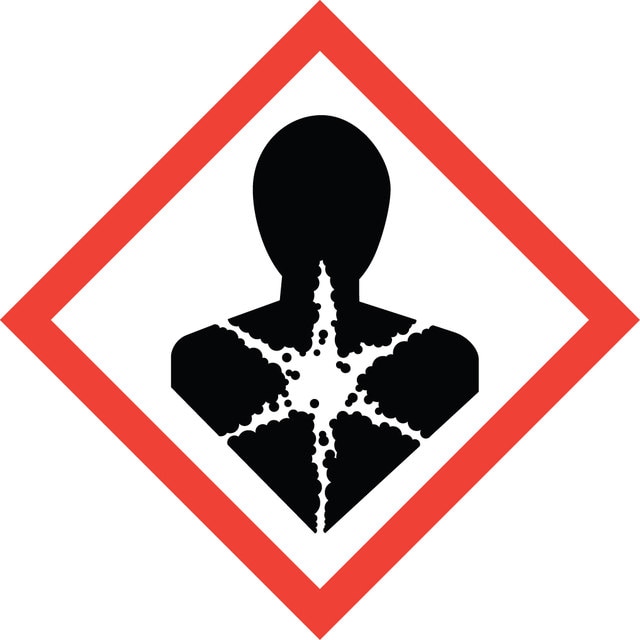
signalword
Danger
hcodes
Hazard Classifications
Repr. 1B
저장 등급
6.1C - Combustible acute toxic Cat.3 / toxic compounds or compounds which causing chronic effects
wgk
WGK 1
flash_point_f
190.4 °F - closed cup
flash_point_c
88 °C - closed cup
ppe
Eyeshields, Gloves, type ABEK (EN14387) respirator filter