
콘텐츠로 건너뛰기
Merck

469319

Poly(dimethylsiloxane)

viscosity 1.0 cSt (25 °C)

동의어(들):

Octamethyltrisiloxane

조직 및 계약 가격을 보려면 로그인를 클릭합니다.

크기 선택

보기 변경

제품정보 (DICE 배송 시 비용 별도)

Linear Formula:
[(CH3)3SiO]2Si(CH3)2
CAS 번호:
Molecular Weight:
236.53
UNSPSC Code:
12162002
NACRES:
NA.23
PubChem Substance ID:
EC Number:
203-497-4
Beilstein/REAXYS Number:
1753063
MDL number:
기술 서비스
도움이 필요하신가요? 저희 숙련된 과학자 팀이 도와드리겠습니다.
도움 문의


vapor density

>1 (vs air)

refractive index

n20/D 1.384 (lit.)

viscosity

1.0 cSt(25 °C)

bp

153 °C (lit.)

mp

−82 °C (lit.)

density

0.82 g/mL at 25 °C (lit.)

SMILES string

C[Si](C)(C)O[Si](C)(C)O[Si](C)(C)C

InChI

1S/C8H24O2Si3/c1-11(2,3)9-13(7,8)10-12(4,5)6/h1-8H3

InChI key

CXQXSVUQTKDNFP-UHFFFAOYSA-N

General description

Poly(dimethylsiloxane) (PDMS), also known as dimethicone, is an organosilicon compound that is widely used as a siloxane based elastomer. It is a hydrophobic material with attractive physical and chemical properties such as elasticity, optical transparency, tunable surface chemistry, and low electrical conductivity.

Application

PDMS can be used in microfluidic devices, nanolithography, and other membrane based applications.
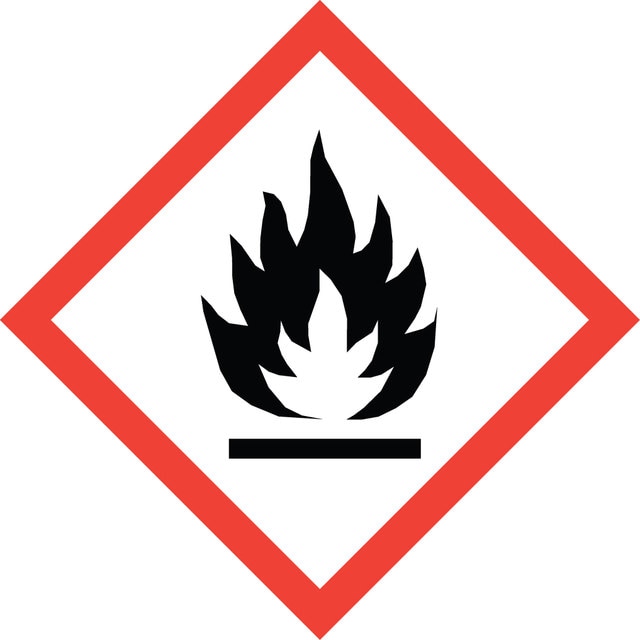

pictograms

Flame

저장 등급

3 - Flammable liquids

wgk

WGK 3

flash_point_f

84.2 °F - (External MSDS)

flash_point_c

29 °C - (External MSDS)

ppe

Eyeshields, Faceshields, Gloves, type ABEK (EN14387) respirator filter

signalword

Danger

Hazard Classifications

Flam. Liq. 3 - vPvB


가장 최신 버전 중 하나를 선택하세요:

시험 성적서(COA)

Lot/Batch Number

적합한 버전을 찾을 수 없으신가요?

특정 버전이 필요한 경우 로트 번호나 배치 번호로 특정 인증서를 찾을 수 있습니다.

이 제품을 이미 가지고 계십니까?

문서 라이브러리에서 최근에 구매한 제품에 대한 문서를 찾아보세요.

문서 라이브러리 방문


문서

Self-healing soft electronic materials enable autonomous repair, reducing waste and costs in electronic devices.

관련 콘텐츠

We offer PDMS surface modification kit which allows for durable hydrophilization of various polydimethylsiloxane (PDMS) surfaces.


Soyoung Hong et al.
Polymers, 11(5) (2019-05-06)
The vascularization of three-dimensional (3D) tissue constructs is necessary for transporting nutrients and oxygen to the component cells. In this study, a vacuum forming method was applied to emboss a vascular pattern on an electrospun membrane so that guided vascular
Shira Joudan et al.
Environmental health perspectives, 125(11), 117001-117001 (2017-11-15)
Perfluoroalkyl phosphinic acids (PFPiAs) have been detected in humans, wildlife, and various environmental matrices. These compounds have been used with perfluoroalkyl phosphonic acids (PFPAs) as surfactants in consumer products and as nonfoaming additives in pesticide formulations. Unlike the structurally related
Xiujuan Wu et al.
PLoS pathogens, 15(6), e1007897-e1007897 (2019-06-18)
Pandemics of vector-borne human and plant diseases often depend on the behaviors of their arthropod vectors. Arboviruses, including many bunyaviruses, manipulate vector behavior to accelerate their own transmission to vertebrates, birds, insects, and plants. However, the molecular mechanism underlying this