
78450

m-Phenylenediamine dihydrochloride
≥99.0% (AT)
동의어(들):
1,3-Benzenediamine dihydrochloride
조직 및 계약 가격을 보려면 를 클릭합니다.
크기 선택
보기 변경
제품정보 (DICE 배송 시 비용 별도)
실험식(Hill 표기법):
C6H8N2 · 2HCl
CAS 번호:
Molecular Weight:
181.06
UNSPSC Code:
12352100
NACRES:
NA.22
PubChem Substance ID:
EC Number:
208-790-0
Beilstein/REAXYS Number:
3911748
MDL number:
Assay:
≥99.0% (AT)
Form:
powder
Quality Segment
assay
≥99.0% (AT)
form
powder
SMILES string
Cl.Cl.Nc1cccc(N)c1
InChI
1S/C6H8N2.2ClH/c7-5-2-1-3-6(8)4-5;;/h1-4H,7-8H2;2*1H
InChI key
SVTOYMIYCMHPIV-UHFFFAOYSA-N
Application
m-Phenylenediamine dihydrochloride is used in the synthesis of bis(thiazolidone) and bis(thiohydantoin) derivatives. It can be used to increase the pore size in the fabrication of poly(aniline-co-1,3-phenylenediamine) cryogels.
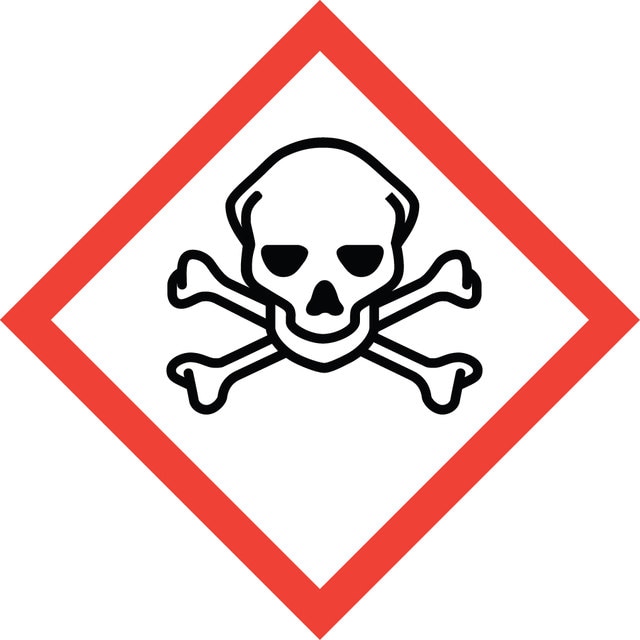
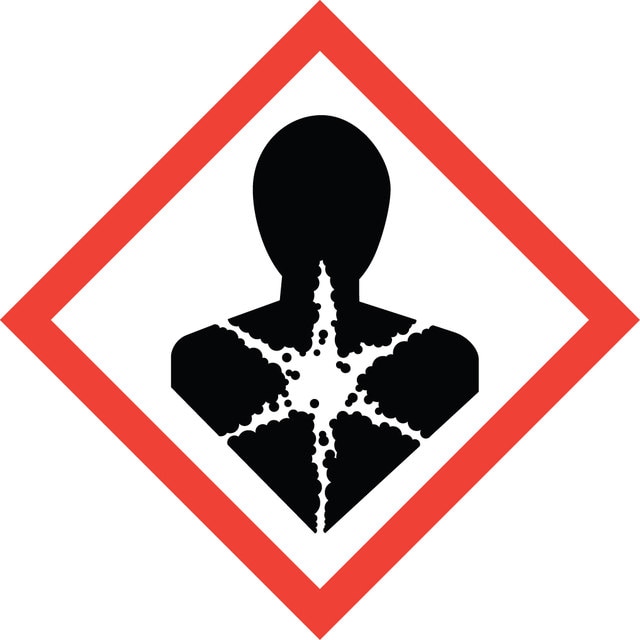
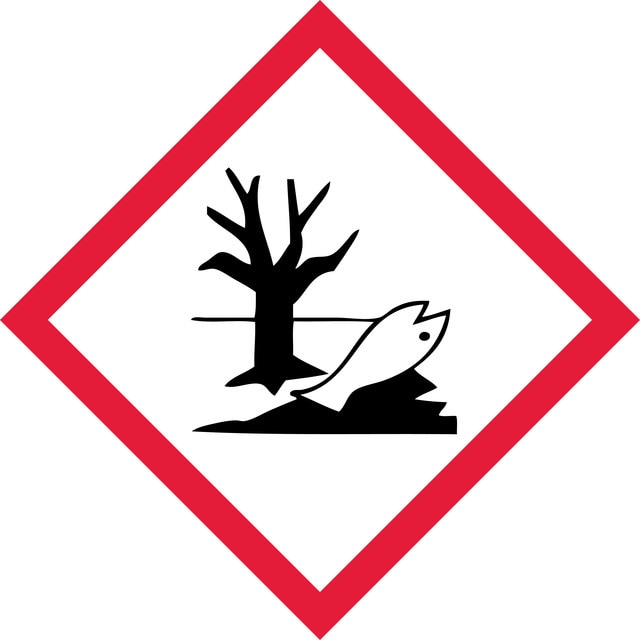
signalword
Danger
Hazard Classifications
Acute Tox. 3 Dermal - Acute Tox. 3 Inhalation - Acute Tox. 3 Oral - Aquatic Acute 1 - Aquatic Chronic 1 - Eye Irrit. 2 - Muta. 2 - Skin Sens. 1
저장 등급
6.1C - Combustible acute toxic Cat.3 / toxic compounds or compounds which causing chronic effects
wgk
WGK 3
flash_point_f
Not applicable
flash_point_c
Not applicable
ppe
Eyeshields, Faceshields, Gloves, type P3 (EN 143) respirator cartridges