
34867

1-Butanol
suitable for HPLC, ≥99.7%
동의어(들):
n-Butanol, Butyl alcohol
조직 및 계약 가격을 보려면 를 클릭합니다.
크기 선택
보기 변경
제품정보 (DICE 배송 시 비용 별도)
Linear Formula:
CH3(CH2)3OH
CAS 번호:
Molecular Weight:
74.12
UNSPSC Code:
41116105
NACRES:
NA.21
PubChem Substance ID:
EC Number:
200-751-6
Beilstein/REAXYS Number:
969148
MDL number:
Assay:
≥99.7%
Grade:
HPLC grade
Technique(s):
HPLC: suitable, UV/Vis spectroscopy: suitable
Bp:
116-118 °C (lit.)
Vapor pressure:
5.5 mmHg
grade
HPLC grade
Quality Segment
vapor density
2.55 (vs air)
vapor pressure
5.5 mmHg
assay
≥99.7%
form
liquid
autoignition temp.
649 °F
expl. lim.
11.2 %
technique(s)
HPLC: suitable, UV/Vis spectroscopy: suitable
impurities
≤0.001% non-volatile matter, ≤0.002% free acid (as C3H7COOH), ≤0.1% water (Karl Fischer)
transmittance
210 nm, ≥20%, 235 nm, ≥80%, 280 nm, ≥98%
refractive index
n20/D 1.399 (lit.)
pH
7 (20 °C, 70 g/L)
bp
116-118 °C (lit.)
mp
−90 °C (lit.)
density
0.81 g/mL at 25 °C (lit.)
application(s)
food and beverages
SMILES string
CCCCO
InChI
1S/C4H10O/c1-2-3-4-5/h5H,2-4H2,1H3
InChI key
LRHPLDYGYMQRHN-UHFFFAOYSA-N
General description
1-Butanol is a linear alcohol. Its biosynthesis from glucose using a bioengineered Escherichia coli strain has been reported. Its reaction with diisocyanates in the presence of triethylamine (catalyst) has been investigated by volumetric method. Kinetic studies suggest that the reaction proceeds via competitive consecutive second order. Its dehydration reaction has been employed as a standard reaction to evaluate the acidic and basic characteristics of various silica-aluminas.
Application
Suitable for HPLC, spectrophotometry, environmental testing
1-Butanol may be used for the solid acid (an acidic salt of H3PW12O40, Cs2.5H0.5PW12O40) catalyzed esterification of acrylic acid. It may be used as a cosolvent to investigate the enantioselective separation of racemic cyclohexyl methylphosphonofluoridate (cyclosarin, GF) by an chiral supercritical fluid chromatographic (SFC) technique.
Packaging
M-Bottle for Solvents
As a global leader in lab reagents, we are constantly looking for new ways to optimize the safety of our products. The newly developed 4L solvent bottle design features advanced sealing technology that eliminates leaks to make the handling of solvents safer and more convenient than ever before.
See all the new features here!
As a global leader in lab reagents, we are constantly looking for new ways to optimize the safety of our products. The newly developed 4L solvent bottle design features advanced sealing technology that eliminates leaks to make the handling of solvents safer and more convenient than ever before.
See all the new features here!
Still not finding the right product?
Explore all of our products under 1-Butanol
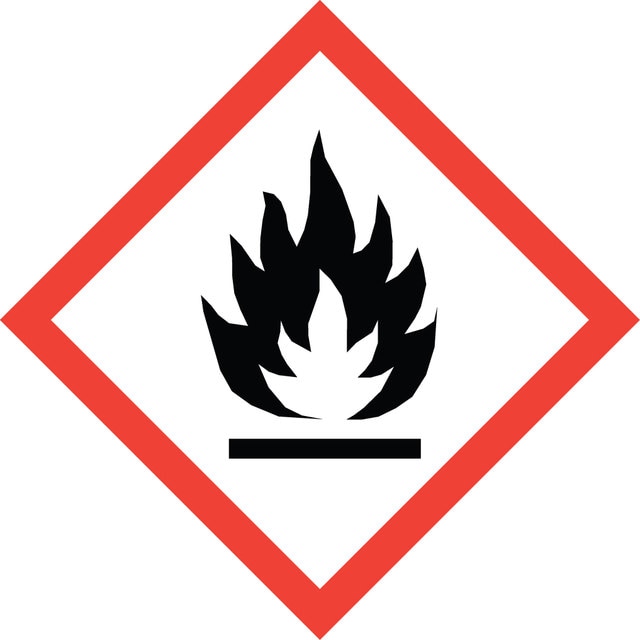


signalword
Danger
Hazard Classifications
Acute Tox. 4 Oral - Eye Dam. 1 - Flam. Liq. 3 - Skin Irrit. 2 - STOT SE 3
target_organs
Central nervous system, Respiratory system
저장 등급
3 - Flammable liquids
wgk
WGK 1
flash_point_f
95.0 °F - Pensky-Martens closed cup
flash_point_c
35 °C - Pensky-Martens closed cup