콘텐츠로 건너뛰기
Merck

695092

Acetic acid

glacial, ACS reagent, ≥99.7%

동의어(들):

Glacial acetic acid

조직 및 계약 가격을 보려면 로그인를 클릭합니다.

크기 선택

보기 변경

제품정보 (DICE 배송 시 비용 별도)

Linear Formula:
CH3CO2H
CAS 번호:
Molecular Weight:
60.05
UNSPSC Code:
12352106
NACRES:
NA.21
PubChem Substance ID:
EC Number:
200-580-7
Beilstein/REAXYS Number:
506007
MDL number:
Assay:
≥99.7%
Form:
liquid
Grade:
ACS reagent
기술 서비스
도움이 필요하신가요? 저희 숙련된 과학자 팀이 도와드리겠습니다.
도움 문의


grade

ACS reagent

Quality Level

vapor density

2.07 (vs air)

vapor pressure

11.4 mmHg ( 20 °C)

assay

≥99.7%

form

liquid

autoignition temp.

800 °F

expl. lim.

16 %, 92 °F, 4 %, 59 °F

technique(s)

mass spectrometry (MS): suitable

impurities

Cr2O72- reducers, passes test, MnO4- reducers, passes test, ≤0.0004 meq/g Titr. base, ≤0.01% acetic anhydride

evapn. residue

≤0.001%

color

APHA: ≤10

refractive index

n20/D 1.371 (lit.)

pH

2.5 (20 °C, 50 g/L)

bp

117-118 °C (lit.)

mp

16.2 °C (lit.)

solubility

water: soluble (602.9 g/l at 25 °C)

density

1.04 g/mL at 25 °C (lit.)

anion traces

chloride (Cl-): ≤1 ppm, sulfate (SO42-): ≤1 ppm

cation traces

Fe: ≤0.2 ppm, heavy metals: ≤0.5 ppm (by ICP)

SMILES string

[F2C(F2C)13F3C]C(O)=O

InChI

1S/C2H4O2/c1-2(3)4/h1H3,(H,3,4)

InChI key

QTBSBXVTEAMEQO-UHFFFAOYSA-N

General description

Acetic acid is an organic carboxylic acid. It is a pungent smelling hygroscopic liquid. Glacial acetic acid is the anhydrous acetic acid. It forms dimers linked by hydrogen bonds in solution and gaseous commonly referred as phases. It is weakly acidic in nature.

Application

Acetic acid is widely employed as solvent for various oxidation reactions. It may be used in the analysis of synthetic peptides by electron transfer dissociation (ETD) tandem mass spectrometry (MS/MS). It may be used in the preparation of peroxyacetic acid (disinfectant), via reaction with perhydrol (30% hydrogen peroxide).

Other Notes

4L and 4X4L are packaged in poly bottles


Still not finding the right product?

Explore all of our products under


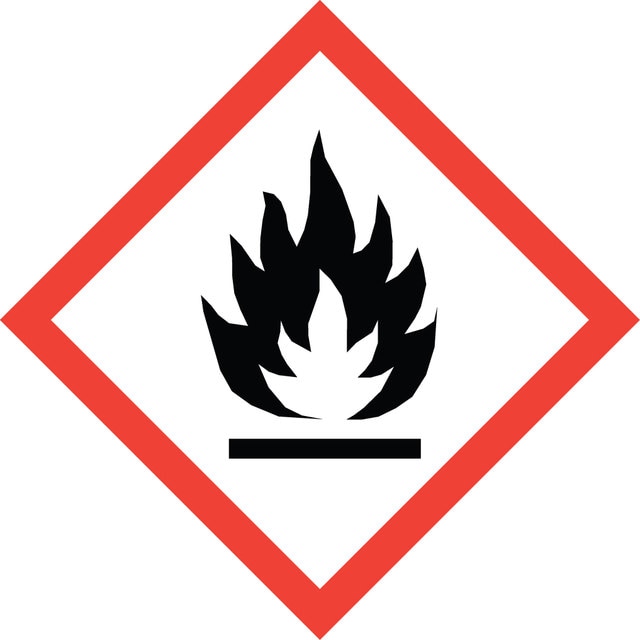
pictograms

FlameCorrosion

signalword

Danger

hcodes

Hazard Classifications

Eye Dam. 1 - Flam. Liq. 3 - Skin Corr. 1A

저장 등급

3 - Flammable liquids

wgk

WGK 1

flash_point_f

102.2 °F - closed cup

flash_point_c

39 °C - closed cup


가장 최신 버전 중 하나를 선택하세요:

시험 성적서(COA)

Lot/Batch Number

It looks like we've run into a problem, but you can still download Certificates of Analysis from our 문서 section.

도움이 필요하시면 연락하세요. 고객 지원 부서

이 제품을 이미 가지고 계십니까?

문서 라이브러리에서 최근에 구매한 제품에 대한 문서를 찾아보세요.

문서 라이브러리 방문


프로토콜

A step-by-step protocol for released N-linked glycan analysis of the monoclonal antibody adalimumab, based on UHPLC-FLR-MS and procainamide labeling.

문서

Learn about the impact of filtration on hematopoietic cell culture media containing vital T cell factors and other media components.

Effective in key synthesis reactions like Knoevenagel condensation, thalidomide synthesis, and Suzuki coupling for sustainable chemical transformations.

Learn to separate and quantify B vitamins and preservatives in capsules with HPLC-UV and Purospher® STAR RP-8 column. Validated for precision.

모든 기사 보기

관련 콘텐츠

전체 솔루션을 알아보세요. 신뢰할 수 있는 제품과 정밀한 툴로 물, 폐수, 흙, 식품, 혈액 등이 포함된 다양한 샘플에서 PFAS 화합물의 양을 더욱 정확하게 측정할 수 있습니다.

Discover our complete solutions: Reliable products and precision tools to more accurately quantify PFAS compounds in diverse samples including water, wastewater, soil, food, blood, etc.


Didem Karakaş et al.
Turkish journal of biology = Turk biyoloji dergisi, 43(4), 256-263 (2019-10-05)
Breast cancer is the most-diagnosed cancer type among women. The triple-negative subtype is an especially aggressive type of breast cancer. Although chemotherapy is almost the only option for the treatment of triple-negative breast cancer (TNBC), currently used chemotherapeutics are not
John E P Syka et al.
Proceedings of the National Academy of Sciences of the United States of America, 101(26), 9528-9533 (2004-06-24)
Peptide sequence analysis using a combination of gas-phase ion/ion chemistry and tandem mass spectrometry (MS/MS) is demonstrated. Singly charged anthracene anions transfer an electron to multiply protonated peptides in a radio frequency quadrupole linear ion trap (QLT) and induce fragmentation
Eagleson M.
Concise Encyclopedia Chemistry, 5-5 (1994)