
C1889

Collagenase from Clostridium histolyticum
0.2 μm filtered, suitable for release of physiologically active rat hepatocytes, Type IV-S, 0.5-5.0 FALGPA units/mg solid, ≥125 CDU/mg solid
동의어(들):
Clostridiopeptidase A
조직 및 계약 가격을 보려면 로그인를 클릭합니다.
크기 선택
보기 변경
제품정보 (DICE 배송 시 비용 별도)
CAS 번호:
UNSPSC Code:
12352204
NACRES:
NA.54
EC Number:
232-582-9
MDL number:
EC 번호:
Specific activity:
≥125 CDU/mg solid, 0.5-5.0 FALGPA units/mg solid
Quality Segment
sterility
0.2 μm filtered
type
Type IV-S
form
powder
specific activity
≥125 CDU/mg solid, 0.5-5.0 FALGPA units/mg solid
mol wt
68-130 kDa
suitability
suitable for release of physiologically active rat hepatocytes
application(s)
diagnostic assay manufacturing
storage temp.
−20°C
General description
Clostridium histolyticum consists of two classes of collagenases, which cleaves at multiple cleavage sites within the collagen triple helix. It is more effective than mammalian collagenases. Clostridial collagenase is implicated in bacterial invasion in gas gangrene.
Application
Collagenase has been used in the preparation of arterial tissue for the study of Advanced Glycosylation End Products (AGE). The enzyme has also been used along with other proteases for the disaggregation of human tumor, mouse kidney, human brain, lung epithelium and many other tissues. It is also effective in liver and kidney perfusion studies, digestion of pancreas, and isolation of nonparenchymal hepatocytes. When this enzyme is tested for suitability for the release of hepatocytes. The collagenase is used at approximately 1 mg/mL in a total volume of 100 mL for each rat liver.
Biochem/physiol Actions
Collagenase is activated by four gram atom calcium per mole enzyme. It is inhibited by ethylene glycol-bis(beta-aminoethyl ether) - N, N, N′,N′-tetraacetic acid, beta-mercaptoethanol, glutathione, thioglycolic acid and 8-hydroxyquinoline.
Effective release of cells from tissue requires the action of both collagenase enzymes and the neutral protease. Collagenase is activated by four gram atom calcium (Ca2+) per mole enzyme. The culture filtrate is thought to contain at least 7 different proteases ranging in molecular weight from 68-130 kDa (pH optimum: 6.3-8.8). The enzyme is typically used to digest the connective components in tissue samples to liberate individual cells. Collagenase treatment can cause some cells to die. Typically, concentrations varying from 0.1 to 5 mg/mL is used for digestion. The duration of reaction varies from 15 minutes to several hours, which enables efficient cell dissociation without causing too much cell death. Krebs Ringer buffer with calcium and BSA is preffered and Zn2+ is required for its activity.
Preparation Note
Prepared from Type IV (C5138). A stock solution may be prepared by dissolving 0.05-0.1 mg/mL of collagenase in 50 mM TES buffer containing 0.36 mM calcium chloride (TESCA) (pH 7.4) at 37 °C. This product also contains clostripain, nonspecific neutral protease, and tryptic activities.
Other Notes
One collagen digestion unit (CDU) liberates peptides from collagen from bovine achilles tendon equivalent in ninhydrin color to 1.0 μmole of leucine in 5 hours at pH 7.4 at 37 °C in the presence of calcium ions. One FALGPA hydrolysis unit hydrolyzes 1.0 μmole of furylacryloyl-Leu-Gly-Pro-Ala per min at 25°C. One Neutral Protease unit hydrolyzes casein to produce color equivalent to 1.0 μmole of tyrosine per 5 hr at pH 7.5 at 37°C. One Clostripain Unit hydrolyzes 1.0 μmole of BAEE per min at pH 7.6 at 25°C in the presence of DTT.
Disclaimer
As supplied, this product is stable for one year at -20°C. There is no loss in FALGPA or protease activity in 30 days at 37°C, 50°C and -20°C. Solutions of crude collagenase are stable if frozen quickly in aliquots (at 10 mg/mL) and kept frozen at -20°C. Further freeze-thaw cycles will damage the solution. The product retains 100% activity over 7 hours when held on ice.
Still not finding the right product?
Explore all of our products under Collagenase from Clostridium histolyticum
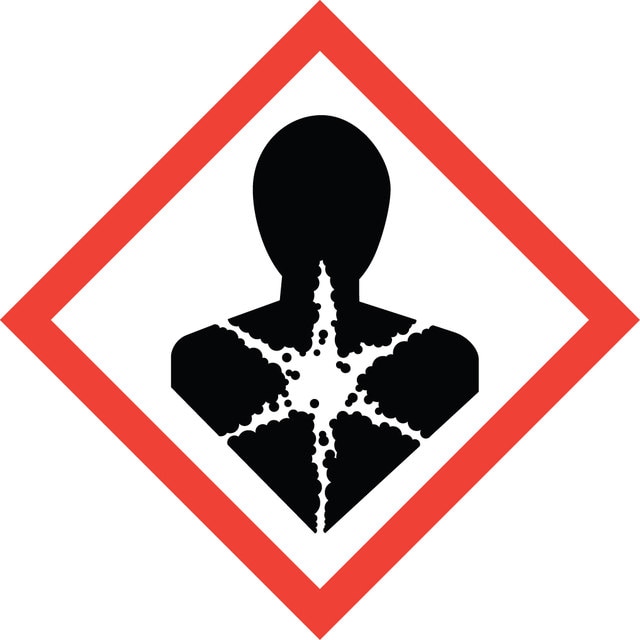

경고어
Danger
위험 코드
Hazard Classifications
Eye Irrit. 2 - Resp. Sens. 1 - Skin Irrit. 2 - STOT SE 3
표적 장기
Respiratory system
저장 등급
11 - Combustible Solids
무슨 일이 일어나고 있는 걸까?
WGK 1
인화점 (F)
Not applicable
인화점 (°C)
Not applicable
개인 보호 장비(PPE)
dust mask type N95 (US), Eyeshields, Faceshields, Gloves