
244406

1-Dodecyne
98%
Sign In to View Organizational & Contract Pricing.
Select a Size
About This Item
Linear Formula:
CH3(CH2)9C≡CH
CAS Number:
Molecular Weight:
166.30
NACRES:
NA.22
PubChem Substance ID:
UNSPSC Code:
12352100
EC Number:
212-134-9
MDL number:
Assay:
98%
Form:
liquid
InChI key
ZVDBUOGYYYNMQI-UHFFFAOYSA-N
InChI
1S/C12H22/c1-3-5-7-9-11-12-10-8-6-4-2/h1H,4-12H2,2H3
SMILES string
CCCCCCCCCCC#C
assay
98%
form
liquid
refractive index
n20/D 1.434 (lit.)
bp
215 °C (lit.)
mp
−19 °C (lit.)
density
0.778 g/mL at 25 °C (lit.)
Quality Level
Related Categories
Application
1-Dodecyne was used in the synthesis of stable ruthenium nanoparticles.
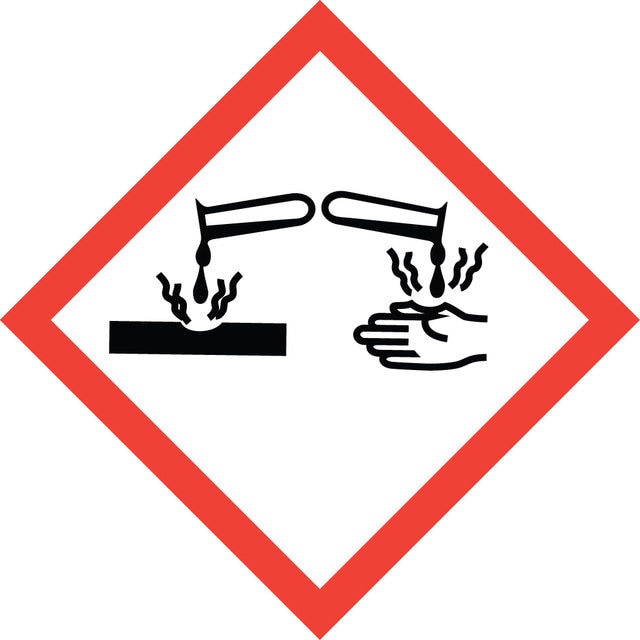
signalword
Danger
hcodes
Hazard Classifications
Aquatic Chronic 4 - Eye Dam. 1
Storage Class
10 - Combustible liquids
wgk
WGK 3
ppe
Eyeshields, Gloves, type ABEK (EN14387) respirator filter
flash_point_f
176.9 °F
flash_point_c
80.5 °C
Choose from one of the most recent versions:
Already Own This Product?
Find documentation for the products that you have recently purchased in the Document Library.
Xiongwu Kang et al.
Journal of the American Chemical Society, 134(3), 1412-1415 (2012-01-11)
Stable ruthenium nanoparticles were prepared by the self-assembly of 1-dodecyne onto the "bare" Ru colloid surface. The formation of a Ru-vinylidene (Ru═C═CH-R) interfacial bonding linkage was confirmed by the specific reactivity of the nanoparticles with imine derivatives to form a
Davide Albani et al.
Nature communications, 9(1), 2634-2634 (2018-07-08)
Ensemble control has been intensively pursued for decades to identify sustainable alternatives to the Lindlar catalyst (PdPb/CaCO3) applied for the partial hydrogenation of alkynes in industrial organic synthesis. Although the geometric and electronic requirements are known, a literature survey illustrates
Our team of scientists has experience in all areas of research including Life Science, Material Science, Chemical Synthesis, Chromatography, Analytical and many others.
Contact Technical Service