
W318000

2-Mercaptopropionic acid
≥95%, FG
Synonym(s):
Thiolactic acid, 2-Mercaptopropionic acid
Select a Size
About This Item
biological source
synthetic
grade
FG, Fragrance grade, Halal, Kosher
agency
follows IFRA guidelines, meets purity specifications of JECFA
reg. compliance
EU Regulation 1223/2009, EU Regulation 1334/2008 & 872/2012
assay
≥95%
refractive index
n20/D 1.481 (lit.)
bp
102 °C/16 mmHg (lit.), 203-208 °C (lit.)
mp
10-14 °C (lit.)
density
1.196 g/mL at 25 °C (lit.)
application(s)
flavors and fragrances
documentation
see Safety & Documentation for available documents
food allergen
no known allergens
fragrance allergen
no known allergens
organoleptic
meaty; roasted; sulfurous
SMILES string
CC(S)C(O)=O
InChI
1S/C3H6O2S/c1-2(6)3(4)5/h2,6H,1H3,(H,4,5)
InChI key
PMNLUUOXGOOLSP-UHFFFAOYSA-N
General description
Application
- Improving the Efficacy of ALA-Based Photodynamic Therapy: 2-MPA was used in the one-step aqueous synthesis of anionic and cationic AgInS2 quantum dots, demonstrating a significant enhancement in the therapeutic efficacy of aminolevulinic acid-based photodynamic cancer therapy (Hashemkhani et al., 2022).
- Fabrication of Hierarchical Core-Shell Heteroarchitectures: 2-MPA facilitates the assembly of Au@ZnO heterostructures for photocatalytic applications, underscoring its pivotal role in the synthesis of complex nanostructured materials (Pączkowski & Gawdzik, 2021).
- Investigating Genotoxic and Apoptotic Pathways: This study uses 2-MPA coated silver sulfide quantum dots to explore their effects on genotoxic and apoptotic pathways in vitro, providing insights into the biocompatibility and safety profile of these nanomaterials (Ozkan Vardar et al., 2018).
Still not finding the right product?
Explore all of our products under 2-Mercaptopropionic acid
signalword
Danger
Storage Class
6.1A - Combustible acute toxic Cat. 1 and 2 / very toxic hazardous materials
flash_point_f
190.4 °F - closed cup
flash_point_c
88 °C - closed cup
ppe
Faceshields, Gloves, Goggles, type ABEK (EN14387) respirator filter
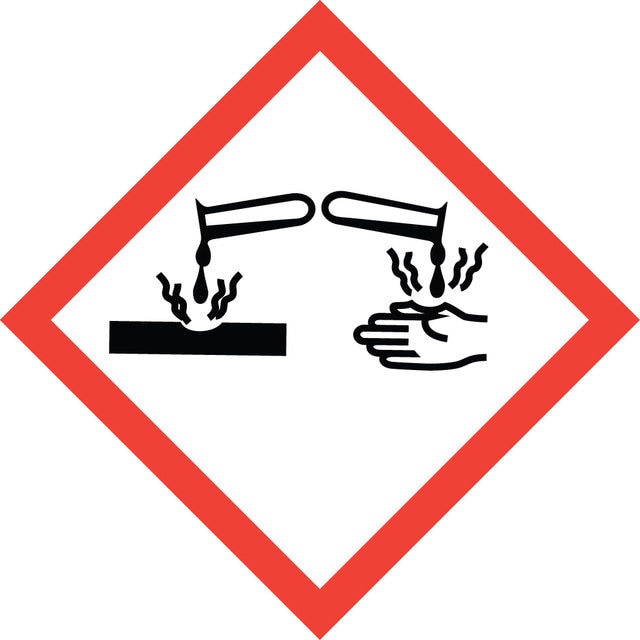

hcodes
Hazard Classifications
Acute Tox. 4 Oral - Eye Dam. 1 - Skin Corr. 1A
Choose from one of the most recent versions:
Already Own This Product?
Find documentation for the products that you have recently purchased in the Document Library.