Skip to Content
Merck

45336

Bendiocarb

PESTANAL®, analytical standard

Sign In to View Organizational & Contract Pricing.

Select a Size


About This Item

Empirical Formula (Hill Notation):
C11H13NO4
CAS Number:
Molecular Weight:
223.23
UNSPSC Code:
41116107
NACRES:
NA.24
PubChem Substance ID:
EC Number:
245-216-8
Beilstein/REAXYS Number:
1315404
MDL number:
Technical Service
Need help? Our team of experienced scientists is here for you.
Let Us Assist
Technical Service
Need help? Our team of experienced scientists is here for you.
Let Us Assist

grade

analytical standard

Quality Level

product line

PESTANAL®

shelf life

limited shelf life, expiry date on the label

technique(s)

HPLC: suitable, gas chromatography (GC): suitable

application(s)

agriculture
environmental

format

neat

SMILES string

CNC(=O)Oc1cccc2OC(C)(C)Oc12

InChI

1S/C11H13NO4/c1-11(2)15-8-6-4-5-7(9(8)16-11)14-10(13)12-3/h4-6H,1-3H3,(H,12,13)

InChI key

XEGGRYVFLWGFHI-UHFFFAOYSA-N

Looking for similar products? Visit Product Comparison Guide

Related Categories

Application

Refer to the product′s Certificate of Analysis for more information on a suitable instrument technique. Contact Technical Service for further support.

Other Notes

Find a digital Reference Material for this product available on our online platform ChemisTwin® for NMR. You can use this digital equivalent on ChemisTwin® for your sample identity confirmation and compound quantification (with digital external standard). An NMR spectrum of this substance can be viewed and an online comparison against your sample can be performed with a few mouseclicks. Learn more here and start your free trial.

Legal Information

PESTANAL is a registered trademark of Merck KGaA, Darmstadt, Germany

pictograms

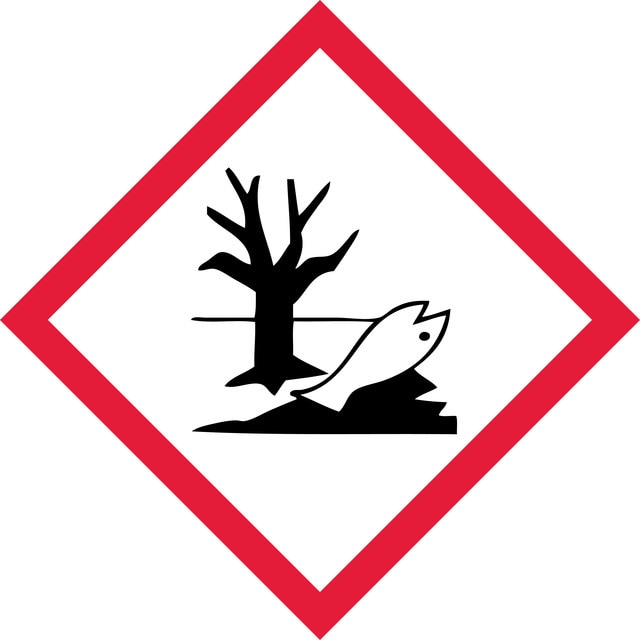
Skull and crossbonesEnvironment

signalword

Danger

Hazard Classifications

Acute Tox. 2 Oral - Acute Tox. 3 Dermal - Acute Tox. 3 Inhalation - Aquatic Acute 1 - Aquatic Chronic 1

Storage Class

6.1A - Combustible, acute toxic Cat. 1 and 2 / very toxic hazardous materials

wgk

WGK 3

flash_point_f

Not applicable

flash_point_c

Not applicable

ppe

Eyeshields, Faceshields, Gloves, type P2 (EN 143) respirator cartridges


Choose from one of the most recent versions:

Certificates of Analysis (COA)

Lot/Batch Number

It looks like we've run into a problem, but you can still download Certificates of Analysis from our Documents section.

If you need assistance, please contact Customer Support

Already Own This Product?

Find documentation for the products that you have recently purchased in the Document Library.

Visit the Document Library

Janneke Snetselaar et al.
Malaria journal, 16(1), 276-276 (2017-08-06)
Whilst significant progress has been made in the fight against malaria, vector control continues to rely on just two insecticidal methods, i.e., indoor residual spraying and insecticidal bed nets. House improvement shows great potential to complement these methods and may
Mike W Dunbar et al.
PLoS neglected tropical diseases, 13(2), e0007203-e0007203 (2019-03-01)
Challenges in maintaining high effectiveness of classic vector control in urban areas has renewed the interest in indoor residual spraying (IRS) as a promising approach for Aedes-borne disease prevention. While IRS has many benefits, application time and intrusive indoor applications
Corine Ngufor et al.
Malaria journal, 19(1), 249-249 (2020-07-15)
New classes of insecticides with novel modes of action, which can provide effective and prolonged control of insecticide-resistant malaria vector populations, are urgently needed for indoor residual spraying. Such insecticides can be included in a rotation plan to manage and
Walter Fabricio Silva Martins et al.
Scientific reports, 9(1), 11406-11406 (2019-08-08)
Culex quinquefasciatus plays an important role in transmission of vector-borne diseases of public health importance, including lymphatic filariasis (LF), as well as many arboviral diseases. Currently, efforts to tackle C. quinquefasciatus vectored diseases are based on either mass drug administration
Joseph Wagman et al.
Malaria journal, 17(1), 19-19 (2018-01-11)
Ségou Region in Central Mali is an area of high malaria burden with seasonal transmission, high access to and use of long-lasting insecticidal nets (LLINs), and resistance to pyrethroids and DDT well documented in Anopheles gambiae s.l. (the principal vector

Our team of scientists has experience in all areas of research including Life Science, Material Science, Chemical Synthesis, Chromatography, Analytical and many others.

Contact Technical Service