Sign In to View Organizational & Contract Pricing.
Select a Size
Change View
About This Item
Linear Formula:
Cl2C6H3NHCONHC6H4Cl
CAS Number:
Molecular Weight:
315.58
NACRES:
NA.24
PubChem Substance ID:
UNSPSC Code:
41116107
MDL number:
Quality Level
grade
certified reference material, pharmaceutical secondary standard
vapor pressure
<0.1 mmHg ( 25 °C)
API family
triclocarban
CofA
current certificate can be downloaded
technique(s)
HPLC: suitable, gas chromatography (GC): suitable
mp
254-256 °C (lit.)
application(s)
pharmaceutical (small molecule)
format
neat
storage temp.
2-30°C
SMILES string
Clc1ccc(NC(=O)Nc2ccc(Cl)c(Cl)c2)cc1
InChI
1S/C13H9Cl3N2O/c14-8-1-3-9(4-2-8)17-13(19)18-10-5-6-11(15)12(16)7-10/h1-7H,(H2,17,18,19)
InChI key
ICUTUKXCWQYESQ-UHFFFAOYSA-N
General description
3,4,4′-Trichlorocarbanilide (Triclocarban) is an ester of 3,4,4′-trichlorocarbanilide and belongs to the group of endocrine disruptors. It is widely used as a preservative and bactericide in a variety of personal care products.
Pharmaceutical secondary standards for application in quality control, provide pharma laboratories and manufacturers with a convenient and cost-effective alternative to the preparation of in-house working standards.
Application
These Secondary Standards are qualified as Certified Reference Materials. These are suitable for use in several analytical applications including but not limited to pharma release testing, pharma method development for qualitative and quantitative analyses, food and beverage quality control testing, and other calibration requirements.
Analysis Note
These secondary standards offer multi-traceability to the US and EP primary standards, where they are available.
Other Notes
This Certified Reference Material (CRM) is produced and certified in accordance with ISO 17034 and ISO/IEC 17025. All information regarding the use of this CRM can be found on the certificate of analysis.
To see an example of a Certificate of Analysis for this material enter LRAA0063 in the slot below. This is an example certificate only and may not be the lot that you receive.
signalword
Warning
hcodes
Hazard Classifications
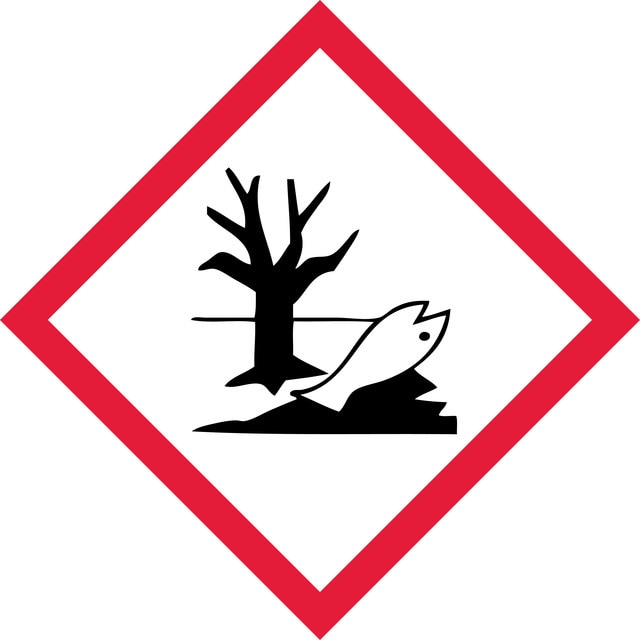
Aquatic Acute 1 - Aquatic Chronic 1
Storage Class
11 - Combustible Solids
pcodes
Certificates of Analysis (COA)
Search for Certificates of Analysis (COA) by entering the products Lot/Batch Number. Lot and Batch Numbers can be found on a product’s label following the words ‘Lot’ or ‘Batch’.
Already Own This Product?
Find documentation for the products that you have recently purchased in the Document Library.
Simultaneous determination of parabens, triclosan and triclocarban in water by liquid chromatography/electrospray ionisation tandem mass spectrometry
Gonzalez-Marino I, et al.
Rapid Communications in Mass Spectrometry, 23(12), 1756-1766 (2009)
Jian-Liang Zhao et al.
Water research, 47(1), 395-405 (2012-11-07)
Triclosan (TCS) and triclocarban (TCC) are two commonly used personal care products. They may enter into aquatic environments after consumption and pose potential risks to aquatic organisms. We investigated the occurrence and fate of TCS and TCC in five large
Nils Helge Schebb et al.
Aquatic toxicology (Amsterdam, Netherlands), 105(3-4), 448-454 (2011-08-30)
The antimicrobial triclocarban (TCC) is frequently found in personal care products and commonly observed in surface waters and sediments. Due to its long environmental persistence TCC accumulates in sewage sludge. It also shows a high unintended biological activity as a