
101338

Benzothiazole
96%
Synonym(s):
1,3-Benzothiazole, Benzosulfonazole
Sign In to View Organizational & Contract Pricing.
Select a Size
Change View
About This Item
Empirical Formula (Hill Notation):
C7H5NS
CAS Number:
Molecular Weight:
135.19
UNSPSC Code:
12352100
NACRES:
NA.22
PubChem Substance ID:
EC Number:
202-396-2
Beilstein/REAXYS Number:
109468
MDL number:
Assay:
96%
vapor density
4.66 (vs air)
Quality Level
vapor pressure
34 mmHg ( 131 °C)
assay
96%
refractive index
n20/D 1.642 (lit.)
bp
231 °C (lit.)
mp
2 °C (lit.)
density
1.238 g/mL at 25 °C (lit.)
SMILES string
c1ccc2scnc2c1
InChI
1S/C7H5NS/c1-2-4-7-6(3-1)8-5-9-7/h1-5H
InChI key
IOJUPLGTWVMSFF-UHFFFAOYSA-N
Application
Interesting carbonyl equivalent. Reacts with aldehydes or ketones to generate α-hydroxy carbonyl compounds.
Still not finding the right product?
Explore all of our products under Benzothiazole
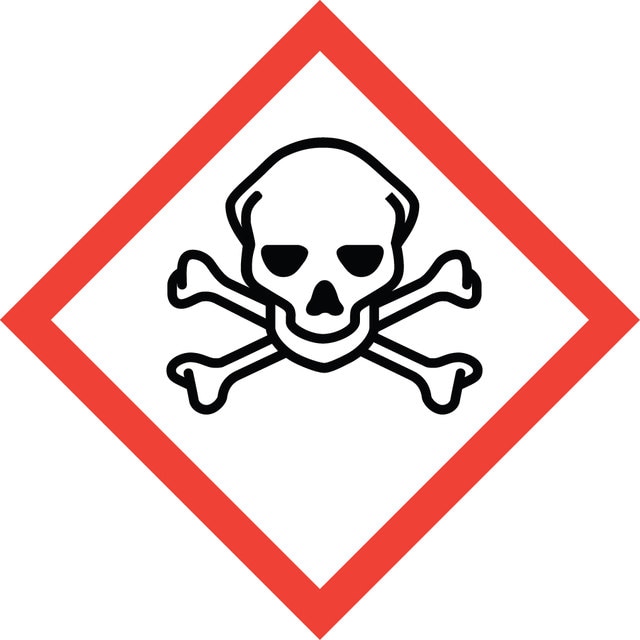
signalword
Danger
hcodes
Hazard Classifications
Acute Tox. 3 Dermal - Acute Tox. 3 Oral - Acute Tox. 4 Inhalation - Eye Irrit. 2
Storage Class
6.1C - Combustible acute toxic Cat.3 / toxic compounds or compounds which causing chronic effects
wgk
WGK 2
flash_point_f
224.6 °F - Pensky-Martens closed cup
flash_point_c
107 °C - Pensky-Martens closed cup
ppe
Eyeshields, Faceshields, Gloves, type ABEK (EN14387) respirator filter
Choose from one of the most recent versions:
Already Own This Product?
Find documentation for the products that you have recently purchased in the Document Library.
Bulletin of the Chemical Society of Japan, 61, 3637-3637 (1988)
Dennis S B Ongarora et al.
Bioorganic & medicinal chemistry letters, 22(15), 5046-5050 (2012-07-04)
The synthesis and evaluation of antiplasmodial activity of benzothiazole, benzimidazole, benzoxazole and pyridine analogues of amodiaquine is hereby reported. Benzothiazole and benzoxazole analogues with a protonatable tertiary nitrogen atom possessed excellent activity against the W2 and K1 chloroquine resistant strains
Kazumasa Wakamatsu et al.
Pigment cell & melanoma research, 25(4), 434-445 (2012-05-04)
Eumelanin is photoprotective while pheomelanin is phototoxic to pigmented tissues. Ultraviolet A (UVA)-induced tanning seems to result from the photooxidation of pre-existing melanin and contributes no photoprotection. However, data available for melanin biodegradation remain limited. In this study, we first