
244112

Titanium(IV) butoxide
reagent grade, 97%
Synonym(s):
Orthotitanic acid tetrabutylester, TNBT, TYZOR® TBT organic titanate, Tetrabutyl orthotitanate, Tetrabutyl titanate
Select a Size
About This Item
grade
reagent grade
Quality Level
assay
97%
form
liquid (or viscous liquid), liquid
reaction suitability
core: titanium, reagent type: catalyst
refractive index
n20/D 1.491 (lit.)
bp
206 °C/10 mmHg (lit.)
density
1.00 g/mL at 20 °C (lit.)
SMILES string
CCCCO[Ti](OCCCC)(OCCCC)OCCCC
InChI
1S/4C4H9O.Ti/c4*1-2-3-4-5;/h4*2-4H2,1H3;/q4*-1;+4
InChI key
YHWCPXVTRSHPNY-UHFFFAOYSA-N
General description
Application
- A catalyst in the transesterification of methyl methacrylate and synthesis of renewable polyesters from vanillin-based dimers.
- A precursor to synthesize ferroelectric Bi4Ti3O12 thin films.
- A catalyst in the synthesis of aliphatic−aromatic copolyesters through polycondensation reactions.
- A precursor for synthesis of Titanium dioxide (TiO2) nanocomposite powders prepared via sol-gel synthesis used for photocatalytic degradation of pollutants.
- A precursor for synthesis of TiO₂ nanoparticles (anatase and rutile) via polyol-mediated synthesis technique.
- A precursor for synthesis of Titanium dioxide nanorods via hydrothermal method which are utilized as electron transport layers (ETLs) in perovskite solar cells (PSCs)
- A precursor for synthesis of TiO2 coatings enhance the stability and luminescent properties of Rb0.1Cs0.9PbBrI2 perovskite quantum dots (PQDs) for white-emitting diodes (WLEDs) and color conversion in display devices.
Features and Benefits
- TBO has a low viscosity, enables improved penetration and uniform coating on various substrates.
- It exhibits good thermal stability, which is advantageous during high-temperature processing, allowing it to maintain its chemical integrity and performance under elevated temperatures.
- It is soluble in anhydrous ethanol, ether, benzene and chloroform.
Legal Information
Still not finding the right product?
Explore all of our products under Titanium(IV) butoxide
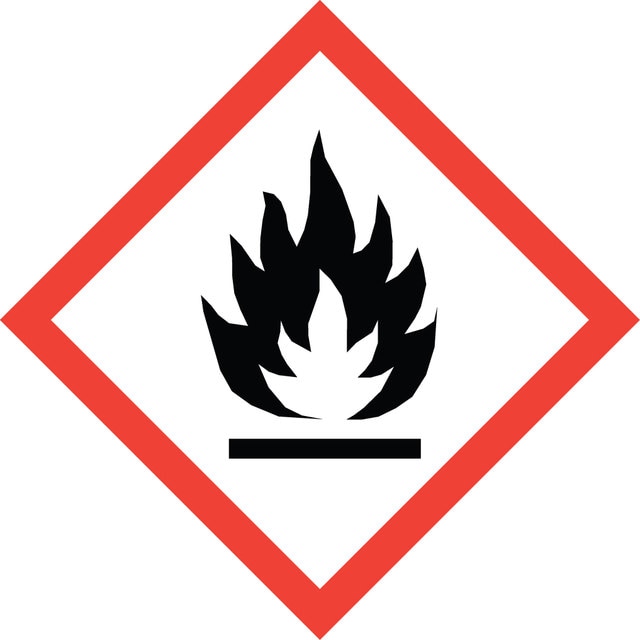
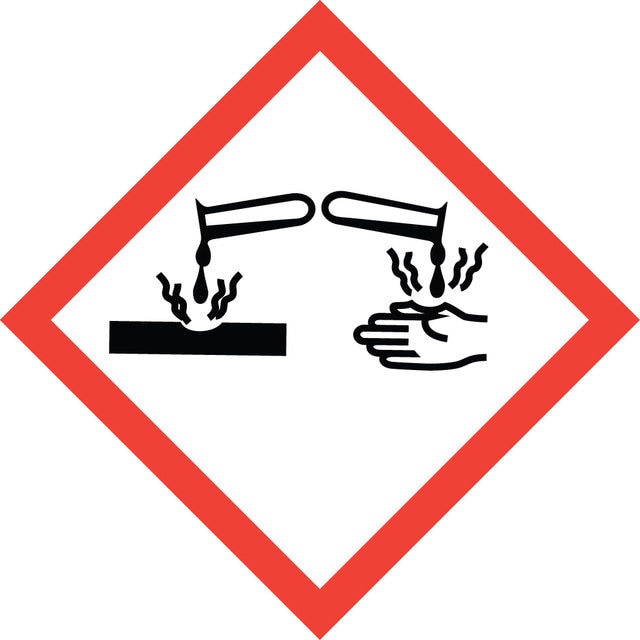

signalword
Danger
hcodes
Hazard Classifications
Eye Dam. 1 - Flam. Liq. 3 - Skin Irrit. 2 - STOT SE 3
target_organs
Central nervous system, Respiratory system
Storage Class
3 - Flammable liquids
wgk
WGK 1
flash_point_f
107.6 °F - Pensky-Martens closed cup
flash_point_c
42 °C - Pensky-Martens closed cup
ppe
Eyeshields, Faceshields, Gloves, type ABEK (EN14387) respirator filter
Choose from one of the most recent versions:
Already Own This Product?
Find documentation for the products that you have recently purchased in the Document Library.