Skip to Content
Merck

302120

n-Butyllithium solution

2.0 M in cyclohexane

Synonym(s):

n-BuLi, Butyl lithium, Butyllithium solution, Lithium-1-butanide

Sign In to View Organizational & Contract Pricing.

Select a Size


About This Item

Linear Formula:
CH3(CH2)3Li
CAS Number:
Molecular Weight:
64.06
UNSPSC Code:
12352103
NACRES:
NA.22
PubChem Substance ID:
MDL number:
Beilstein/REAXYS Number:
1209227
Concentration:
2.0 M in cyclohexane
Form:
liquid
Technical Service
Need help? Our team of experienced scientists is here for you.
Let Us Assist
Technical Service
Need help? Our team of experienced scientists is here for you.
Let Us Assist

Product Name

n-Butyllithium solution, 2.0 M in cyclohexane

InChI

1S/C4H9.Li/c1-3-4-2;/h1,3-4H2,2H3;

SMILES string

[Li]CCCC

InChI key

MZRVEZGGRBJDDB-UHFFFAOYSA-N

form

liquid

concentration

2.0 M in cyclohexane

bp

80 °C

density

0.775 g/mL at 25 °C

storage temp.

2-8°C

Quality Level

Looking for similar products? Visit Product Comparison Guide

Application

n-Butyllithium (2.0 M in cyclohexane) can be used as:      
  • A polymerization initiator to synthesize polystyrenes by anionic polymerization of styrene.      
  • A strong base in the diastereoselective alkylation reactions.
  • A reagent to synthesize 2-benzoylpyrroles by reacting benzaldehydes with di(1H-pyrrol-1-yl)zirconium(IV) chloride complex.

General description

n-Butyllithium (n-BuLi) is an organolithium reagent widely used as a strong base (superbase) in organic synthesis for the preparation of various chemical intermediates. It is also used as a reagent for lithium-halogen exchange and lithium-metal transmetalation reactions. n-BuLi is capable of lithiating carbon acids.

Packaging

The 25 mL Sure/Seal bottle is recommended as a single-use bottle. Repeated punctures will likely result in decreased performance of product.

Legal Information

Sure/Seal is a trademark of Sigma-Aldrich Co. LLC

signalword

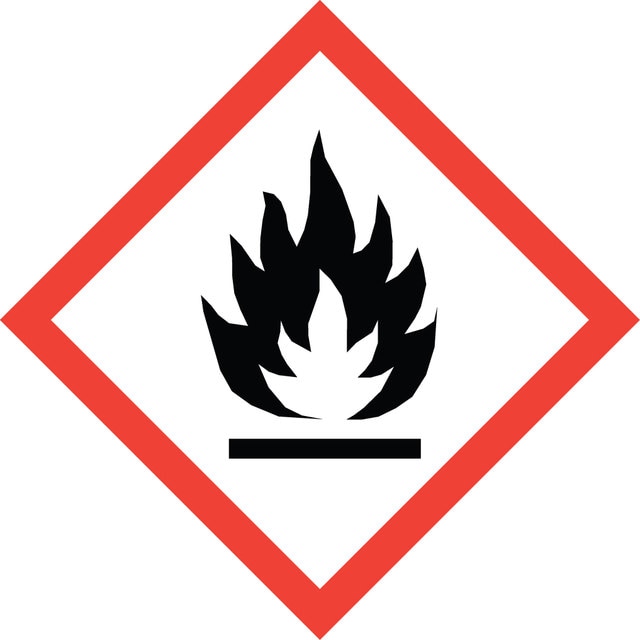
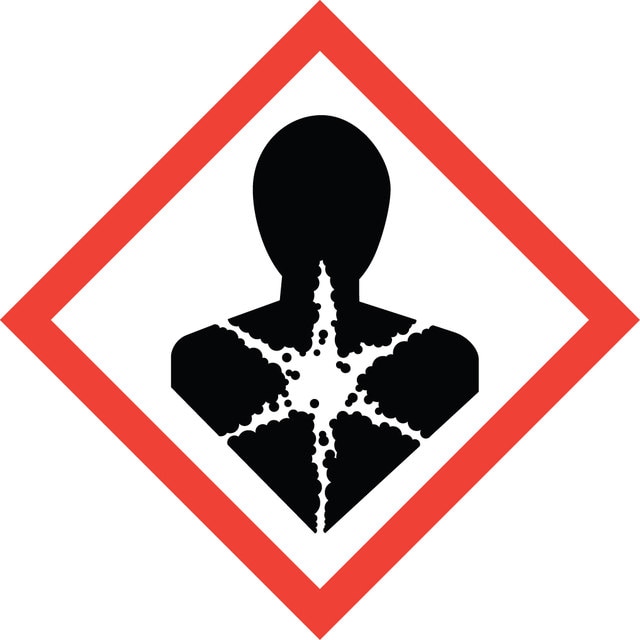
Danger

Hazard Classifications

Aquatic Acute 1 - Aquatic Chronic 1 - Asp. Tox. 1 - Eye Dam. 1 - Flam. Liq. 2 - Skin Corr. 1B - STOT SE 3 - Water-react 1

target_organs

Central nervous system

supp_hazards

Storage Class

4.3 - Hazardous materials which set free flammable gases upon contact with water

wgk

WGK 2

flash_point_f

-0.4 °F - closed cup

flash_point_c

-18 °C - closed cup

ppe

Faceshields, Gloves, Goggles, type ABEK (EN14387) respirator filter


Regulatory Listings

Regulatory Listings are mainly provided for chemical products. Only limited information can be provided here for non-chemical products. No entry means none of the components are listed. It is the user’s obligation to ensure the safe and legal use of the product.

110-82-7

CAS No.

Choose from one of the most recent versions:

Certificates of Analysis (COA)

Lot/Batch Number

Don't see the Right Version?

If you require a particular version, you can look up a specific certificate by the Lot or Batch number.

Already Own This Product?

Find documentation for the products that you have recently purchased in the Document Library.

Visit the Document Library

Comparison of the synthetic utility of n-butyllithium and lithium diisopropylamide in the metalations of N, N-dialkyltoluamides.
Ludt RE, et al
The Journal of Organic Chemistry, 38(9), 1668-1674 (1973)
Arene-metal complexes. 13. Reaction of substituted (benzene) tricarbonylchromium complexes with n-butyllithium.
Card RJ and Trahanovsky WS.
The Journal of Organic Chemistry, 45(13), 2560-2566 (1980)
High-field proton NMR study of the aggregation and complexation of n-butyllithium in tetrahydrofuran.
McGarrity JF and Ogle CA.
Journal of the American Chemical Society, 107(7), 1805-1810 (1985)
Lithium intercalation via n-butyllithium of the layered transition metal dichalcogenides.
Dines MB.
Materials Research Bulletin, 10(4), 287-291 (1975)
Yuqiang Ma et al.
ACS nano, 9(7), 7383-7391 (2015-07-01)
Two-dimensional (2D) semiconducting monolayer transition metal dichalcogenides (TMDCs) have stimulated lots of interest because they are direct bandgap materials that have reasonably good mobility values. However, contact between most metals and semiconducting TMDCs like 2H phase WSe2 are highly resistive

Our team of scientists has experience in all areas of research including Life Science, Material Science, Chemical Synthesis, Chromatography, Analytical and many others.

Contact Technical Service